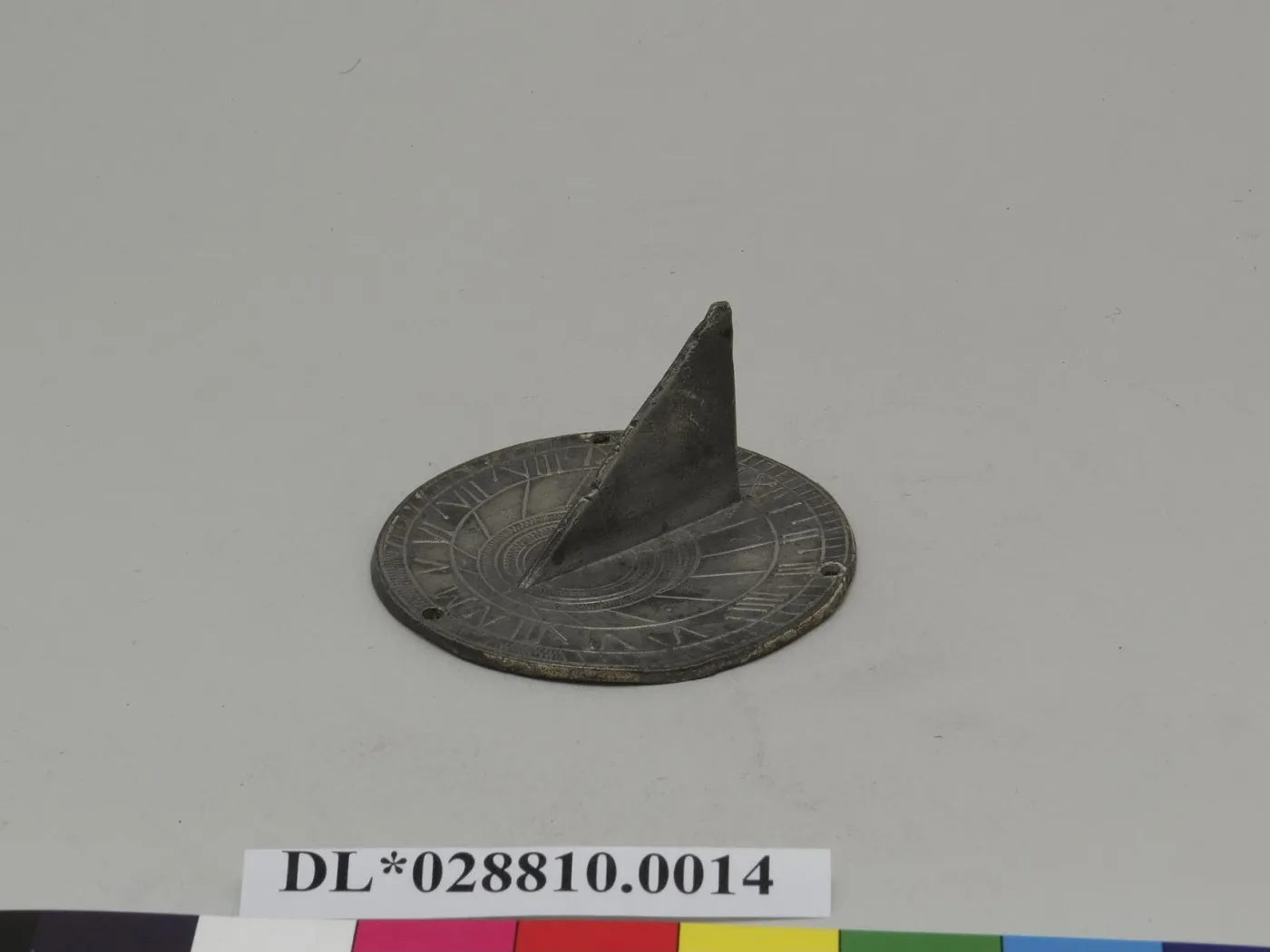
Sundial
The sun's shadow, cast by a pointer onto marked lines, showed the hour, and it worked only on sunny days.
- Date
- ca 1750
- Place
- United States: New England; United States: Connecticut; United States: Massachusetts; United States: Rhode Island; United States: Connecticut, Stonington
- Materials
- pewter (overall material)
- Dimensions
- overall: 1 5/8 in x 3 in; 4.1275 cm x 7.62 cm
- Others named in the record
- Copp Family (Associated Name)
- Museum
- National Museum of American History
- Credit line
- Gift of John Brenton Copp
The Copp family of Stonington, Connecticut used this pewter sundial around 1785. The dial has three holes to mount the sundial horizontally, with the initials “NM” cast at the clocks’ “6” position. Accurately aligning the tip of the sundial’s gnomon to true north allows the gnomon’s shadow to fall on the hour of the dial plate. The NM is possibly Nathan Miller from Rhode Island, the son of founder Josiah Miller, whose name appears on several similar sundials of the era.
The Copp Collection contains a variety of household objects that the Copp family of Connecticut used from around 1700 until the mid-1800s. Part of the Puritan Great Migration from England to Boston, the family eventually made their home in New London County, Connecticut, where their textiles, clothes, utensils, ceramics, books, bibles, and letters provide a vivid picture of daily life. More of the collection from the Division of Home and Community Life can be viewed by searching accession number 28810.
The museum's own record (Smithsonian, National Museum of American History)
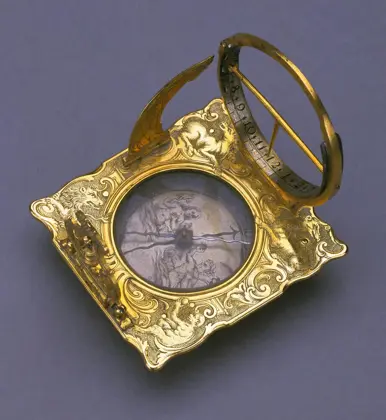 Portable Equatorial
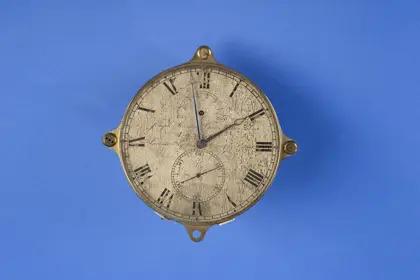 box chronometer movement
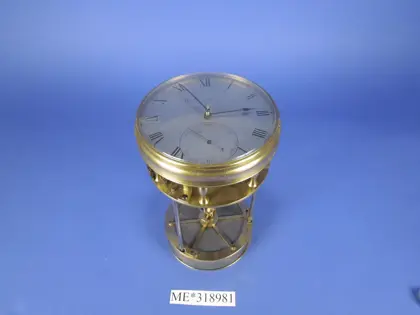 Bond Marine Chronometer
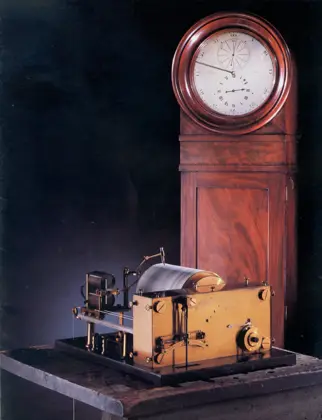 Chronograph
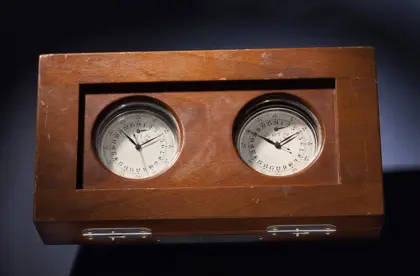 Watches, Army Air Corps, Avigation [Air Navigation], A-6
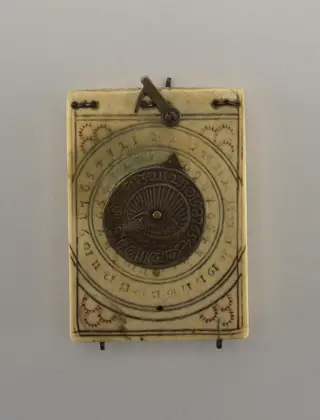 Sundial compass
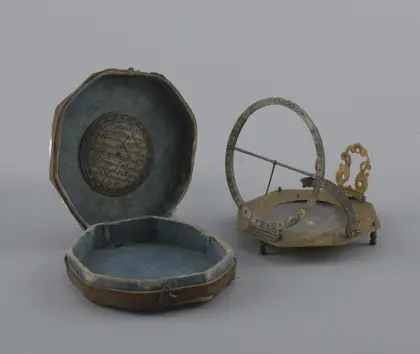 Traveling sundial and compass