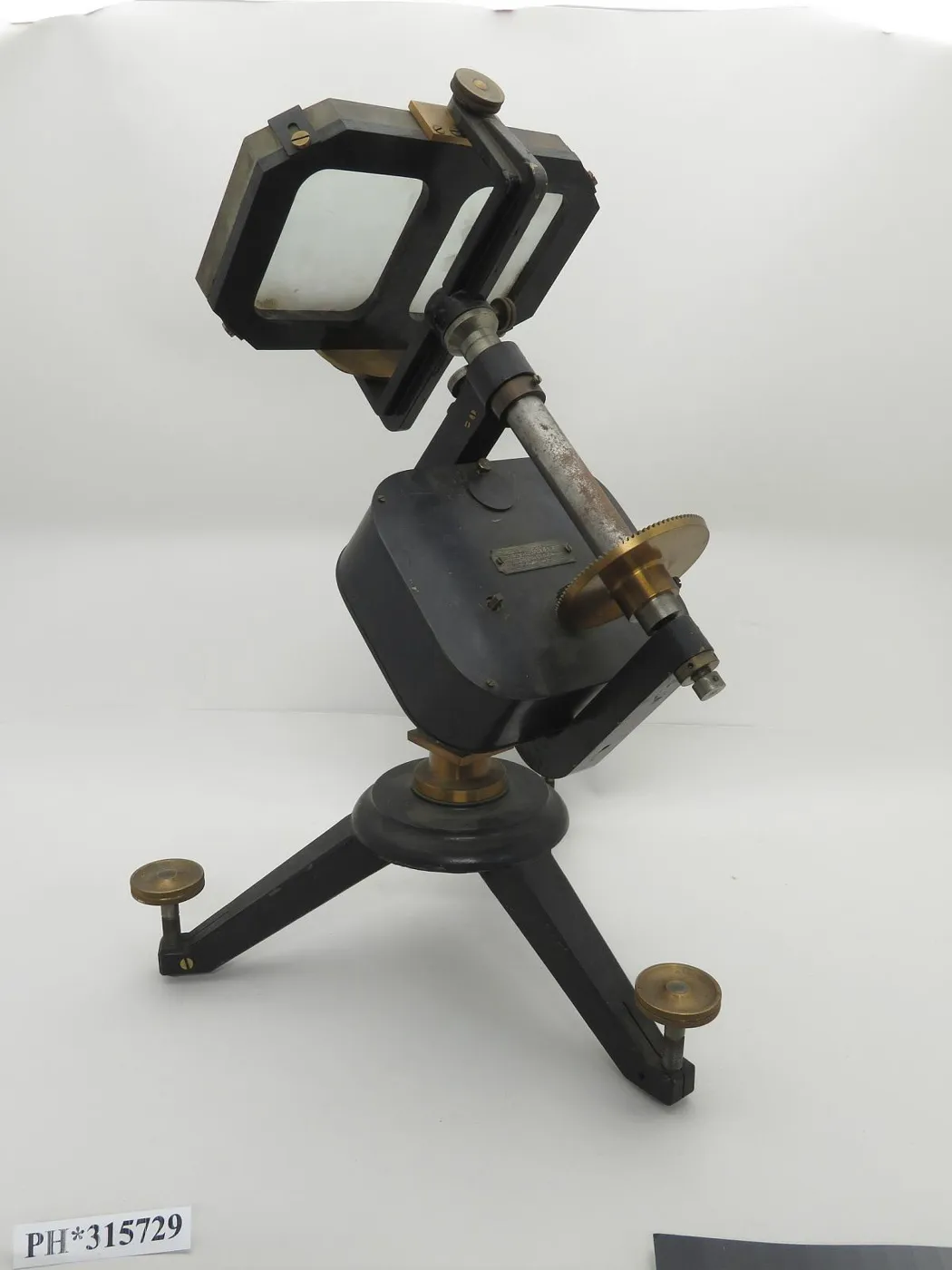
Heliostat
A clockwork mirror followed the sun and bounced its light in one fixed direction for photography or experiments.
- Date
- around 1900
- Maker
- John A. Brashear
- Place
- United States: Pennsylvania, Pittsburgh
- Dimensions
- overall: 20 in; 50.8 cm; overall: 18 1/2 in x 12 3/8 in x 12 1/2 in; 46.99 cm x 31.4325 cm x 31.75 cm
- Museum
- National Museum of American History
- Credit line
- U.S. Military Academy
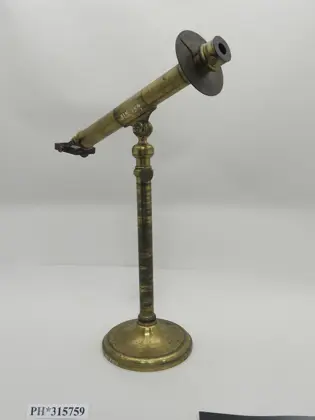
A heliostat throws sunlight where it might be used for photography or scientific observations. This example (half of a two mirror instrument) has a silvered-glass octagonal mirror, clockwork mechanism, and tripod base with leveling screws. The “J. A. Brashear, Allegheny, Pa.” inscription refers to John A. Brashear who began making telescopes in 1880, in a shop behind his house in Pittsburgh, and who established a new shop in Allegheny, then a suburb of Pittsburgh, in the fall of 1886.
Ref: John A. Brashear, Catalogue (Allegheny, 1906), p. 35.
The museum's own record (Smithsonian, National Museum of American History)
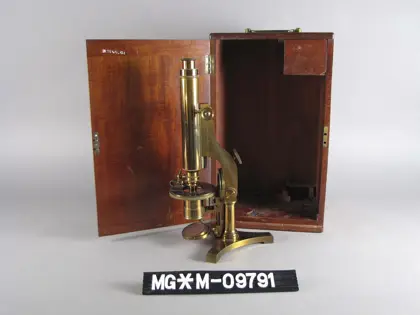 Microscope
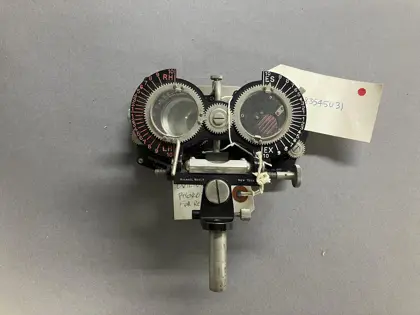 Ski-Optometer (Woolf Phoropter)
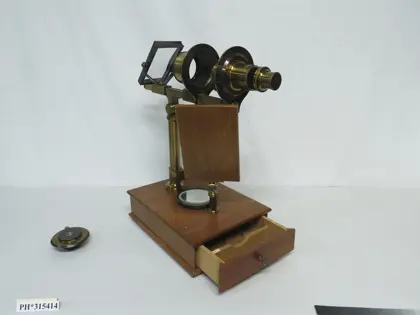 Projection Polariscope
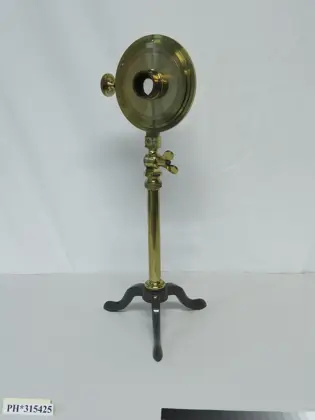 Jamin Apparatus
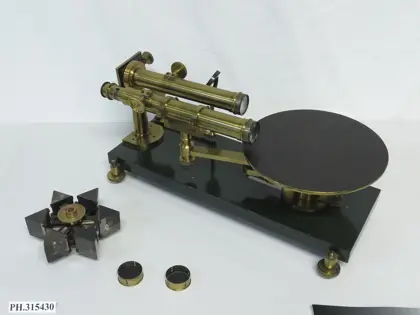 Spectroscope
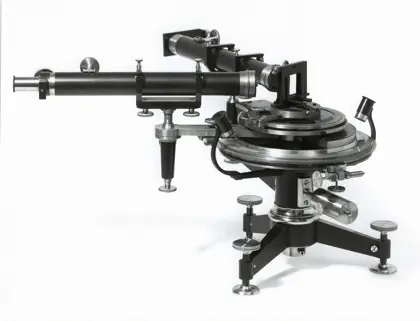 Spectrometer
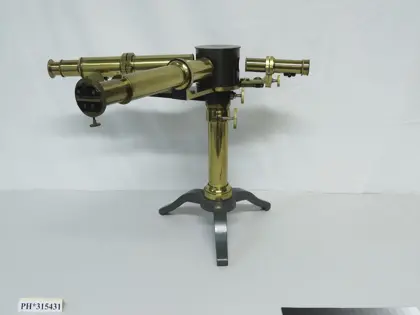 Spectroscope
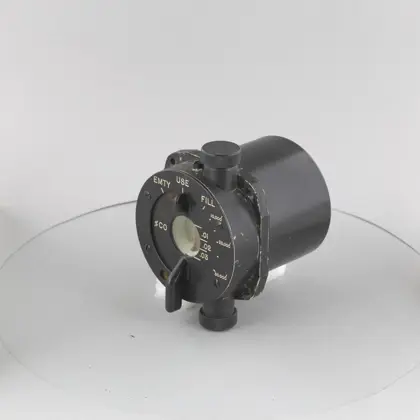 Indicator, Carbon Monoxide
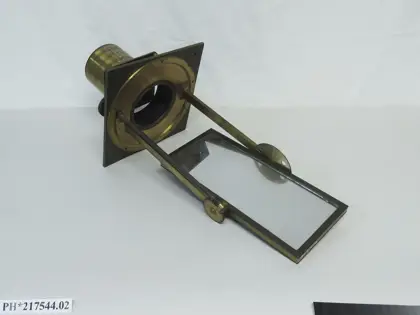 Solar Microscope
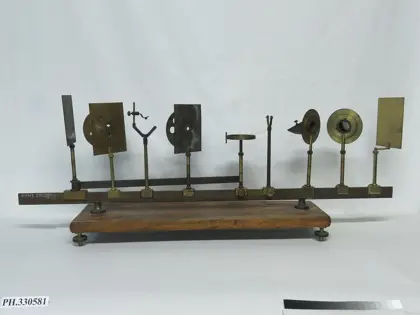 Melloni Bench
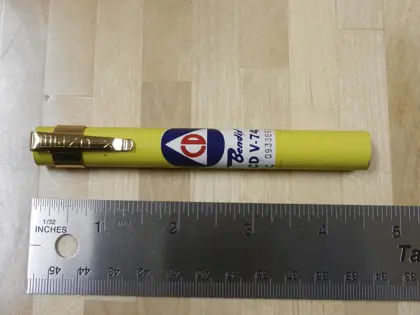 Civil Defense pocket dosimeter
 Polariscope