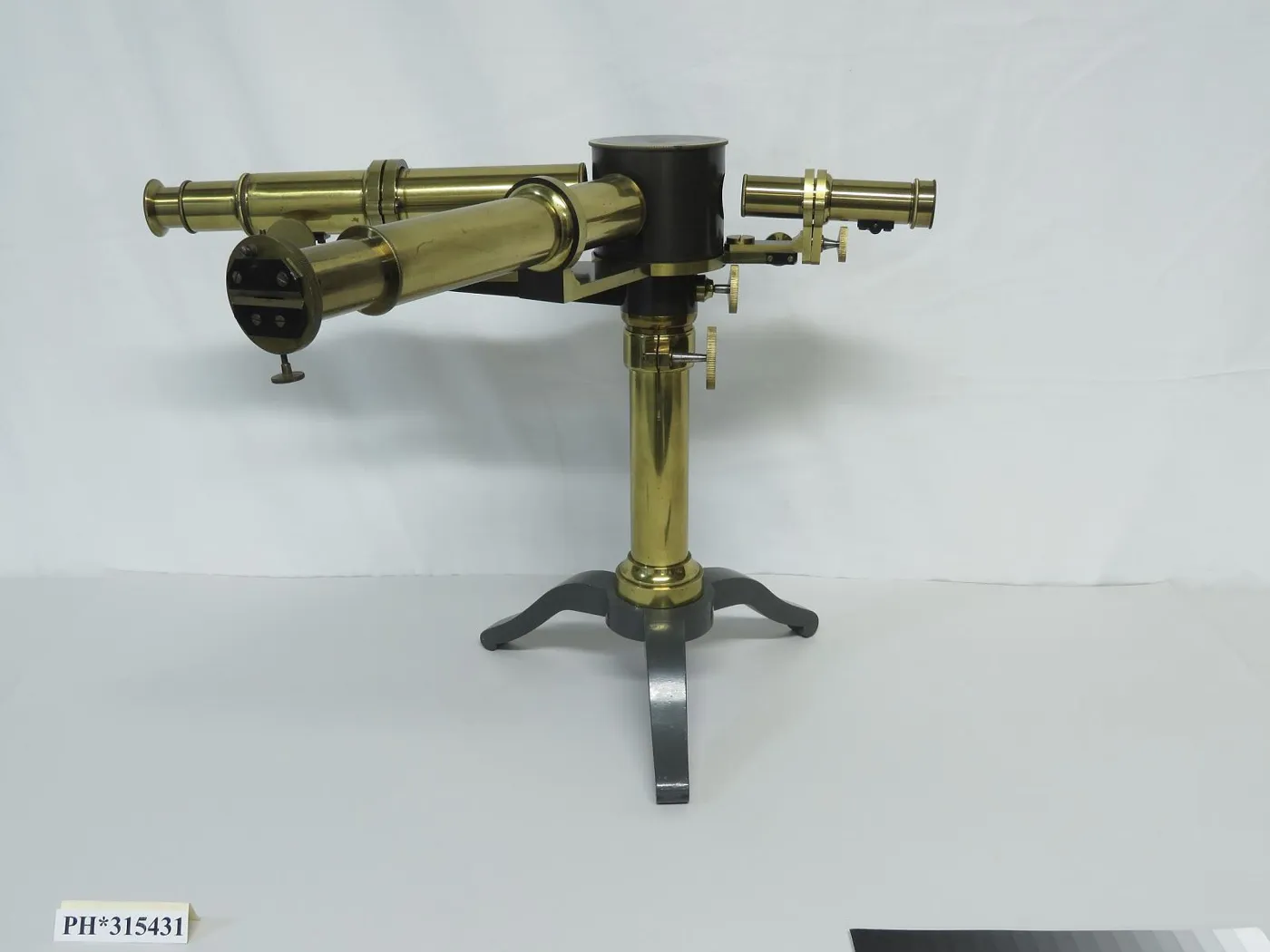
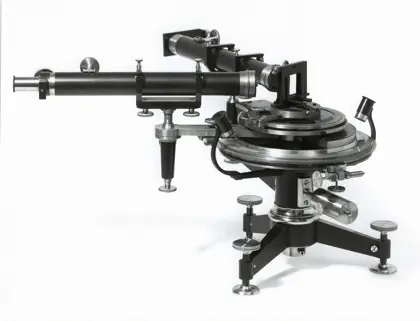
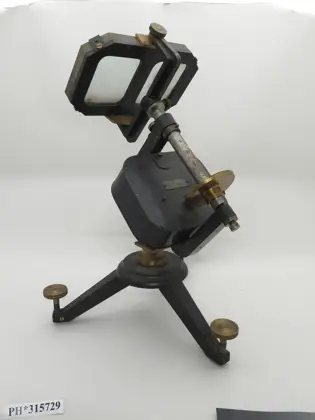
Spectroscope
A prism split light from a flame into colored lines, and the pattern of lines revealed which chemicals were burning.
- Date
- early 1860s
- Maker
- Jules Duboscq
- Place
- France: Île-de-France, Paris
- Dimensions
- overall: 14 in; 35.56 cm; overall: 14 3/8 in x 11 3/8 in x 16 1/2 in; 36.5125 cm x 28.8925 cm x 41.91 cm
- Museum
- National Museum of American History
- Credit line
- United States Military Academy
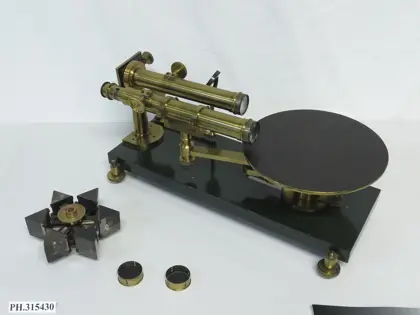
Jules Duboscq began making spectroscopes soon after Robert Bunsen and Gustav Kirchhoff announced their pioneering observations in this field, and by 1863 he could boast of having supplied instruments of this sort to numerous chemical laboratories and cabinets of physics. In this example, used at the U.S. Military Academy, the medium arm holds the slit facing the light source, the short arm holds a linear scale, the long arm holds the viewing telescope, and the central platform holds the prism that dispersed the light into a spectrum. The inscription reads “J. Duboscq / à Paris / No. 303.”
Ref: J. Duboscq, Catalogue Raisonés des Spectroscopes (Paris, 1870), p. 5.
Maison Jules Duboscq, Historique & Catalogue de tous les Instruments d’Optique Supérieure Appliqués aux Sciences et à l’Industrie (Paris, 1885), p. 52.
The museum's own record (Smithsonian, National Museum of American History)
Also by Jules Duboscq see all
Also made in Paris see all
 Jamin Apparatus
 Projection Polariscope
 Polariscope
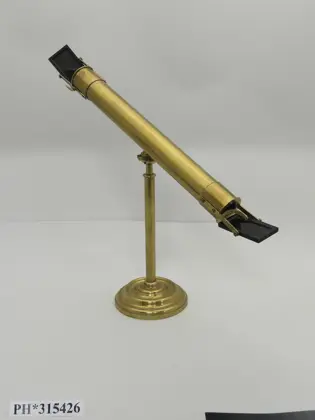 Polariscope
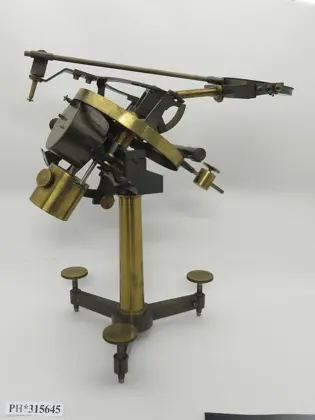 Heliostat
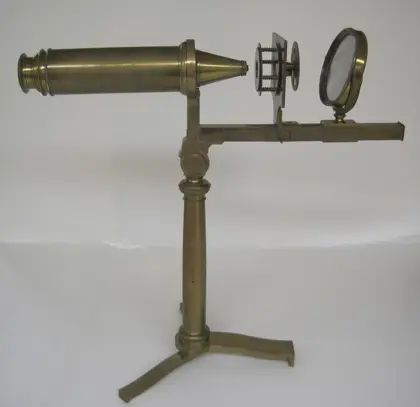 Microscope, Lerebours
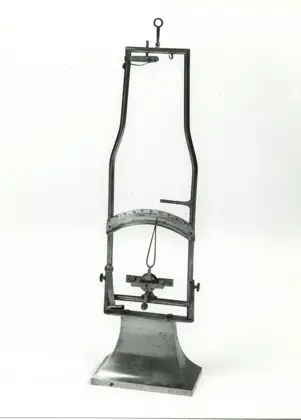 Hair Hygrometer
 Thomas Arithmometer
 Projection Polariscope
 Vibration Microscope
 Spectroscope
 Spectrometer
 Solar Microscope
 Melloni Bench
 Microscope
 Heliostat