The IDEA Lab
I started the IDEA Lab at Tufts more than eight years ago with Xuanjiang (William) Liu, who was then a Tufts undergraduate. The name stands for Innovation, Design, Engineering, and Action. Students from any school at Tufts join small teams that mix engineers, designers, psychologists, and policy students, and each team designs and builds something real around a human need. Students from other universities and from high schools take part too, and so do Tufts faculty and staff.
Why we started it
Students, even in their first year, want to work on real research. Most professors will not trust them with it until they have experience, and they cannot get experience without the chance. It is a chicken-and-egg problem. So William and I started a lab where students of any year, from any field, work on real projects from the start.
After a few years in industry, William is back at Tufts, doing his PhD in Markus Nemitz's group.
How a team works
The students run the projects. Each lab has student directors, who keep every project's leads moving and organized. Each team has one or two leads, who hold the vision, and one or two coordinators, who keep the schedule. A team has anywhere from five to more than twenty members, and larger teams split into sub-teams, such as a hardware team and a UX team, often with their own sub-leads. Each member gives four to five hours a week, including a weekly team meeting. Every student in the lab does this for no pay and no academic credit.
Projects run for many semesters, so each new team picks up the work where the last one left it and takes it further. A prototype from one year becomes the starting point for the next. Every team also has fixed public moments: progress presentations in the middle of each semester, and a poster showcase in the spring.
Each team is built from whatever its problem needs. The prosthetics team does CAD, interviews users, and researches the causes of pain. The team building an app for migrants needs coders, designers, and students who can research migration law and privacy.
- More than eight yearssince we started the lab at Tufts
- Two labsthe IDEA Human Factors Lab and IDEA Lab @ Fletcher
- Over 120 studentsacross the two labs in Spring 2026, on 11 major projects
- 13 projectsin Fall 2026, eight in the Human Factors Lab and five at Fletcher
- Over 100 applicantsfor those 13 projects this fall
From 12 students to over 120
The lab started with 12 students, and last spring it had over 120. Dozens of students join every semester, and hundreds have worked in it over more than eight years.
- 12 Year 1
- 26 Year 2
- 38 Year 3
- 48 Year 4
- 55 Year 5
- 75 Year 6
- 90 Year 7
- 120 Year 8
Why there are two labs
The original lab grew past 80 students, and splitting it was the only way to keep it working. So in Spring 2025 we launched a second lab, IDEA Lab @ Fletcher, at The Fletcher School, Tufts's graduate school of global affairs. It already has over 45 students.
The original lab
IDEA Human Factors Lab
Projects in assistive technology, ergonomics, virtual reality, music technology, and machine learning.
Since Spring 2025
IDEA Lab @ Fletcher
Digital tools for global problems: refugees' records, political instability, migration, and civic organizing. The two labs share one application and one set of policies.
The 13 projects this fall
IDEA Human Factors Lab, eight projects
- ProstheticsNew this fall, and the project students asked for most. The team is designing prosthetic liners and sockets that can be adjusted and let air through.
- AxisA clip-on motion controller for the guitar. Tilt, roll, or twist the guitar to shape effects like delay and reverb, and your hands stay on the strings. It also opens effects to players who cannot use foot pedals.
- Spatial MappingHelp for people with low or no vision to find their way indoors. Wearable sensors turn distance into spatial sound, something like a virtual white cane.
- Owl HeadResearch in virtual reality on remapping your point of view: the view turns faster than your head does, so you can take in more of the world around you.
- DentistryDental tools were designed around the average male hand, and more than half of dentists develop muscle or joint disorders. The team is designing an attachable grip for the explorer, the tool dentists use most.
- Design EvolutionEvolving product designs by computer, with people choosing what survives.
- PlastibotMachine learning that sorts plastics from hyperspectral images. It looks for the few bands of light that matter, so cheaper cameras could do the sorting in places like landfills.
- SoundSketchA VR piece that records how you move while you listen to music and turns those movements into sound and visuals for the next listener. It used to be called Synesthesiazer.
IDEA Lab @ Fletcher, five projects
- Digital OasisA secure cloud store for the documents, photos, and contacts of refugees and displaced people, so they can keep proof of who they are through displacement. It is built to work offline and in many languages.
- Instability InsightsA live dashboard of political instability that tracks protests, coups, economic distress, and conflict risk, for journalists, policy experts, and humanitarian responders.
- Fletcher @ 100A website for The Fletcher School's centennial, where alumni oral histories, archival photographs, and timelines come together.
- Migrant CompassAn app that gives migrants up-to-date information for where they are: safe routes, border wait times, legal requirements, and medical aid.
- Tools for DemocracyA platform that helps first-time organizers get from wanting to do something to building something real, with resources, task flows, templates, and peer support.
Earlier roots
Early roots of the IDEA Lab in Enterprise by Design
Years before Tufts, in 2010, at Bangor University in Wales, I helped design Enterprise by Design (EbD), an evening program that ran like a creative startup. Students from psychology, business, design, and engineering worked in mixed teams on a real company's brief. They went from problem to prototype to business case, and then pitched to a panel of experts for cash prizes. It was a separate program, but some of the ideas behind the IDEA Lab first showed up there.
The part I still use is how the teams were set up. Each mixed team had one student from each school, and that team designed the product. Students from the same school also met as a group, with their own academic, to decide what would count as good in their field: emotional appeal and ease of use for psychology, the market for business, user needs for design, and function for engineering. Those criteria went back to the mixed teams and were used to judge their work.
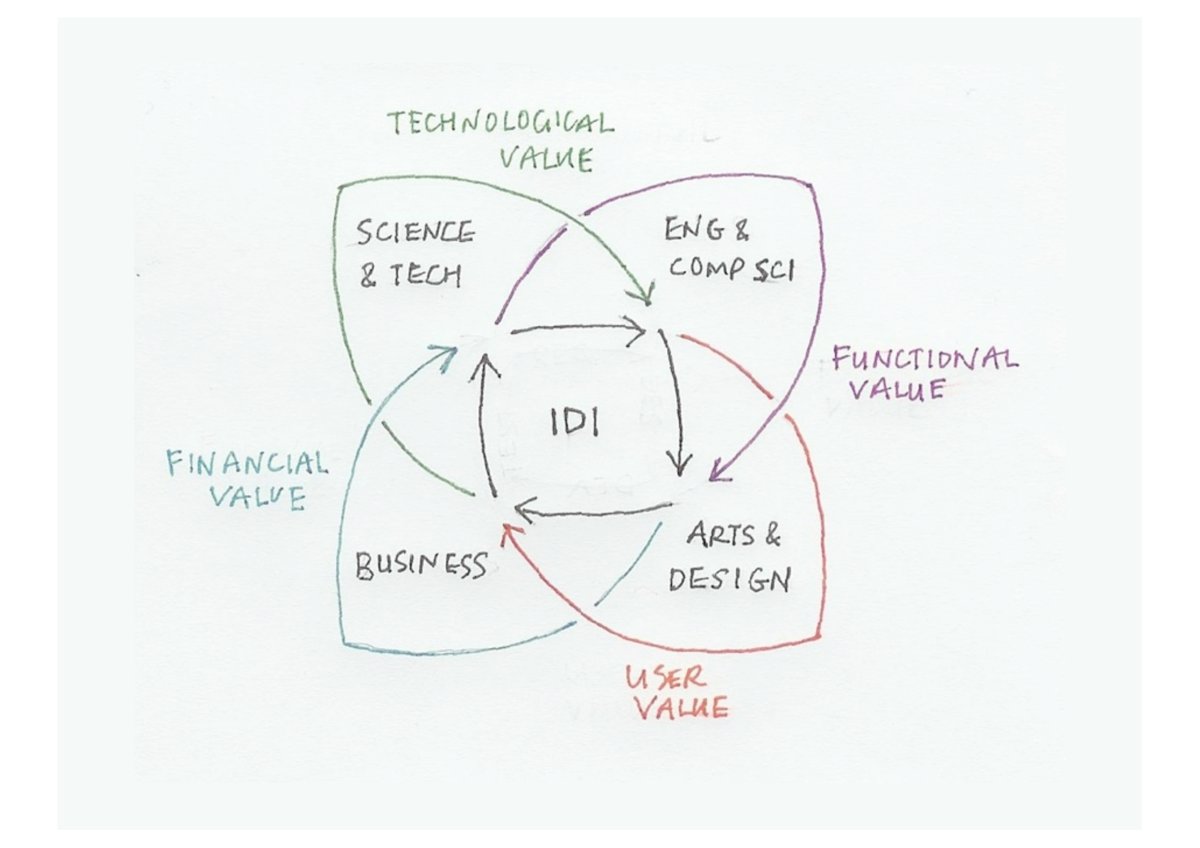
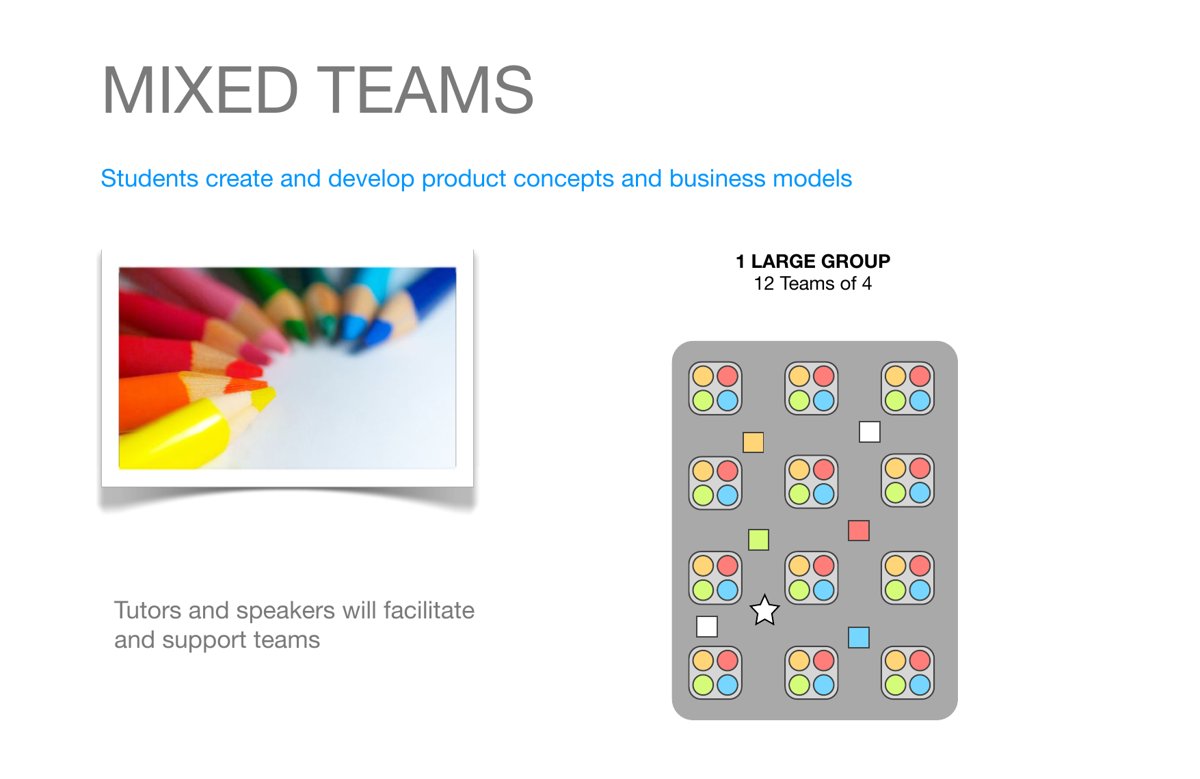
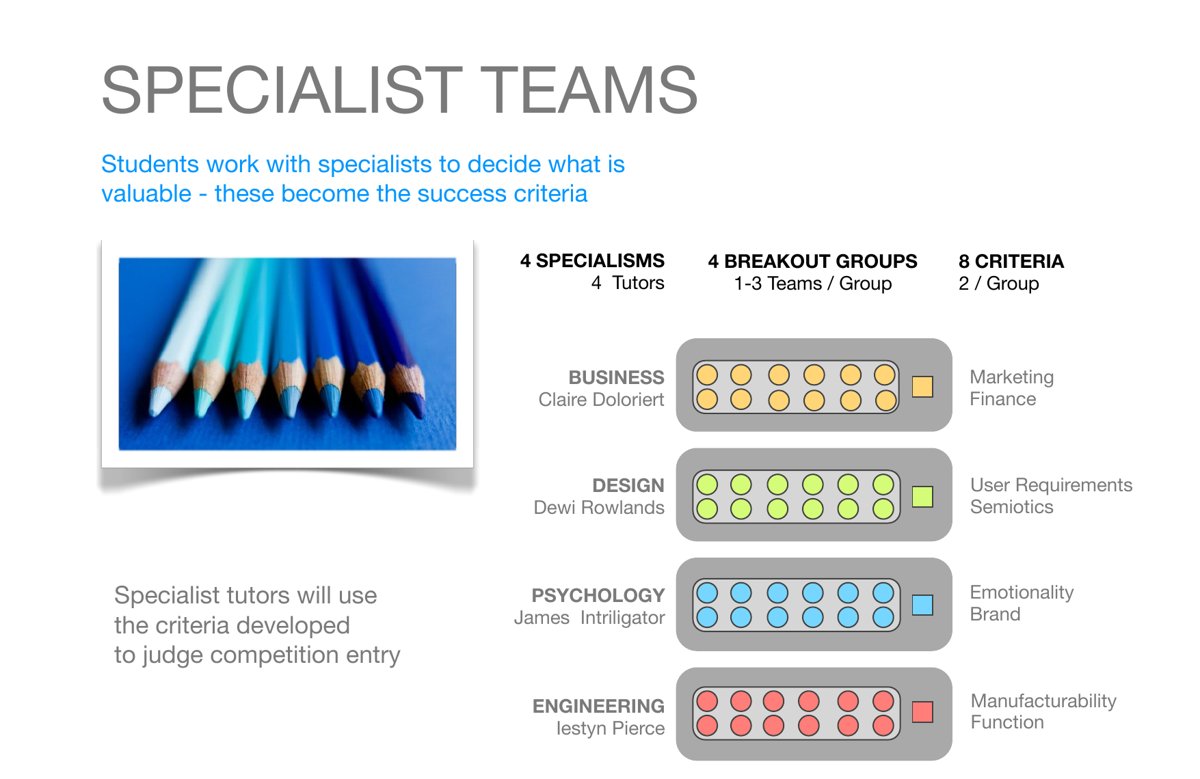
Over its first three years, 172 undergraduates, 20 postgraduates, 10 academics, and 20 companies took part. Clients included the outdoor brand Gelert and DMM, a climbing-equipment maker in Llanberis. Our 2010 study, presented as a poster at the International Entrepreneurship Educators Conference in Cardiff, found that students came out more confident and less risk-averse, and with fewer stereotypes about the other disciplines.
EbD was a team design. It grew out of the Welsh Government's Academic Champions of Enterprise program, and it was coordinated by Lowri Owen and Ceri Jones, with Andy Goodman, Chris Walker, and academics from each school, including Dewi Rowlands, Iestyn Pierce, Claire Doloriert, and Eben Muse. Andy Goodman led it for years after I left, and in 2021 it won the Enterprise Catalyst award at the National Enterprise Educator Awards.
The paper about the lab
With five co-authors, all current or past directors of the lab, I wrote a chapter on how the lab works for a 2025 book from the International Federation of National Teaching Fellows.
Liu, X., Manor, Y., Liao, G., Wang, D., Joseph, J., and Intriligator, J. (2025). "IDEA Lab: A Mechanism for Transformation, Engagement, and Community Through Interdisciplinary Innovation and Leadership." In M. A. Doolan and L. Ritchie (Eds.), Leading Global Excellence in Pedagogy: Transforming Teaching Excellence: Future Proofing Education for All. IFNTF Publishing UK. ISBN 978-1-7393772-2-9.
In progress
Since the beginning, the plan has been to create an open-source framework and tools, a sort of "IDEA Lab in a Box," so that any professor, at any university, could start their own IDEA Lab. We have been documenting all our processes, roles, presentations, and lessons learned, so that we can create the blueprint for others. If you are interested in getting involved in that effort, please get in touch!
With SeeDegree, I am developing a short survey to measure what the lab does for students: their confidence, sense of belonging, collaboration, and leadership.
Joining
Tufts students who want to join a team can find out how on each lab's page.