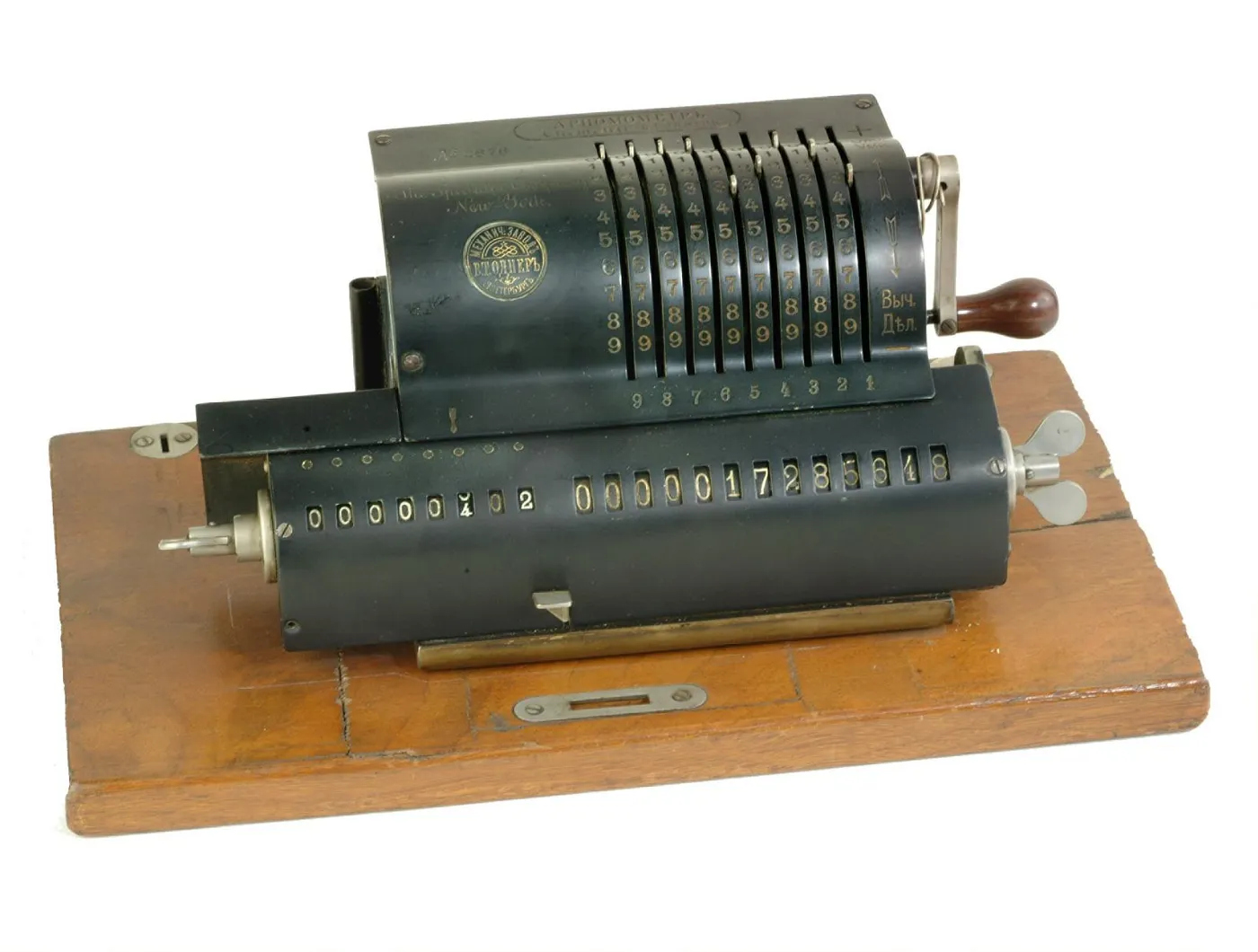
Odhner Arithmometer
Turning a crank and setting dials multiplied and divided numbers, saving clerks from doing the long arithmetic by hand.
- Date
- ca 1896
- Maker
- W. T. Odhner
- Place
- Russia: Saint Petersburg, St. Petersburg
- Materials
- brass (overall material); steel (overall material); wood (overall material)
- Dimensions
- overall: 14 cm x 34.2 cm x 20.6 cm; 5 1/2 in x 13 15/32 in x 8 1/8 in
- Museum
- National Museum of American History
- Credit line
- Gift of Victor Comptometer Corporation
In about 1886 the Swede W. T. Odhner, who worked in St. Petersburg, Russia, opened his own shop where he worked on improvements to the pinwheel calculating machine he had introduced the previous decade. By 1890, Odhner had a commercial product, and had begun to produce calculating machines in some numbers. In 1893 he exhibited his arithmometer, or reckoning machine, at the Columbian Exposition, a World’s Fair held in Chicago.
This is an example of an Odhner arithmometer from the 1890s. The machine has a brass frame, painted black, with eight metal pinwheels and a wooden base. Numbers are set by rotating the pinwheels forward, using levers that extend from the wheels. Digits inscribed on the frame next to the rotating pinwheels show the number set. The machine has no separate set of windows to show these digits.
The carriage is at the front of the machine, with eight windows for the revolution counter on the left and 13 windows for the result register on the right. Wing nuts at opposite ends of the carriage zero these registers. To release the carriage, one pushes down a lever at the front. the machine has no metal holds to ease the shifting. A crank with a wooden knob on the right side of the machine rotates clockwise for addition and multiplication, and counterclockwise for subtraction and division. The machine has no decimal markers.
A mark on the top reads: No 2676. Another mark there reads: The Spectator Company (/) New York
Compare MA.328418.
According to the Odhner History, W. T. Odhner manufactured calculating machines in Russia on his own from 1886 until his death in 1905. According to Timo Leiipälä, from 1892 until 1896 Odhner manufactured calculating machines in conjunction with an Englishman named Hill. These machines are marked (in Cyrillic) Odhner and Hill. There appears to be no mention of Hill on this machine. By the time Odhner manufactured machine number 2490, Hill was no longer in the picture. Leipälä dates the machine to between 1896 and 1899. The Spectator Company of New York was the U.S. agent for the Odhner calculating machine from at least 1897 through at least 1903. In 1897 it advertised this model of the Odhner as selling for $125.
References:
Timo Leipälä, “The Life and Works of W. T. Odhner,” Greifswalder Symposium zur Entwicklung der Rechentechnik, ed. W. Girbardt, Greifswald: Univ. Greifswald, Inst. für Mathematik und Informatik, 2003 and 2006.
Timo Leipälä, Personal communication.
Henry Wassen, Odhner History, Gothenburg, Aktiebolaget Original-Odhner, 1951.
The Spectator Company, The Insurance Year Book 1897-8, New York, 1897, p. 30.
The museum's own record (Smithsonian, National Museum of American History)
Also answering “How much?” see all
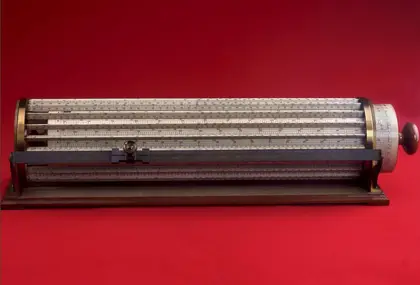 Keuffel & Esser 1741 Thacher Cylindrical Slide Rule
 Peerless hanging letter scale
 Odometer by J. D. Roberts
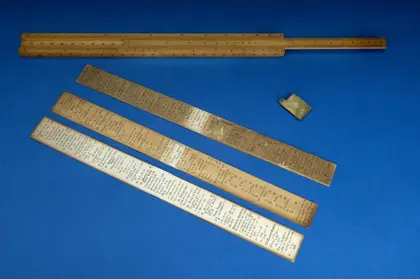 Patent Model for Simplex Slide Rule Clasp Invented by Rudolph C. Smith
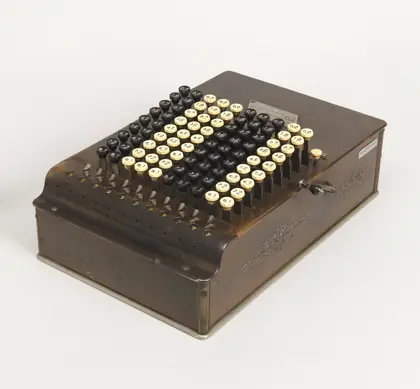 Comptometer
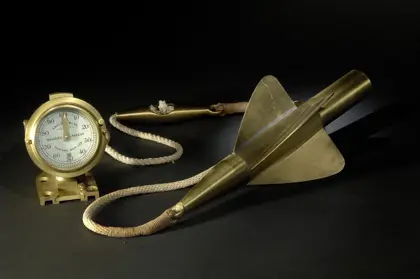 Log and Rotor, Patent Model
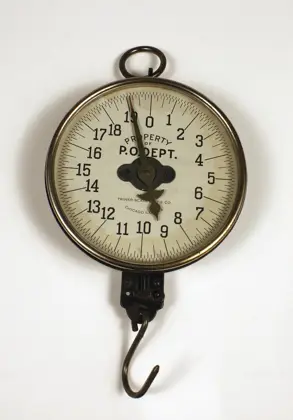 Triner postal scale
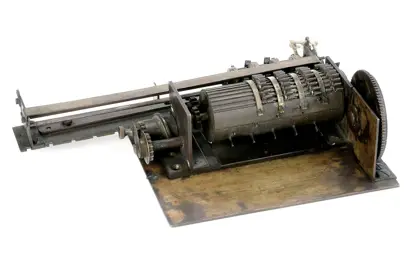 Barbour Calculating Machine
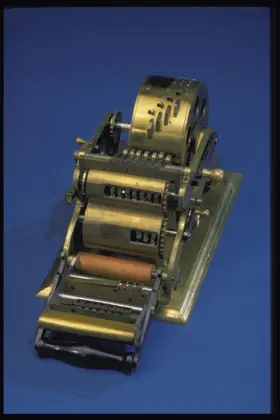 Baldwin Calculating Engine
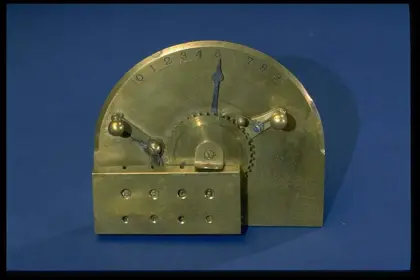 Baldwin Arithmometer
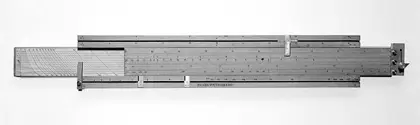 Patent Model for Estimator Slide Rule Invented by Fredric Maurice Stapff
 Barbour Calculating Machine Model