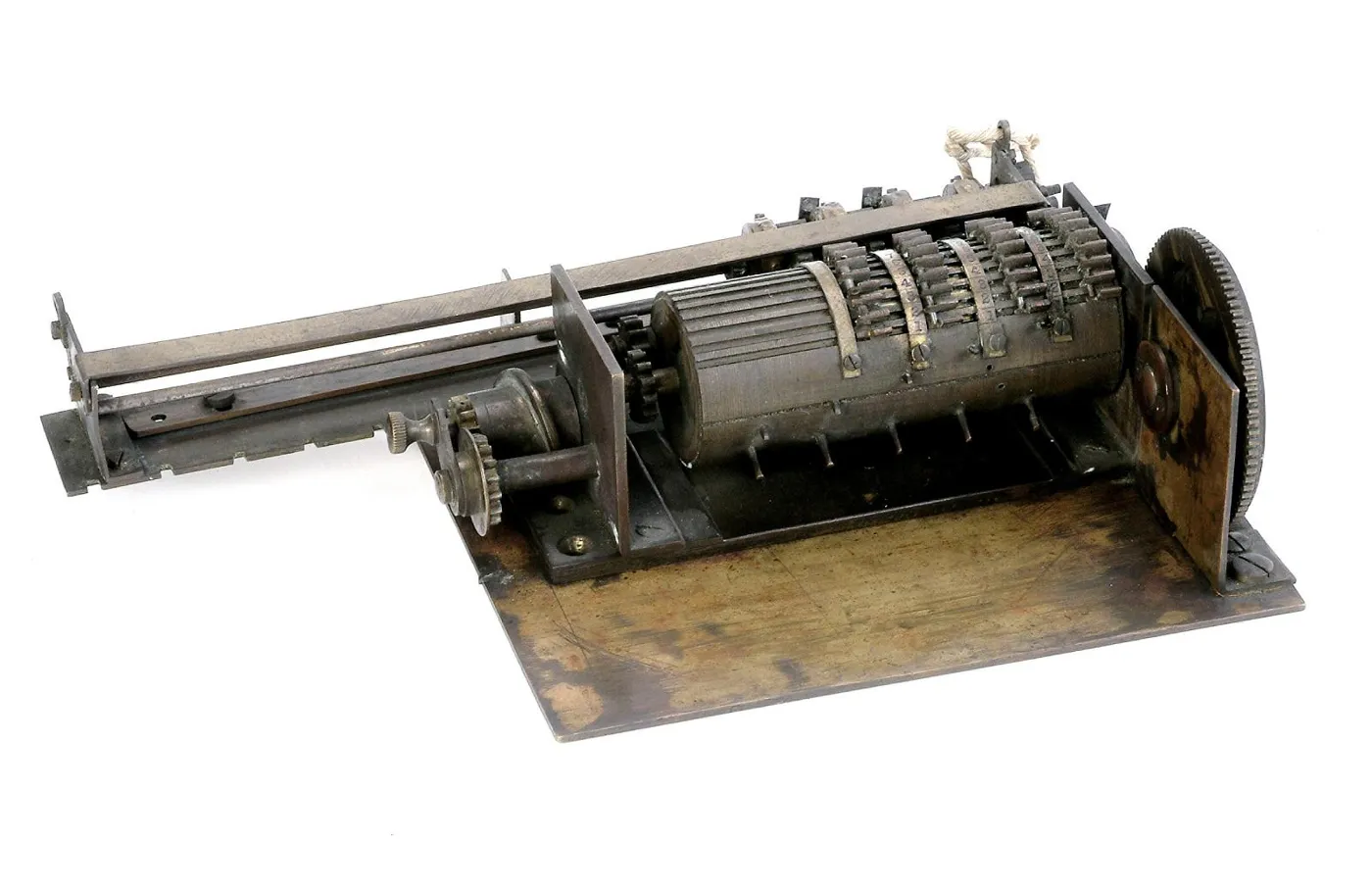
Barbour Calculating Machine
Setting digits on its wheels or keys added and multiplied numbers mechanically, so a clerk did less arithmetic by hand.
- Date
- 1875
- Maker
- Edmund D. Barbour
- Place
- United States: Massachusetts, Boston
- Materials
- brass (overall material)
- Dimensions
- overall: 5.5 cm x 19 cm x 12.2 cm; 2 5/32 in x 7 15/32 in x 4 13/16 in
- Museum
- National Museum of American History
- Credit line
- Gift of L. Leland Locke
This small brass U.S. Patent Office model of a calculating machine is a modification of Edmund D. Barbour’s two earlier machines. It has a rectangular base on which is mounted crosswise a rotating cylinder. The cylinder has nine crosswise grooves that fill somewhat less than a quarter of the surface. Metal bands separate the grooves into columns, and each column has a set of nine sliding markers that fit in the grooves. Sliding these markers sets a number. There also is an array of pins around the cylinder, which is used in carrying. There are gears on both sides of the cylinder.
The registering mechanism has an open frame that holds three rods. One rod holds four type wheels, and the other two rods hold four gears each. Each type wheel has the numbers from 0 to 9.
The machine has no maker’s marks.
Compare 309172, 309173, and 318168.
The Edmund D. Barbour who took out this patent was probably Edmund Dana Barbour (1841–1925), a Boston native. He reportedly gained a fortune in the China trade, returning to Boston in 1871. Barbour took out two other patents for calculating machines; invested successfully in the Bell Telephone Company; carried out extensive genealogical research; and left most of his fortune in bequests to Harvard University, the Massachusetts Institute of Technology, and Radcliffe College. The model apparently did not lead to a successful product.
References:
U.S. Patent 168080, September 28, 1875.
J. A. V. Turck, Origin of Modern Calculating Machines, Chicago: Western Society of Engineers, 1921, pp. 180–187.
“Sharon’s Rich Men,” Boston Daily Globe, February 20, 1888, p. 6.
“Fund for Three Local Colleges: Edmund D Barbour’s Will Gives Each $20,000 a Year,” Boston Daily Globe, March 13, 1925.
Kwang-Ching Liu, Anglo-American Steamship Rivalry in China, Cambridge: Harvard University Press, 1962, esp. pp. 92–98, 128.
J. Gardner Bartlett, “Edmund Dana Barbour,” The New England Historical and Genealogical Register , vol. 79, October, 1925, pp. 339–344. This obituary does not mention any inventive activity of Barbour.
The museum's own record (Smithsonian, National Museum of American History)
Also by Edmund D. Barbour see all
Also made in Boston see all
 Winlock & Huddleston Psychrometer
 Barbour Calculating Machine Model
 Chronograph
 Liquid Compass
 Bond Marine Chronometer
Also answering “How much?” see all
 Baldwin Calculating Engine
 Baldwin Arithmometer
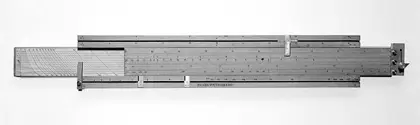 Patent Model for Estimator Slide Rule Invented by Fredric Maurice StapffBarbour Calculating Machine Model
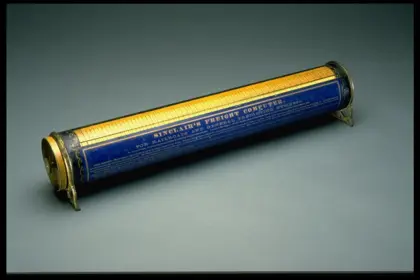 Rotating Mathematical Table, Sinclair's Freight Computer
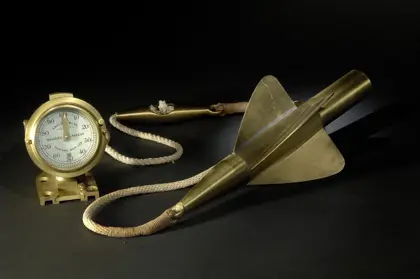 Log and Rotor, Patent Model
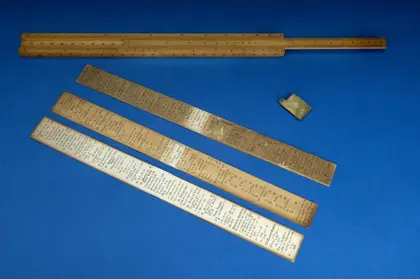 Patent Model for Simplex Slide Rule Clasp Invented by Rudolph C. Smith
 Comptometer
 Burns Addometer
 Hill Arithmometer
 Keuffel & Esser 1741 Thacher Cylindrical Slide Rule
 Odhner Arithmometer