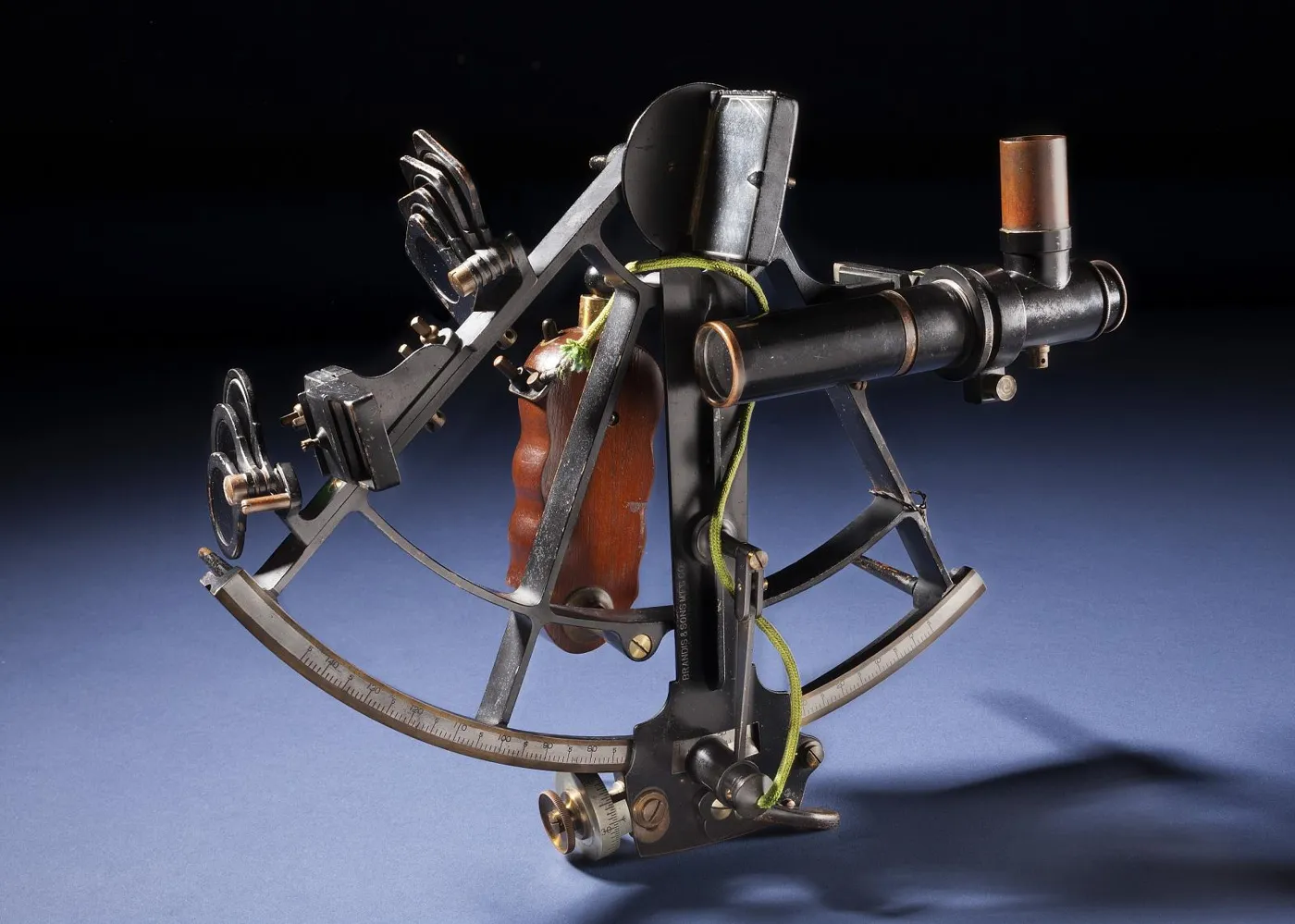
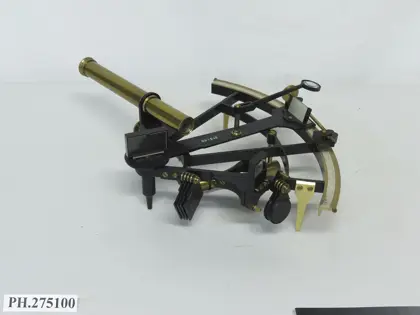
Sextant, Brandis, with Willson Bubble Telescope, Early
A navigator sighted a star or the sun, and a floating bubble served as the horizon, so it worked in clouds or at night.
- Date
- ca. 1919
- Maker
- Brandis & Sons Inc.
- Place
- United States of America
- Materials
- Wood, brass, steel, glass, paper, felt, paint
- Dimensions
- 3-D (L x W x H) (In Box): 27.7 × 28.6 × 14.6cm (10 7/8 × 11 1/4 × 5 3/4 in.); 3-D (L x W x H) (upright): 24.1 × 10.2 × 28.9cm (9 1/2 × 4 × 11 3/8 in.)
- Museum
- National Air and Space Museum
- Credit line
- Transferred from the Department of Commerce
270mm long, 240mm high, 100mm wide; bubble type; illuminated.
The museum's own record (Smithsonian, National Air and Space Museum)
Also answering “Where am I?” see all
 Plotter, Drift
 Receiver, Radio Range, ARC, Lab Prototype, Model B
 Sight, Drift & Ground Speed, Gatty
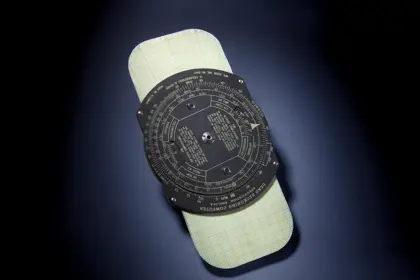 Dead Reckoning, E-6B, Prototype
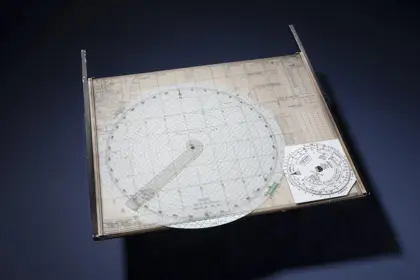 Plotting Board, Navy, Mark 3A
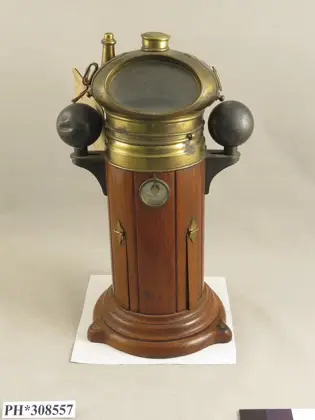 Dry Card Compass with Binnacle
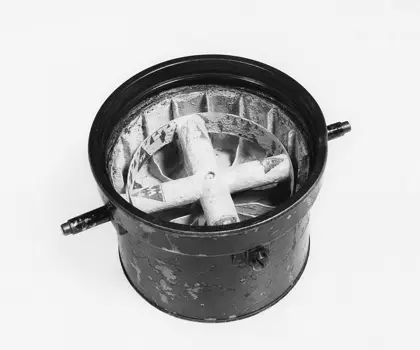 Liquid Compass
 Sextant
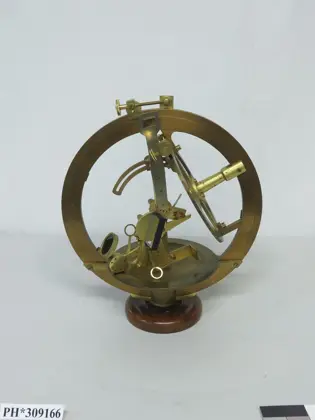 Equatorial Sextant
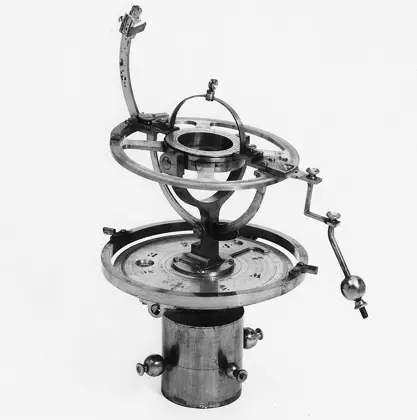 Solar Compass
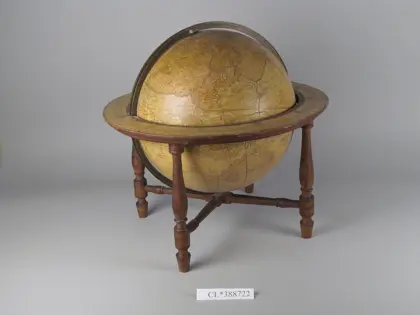 James Wilson's Terrestrial Globe, 1811
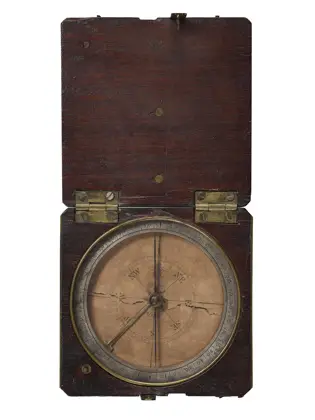 Pocket compass from the Lewis and Clark Expedition, 1804-1806