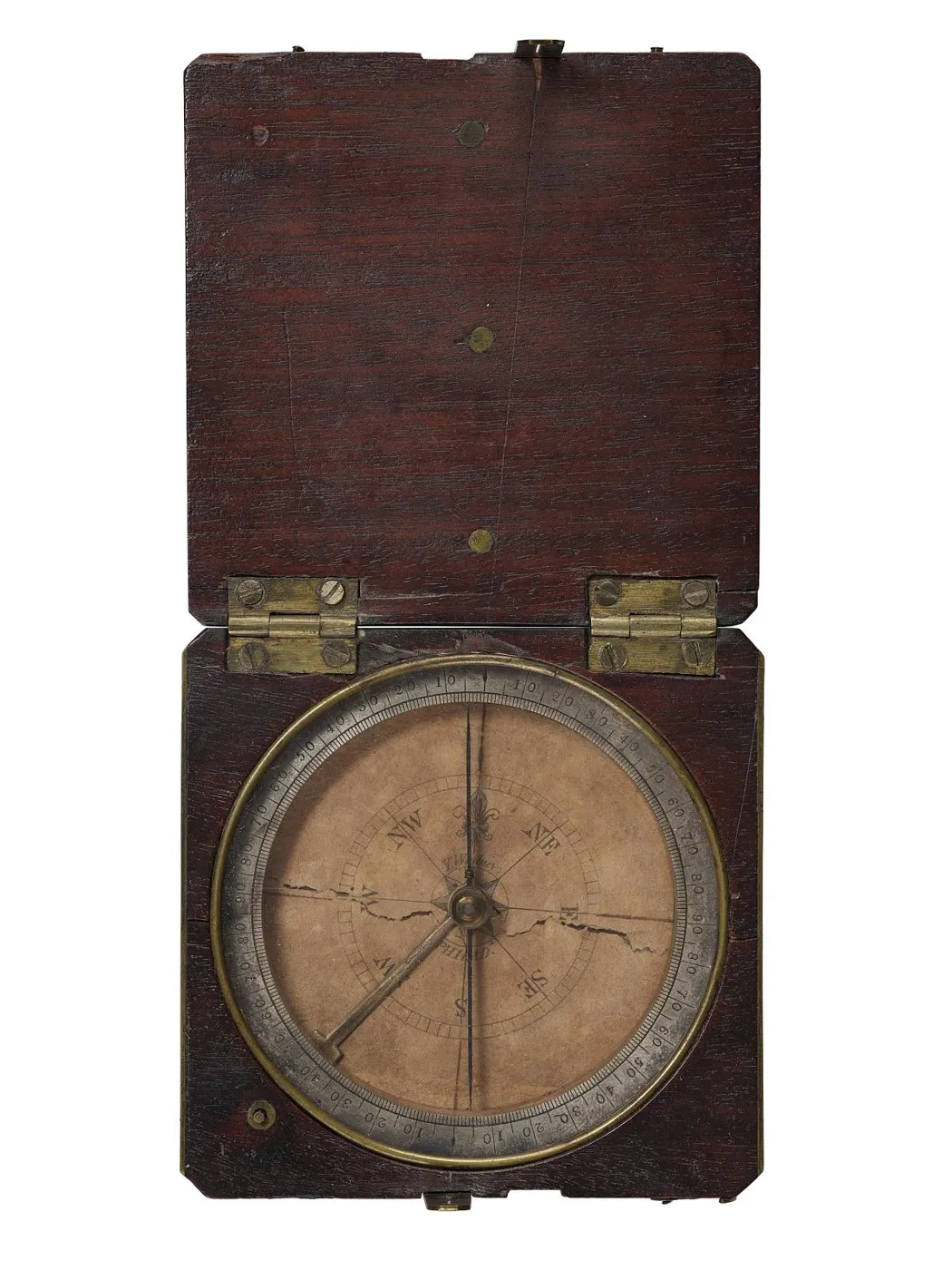
Pocket compass from the Lewis and Clark Expedition, 1804-1806
A small magnetic needle showed north, so the Lewis and Clark party could keep track of their direction.
- Date
- ca 1804
- Maker
- Thomas Whitney
- Place
- United States: Pennsylvania, Philadelphia
- Materials
- wood, mahogany (overall material); brass (overall material); silver plate (overall material)
- Dimensions
- closed: 3 1/2 in x 3 1/2 in x 1 1/2 in; 8.89 cm x 8.89 cm x 3.81 cm
- Others named in the record
- Clark, William (user)
- Museum
- National Museum of American History
- Credit line
- Mary McCabe
In the spring of 1803, Meriwether Lewis began to purchase scientific and mathematical instruments for a pending expedition into the northwestern region of North America. Among the items he purchased from Philadelphia instrument maker Thomas Whitney were three pocket compasses for $2.50 each, and this silver-plated pocket compass for $5. It has a mahogany box, a silver-plated brass rim that is graduated to degrees and numbered in quadrants from north and south, a paper dial, two small brass sight vanes, and a leather carrying case. Whether Lewis purchased the silver compass for himself or intended it as a special gesture for William Clark is not known.
Following the instructions of President Thomas Jefferson, the Corps of Discovery, under the leadership of Lewis and Clark, ascended the Missouri River in May 1804 to obtain detailed information on the natural resources of the region, to search for a northwest passage, and to make official diplomatic contact with Indian leaders.
By the time they returned to St. Louis in September 1806, few of the instruments that were purchased for the trip had survived the journey. The pocket compass, however, was kept by Clark as a memento. He later gave the compass to his friend, Capt. Robert A. McCabe, whose heirs donated it in 1933 to the Smithsonian Institution.
The museum's own record (Smithsonian, National Museum of American History)
Also made in Philadelphia see all
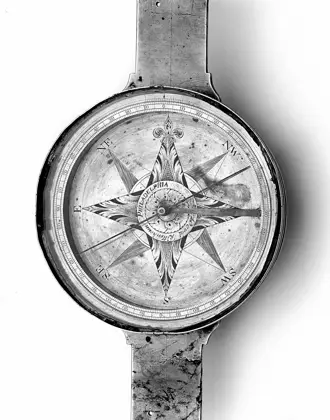 Surveyor's Vernier Compass
 Patent Model for Circular Slide Rule Invented by John W. Nystrom
 William W. Wythes Cyclo-Ellipto-Pantograph Patent Model
 Baldwin Arithmometer
 polariscope
Also answering “Where am I?” see all
 James Wilson's Terrestrial Globe, 1811Surveyor's Vernier Compass
 Solar Compass
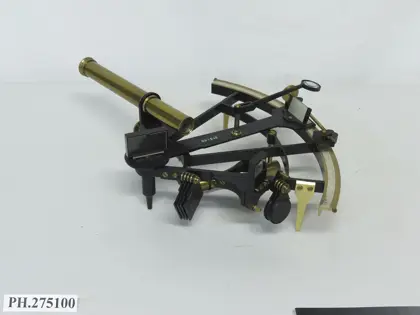 Sextant
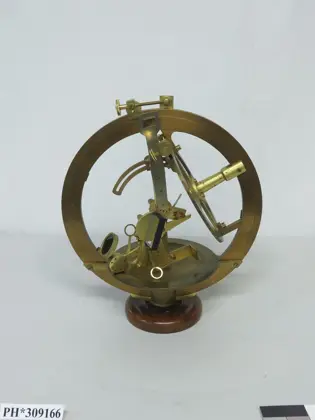 Equatorial Sextant
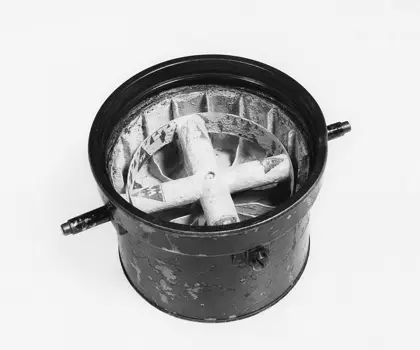 Liquid Compass
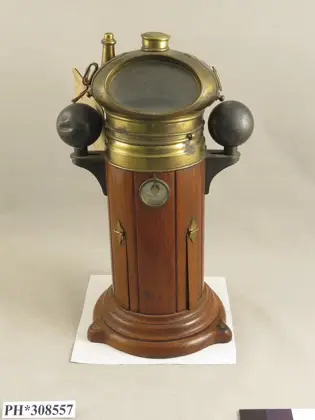 Dry Card Compass with Binnacle
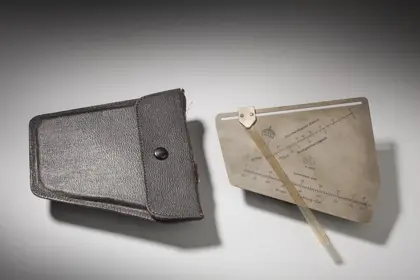 Plotter, Drift
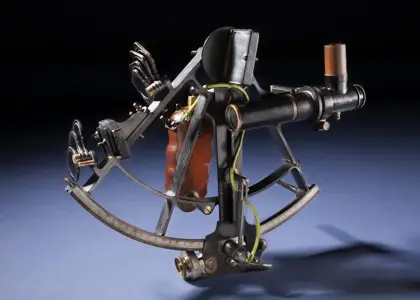 Sextant, Brandis, with Willson Bubble Telescope, Early
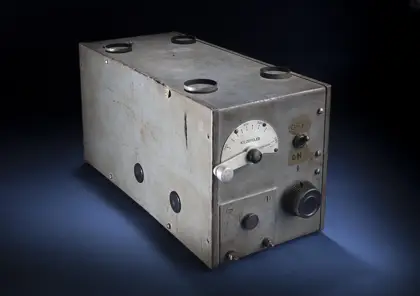 Receiver, Radio Range, ARC, Lab Prototype, Model B
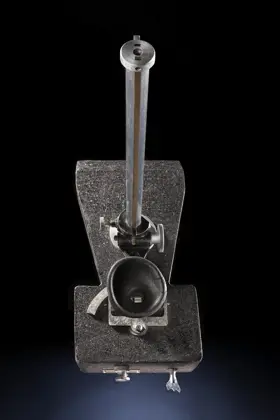 Sight, Drift & Ground Speed, Gatty
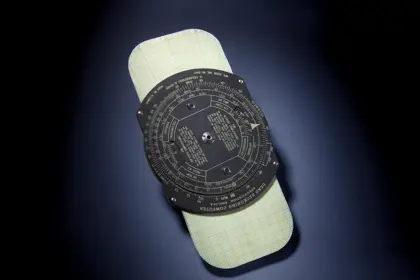 Dead Reckoning, E-6B, Prototype