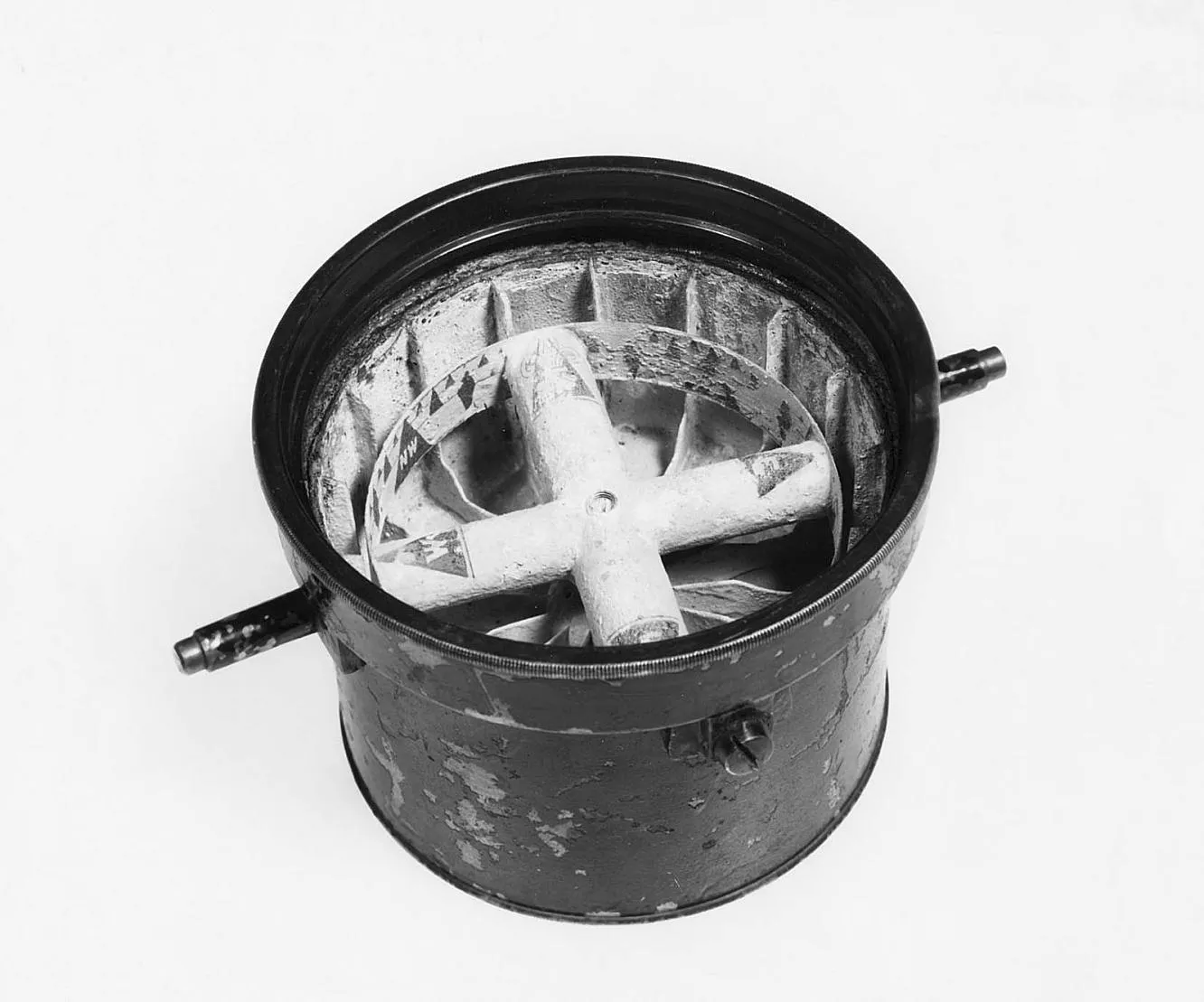
Liquid Compass
A compass card floating in liquid stayed steady on a rolling ship, so the helmsman could read direction easily.
- Date
- 1863
- Maker
- Edward S. Ritchie
- Place
- United States: Massachusetts, Boston
- Dimensions
- overall: 3 5/8 in x 5 1/4 in x 7 1/4 in; 9.2075 cm x 13.335 cm x 18.415 cm; overall: 3 1/2 in x 7 1/2 in x 5 1/4 in; 8.89 cm x 19.05 cm x 13.335 cm
- Museum
- National Museum of American History
Edward S. Ritchie of Boston developed the first successful liquid compass in 1862 and introduced several improvements over the course of the next two decades. This is the model for Ritchie’s third patent (#38,126) of April 7, 1863. Three features should be noted. The magnetic needle is enclosed in an air-tight metallic case and, with the card, is very nearly the same specific gravity as the liquid. The needle float is in the form of crossed cylinders. An elastic chamber compensates for the unequal expansion of the liquid and the bowl.
The U.S. Patent Office transferred this compass to the Smithsonian in 1926. An attached Patent Office tag reads: "No. 38,126 E. S. Ritchie. Mariner’s Compass. Patented Apl 7th 1863."
Ref: "Improved Ship’s Compass," Scientific American 11 (1864): 52.
"The Liquid Compass," Journal of the Franklin Institute 85 (1868): 218-221.
The museum's own record (Smithsonian, National Museum of American History)
Also made in Boston see all
 Chronograph
 Barbour Calculating Machine Model
 Winlock & Huddleston Psychrometer
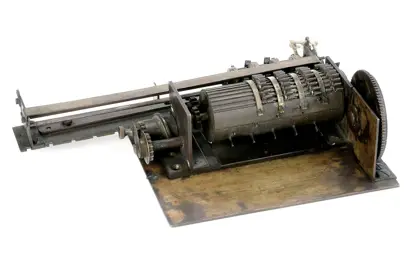 Barbour Calculating Machine
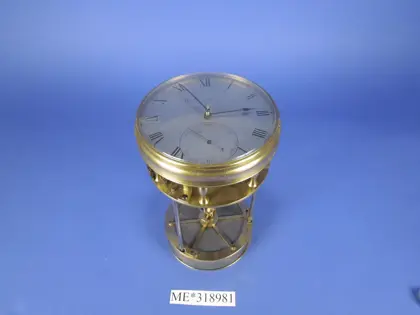 Bond Marine Chronometer
Also answering “Where am I?” see all
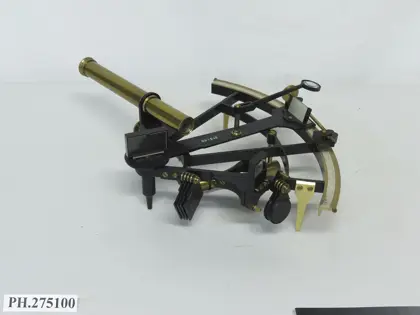 Sextant
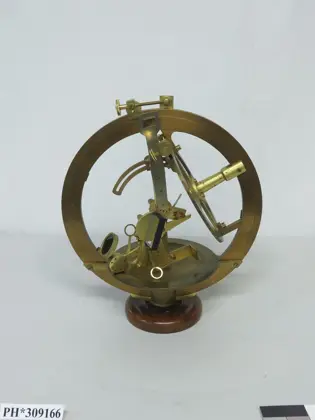 Equatorial Sextant
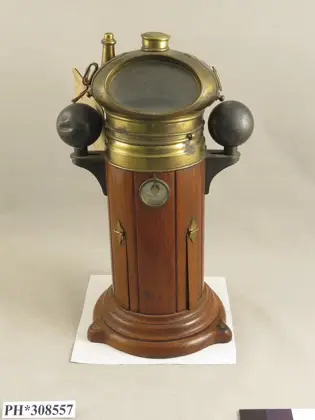 Dry Card Compass with Binnacle
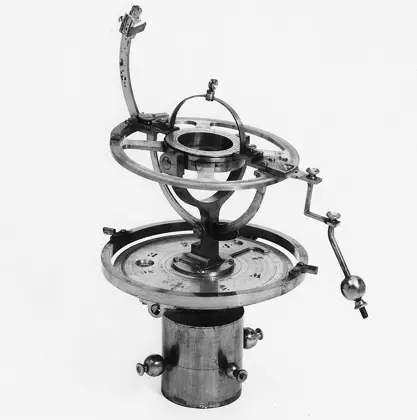 Solar Compass
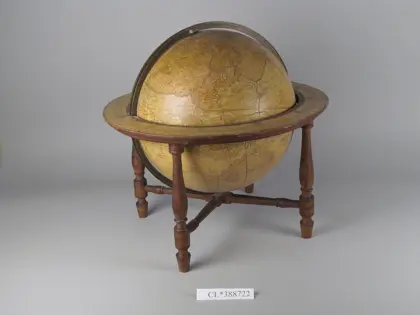 James Wilson's Terrestrial Globe, 1811
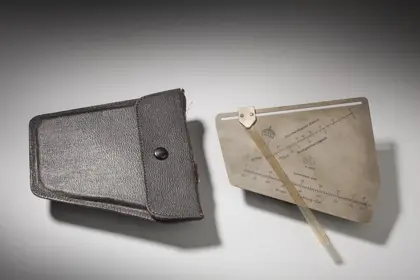 Plotter, Drift
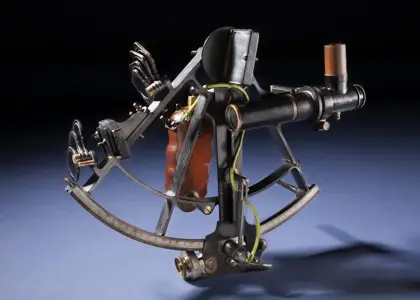 Sextant, Brandis, with Willson Bubble Telescope, Early
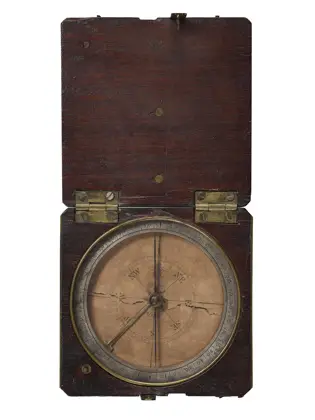 Pocket compass from the Lewis and Clark Expedition, 1804-1806
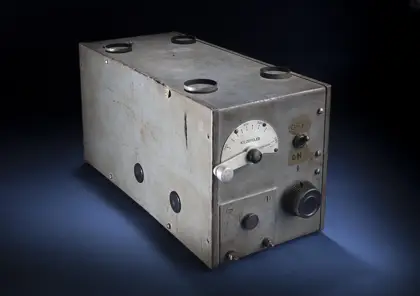 Receiver, Radio Range, ARC, Lab Prototype, Model B
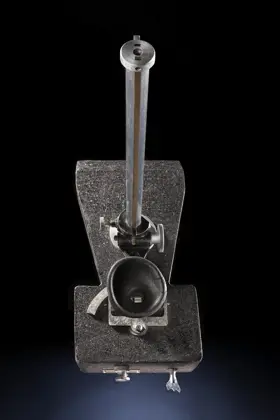 Sight, Drift & Ground Speed, Gatty
 Surveyor's Vernier Compass
 Dead Reckoning, E-6B, Prototype