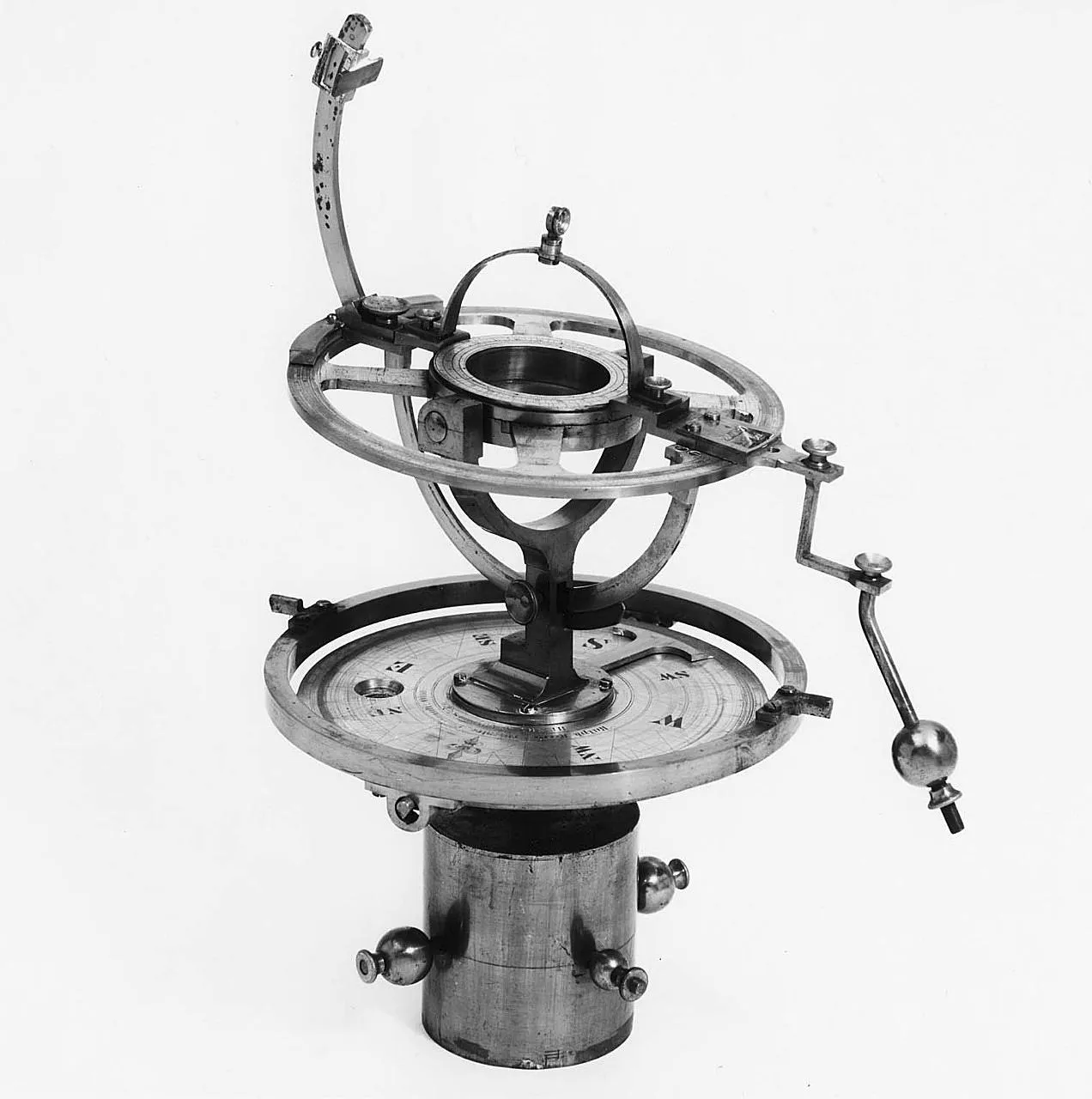
Solar Compass
- Date
- 1840s
- Maker
- Henry Ware
- Place
- United States: Ohio, Cincinnati
- Dimensions
- overall: 15 in x 8 in; 38.1 cm x 20.32 cm; overall: 16 in x 9 in; 40.64 cm x 22.86 cm
- Museum
- National Museum of American History
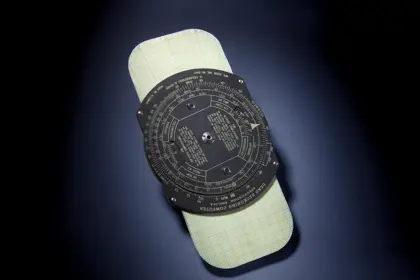
Patent model for Ralph Reeder, "Mariner's Time Compass," U.S. Patent #4,964 (1847). The inscription reads "Ralph Reeder Patentee, Cincinnati, Ohio. HENRY WARE, MAKER, CINCINNATI, O." Henry Ware (1810-1885) was a leading instrument maker in Cincinnati.
Scientific American reported that this instrument combines "three important uses." It shows "the local variation of the magnetic needle with unerring certainty," "the altitude of the sun, and thus enables the mariner readily to compute latitude." and "the true time" and thus "by the aid of the chronometer, shows the longitude." Despite journal's opinion that Reeder’s instrument "appears to be a practically useful invention," the Mariner’s Time-Compass was not a commercial success.
Ref: "Improved Nautical Instrument," Scientific American 12 (1856): 4.
The museum's own record (Smithsonian, National Museum of American History)
Also answering “Where am I?” see all
 Sextant
 Equatorial Sextant
 Liquid Compass
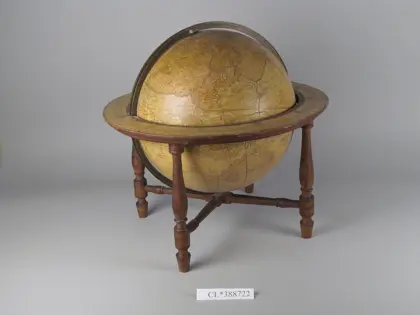 James Wilson's Terrestrial Globe, 1811
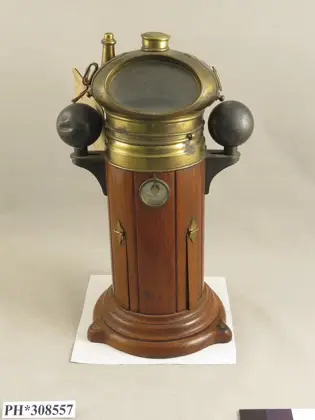 Dry Card Compass with Binnacle
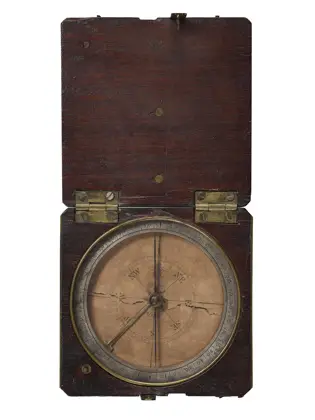 Pocket compass from the Lewis and Clark Expedition, 1804-1806
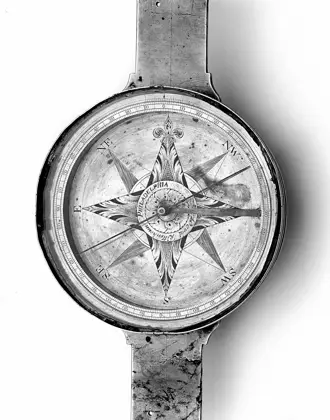 Surveyor's Vernier Compass
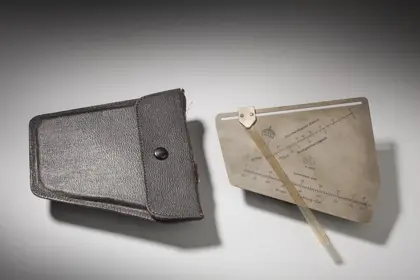 Plotter, Drift
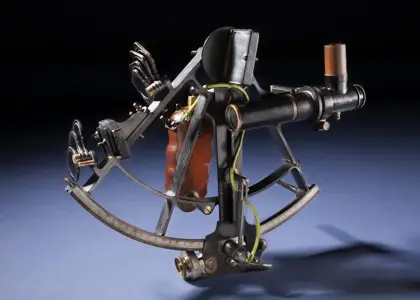 Sextant, Brandis, with Willson Bubble Telescope, Early
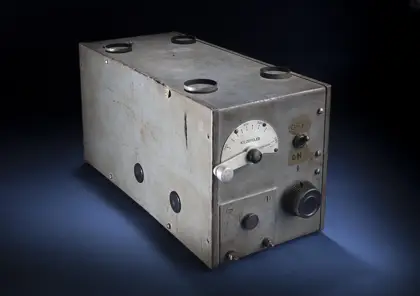 Receiver, Radio Range, ARC, Lab Prototype, Model B
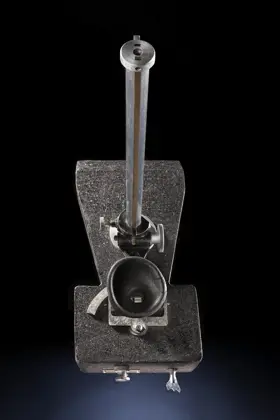 Sight, Drift & Ground Speed, Gatty
 Dead Reckoning, E-6B, Prototype