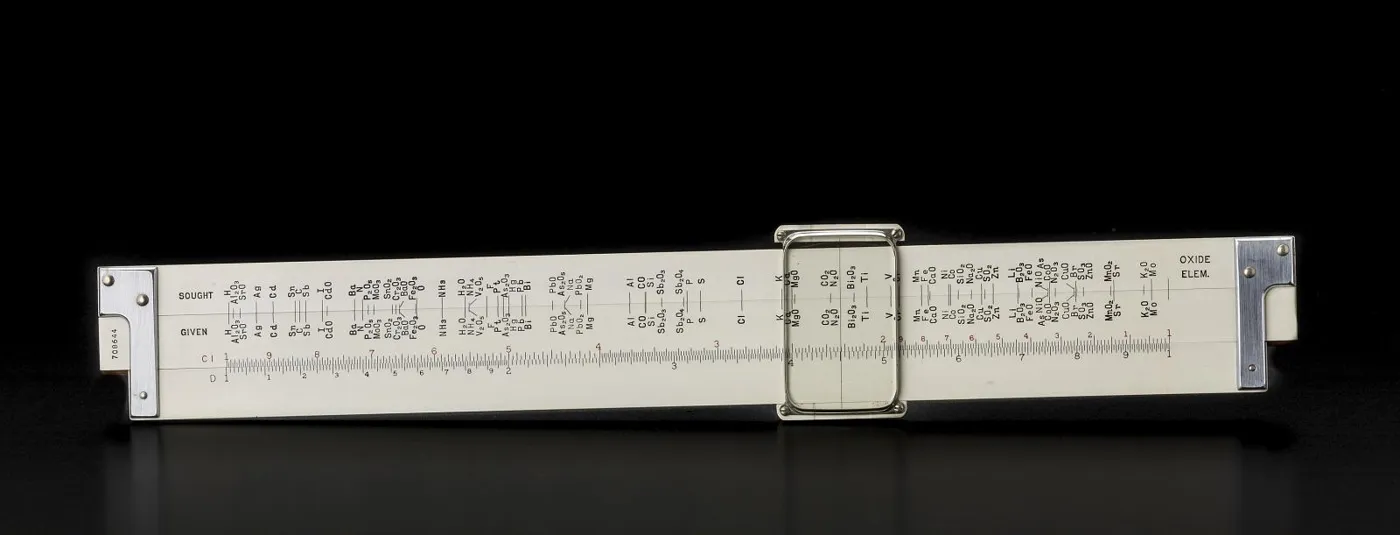
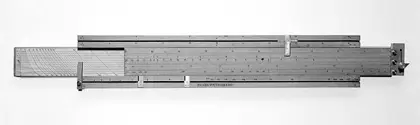
Slide Rule, Chemical, Sally Ride
Sliding the middle strip against the fixed scales multiplied and divided numbers, with special scales for chemistry problems.
- Maker
- Keuffel & Esser Company
- Place
- United States of America
- Materials
- Laminate Wood, Plastic, Ink, Copper Alloy, Non-Magnetic White Metal Plating, Adhesive
- Dimensions
- 3-D: 31.9 × 5.1 × 1.1cm (1 ft. 9/16 in. × 2 in. × 7/16 in.)
- Others named in the record
- Sally K. Ride (Owner)
- Museum
- National Air and Space Museum
- Credit line
- Gift of Tam O'Shaughnessy
This chemical slide rule used for determining the mass of atoms and molecules belonged to Dr. Sally K. Ride. Before pocket-sized electronic calculators became available in the 1970s, slide rules were used as an aid to complex mathematical operations. Ride used this device as a university student.
Sally Ride became the first American woman in space when she flew on the STS-7 shuttle mission in 1983. Her second and last space mission was STS-41G in 1984. A physicist with a Ph.D., she joined the astronaut corps in 1978 in the first class of astronauts recruited specifically for the Space Shuttle Program. Viewed as a leader in the NASA community, she served on the Rogers Commission after the Challenger accident in 1986 and the Columbia Accident Investigation Board in 2003. She also led the task force that produced a visionary strategic planning report in 1987, titled “NASA Leadership and America’s Future in Space” but known popularly as the "Ride Report."
After she left NASA in 1987, Dr. Ride taught first at Stanford and later at the University of California, San Diego, where she also served as the director of the California Space Institute. Until her death in 2012, she was president and CEO of Sally Ride Science, a company she founded to promote science education.
Dr. Ride’s partner, Dr. Tam O’Shaughnessy, donated the slide rule to the Museum in 2013.
The museum's own record (Smithsonian, National Air and Space Museum)
Try it yourself
Also answering “How much?” see all
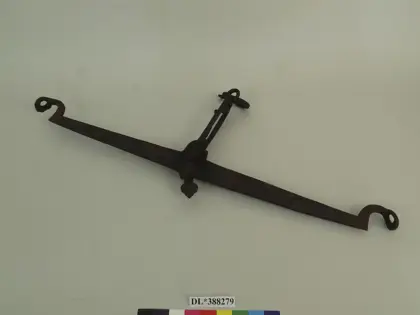 Beam Balance
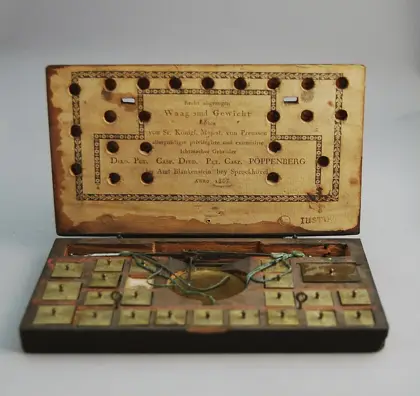 Balance
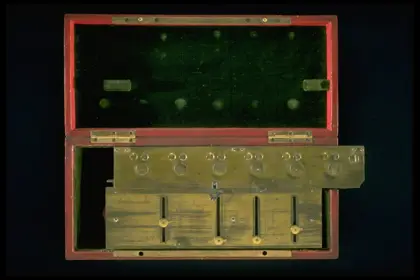 Thomas Arithmometer
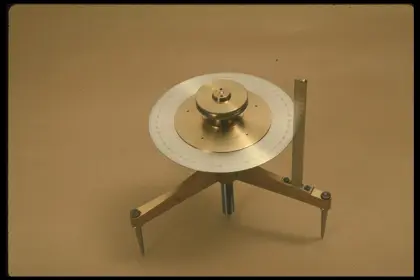 Grunow Spherometer
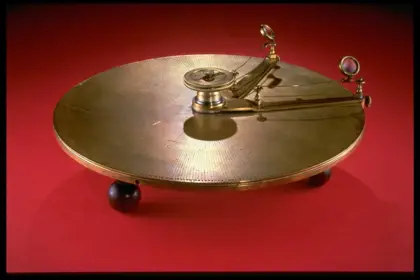 Patent Model for Circular Slide Rule Invented by John W. Nystrom
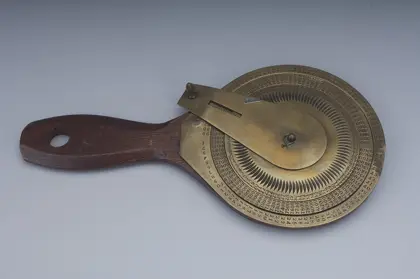 Hatfield Machine for Adding Numbers
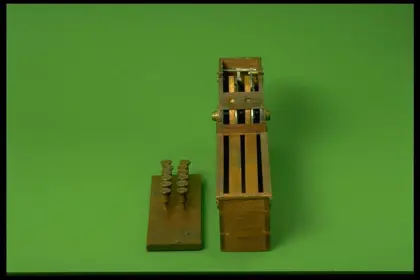 Hill Arithmometer
 Burns Addometer
 Rotating Mathematical Table, Sinclair's Freight Computer
 Barbour Calculating Machine Model
 Baldwin Arithmometer
 Patent Model for Estimator Slide Rule Invented by Fredric Maurice Stapff