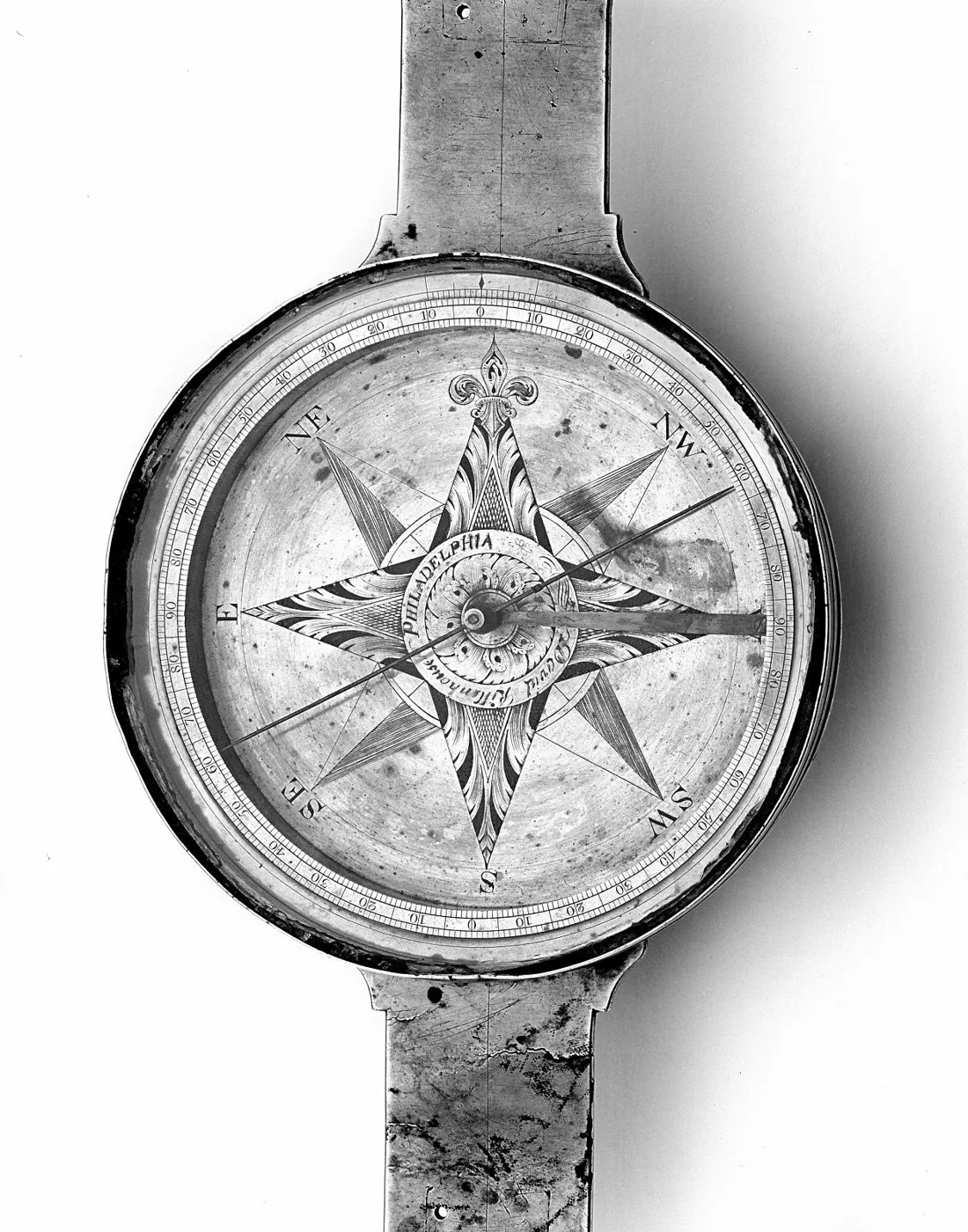
Surveyor's Vernier Compass
Its magnetic needle pointed north, and the sights let a surveyor measure directions to mark property lines.
- Date
- ca 1785
- Maker
- David Rittenhouse
- Place
- United States: Pennsylvania, Philadelphia
- Dimensions
- overall: 13 3/8 in; 33.9725 cm; needle: 5 1/4 in; 13.335 cm; overall: 2 3/4 in x 13 1/2 in x 6 1/2 in; 6.985 cm x 34.29 cm x 16.51 cm
- Museum
- National Museum of American History
The magnetic compasses that Americans used to determine property boundaries were inexpensive and expeditious but affected by magnetic variation—the fact that magnetic north seldom coincides with true north, and the relation between the two changes over time. The vernier compass solved this problem.
This example dates from around 1785, and is probably the first American instrument of its kind; similar instruments were made in Ireland. The vernier (not easy to see) is on the rim, at north. An inscription reads "David Rittenhouse PHILADELPHIA".
David Rittenhouse (1732–1796) was a skilled clock and instrument maker, man of science, and master of the American mint.
Ref: D. J. Warner, "True North—And Why It Mattered in Eighteenth Century America," Proceedings of the American Philosophical Society 149 (2005): 372–385.
The museum's own record (Smithsonian, National Museum of American History)
Also made in Philadelphia see all
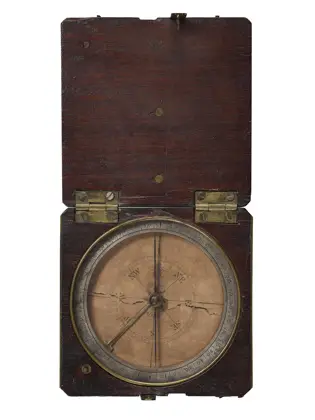 Pocket compass from the Lewis and Clark Expedition, 1804-1806
 Patent Model for Circular Slide Rule Invented by John W. Nystrom
 William W. Wythes Cyclo-Ellipto-Pantograph Patent Model
 Baldwin Arithmometer
 polariscope
Also answering “Where am I?” see all
Pocket compass from the Lewis and Clark Expedition, 1804-1806 James Wilson's Terrestrial Globe, 1811
 Solar Compass
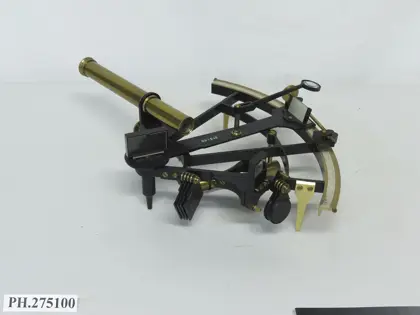 Sextant
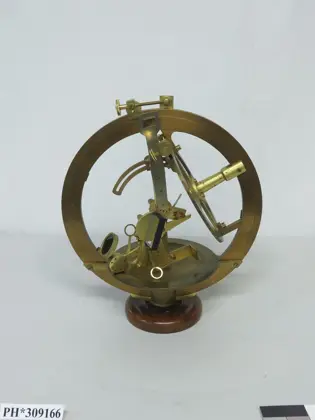 Equatorial Sextant
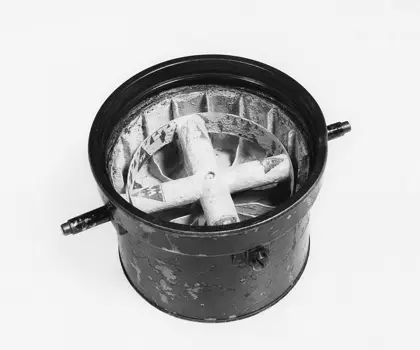 Liquid Compass
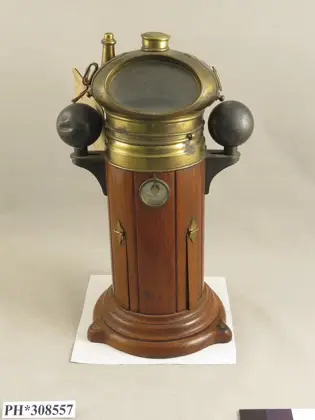 Dry Card Compass with Binnacle
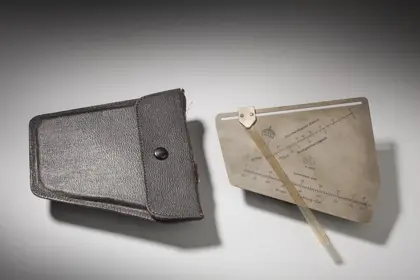 Plotter, Drift
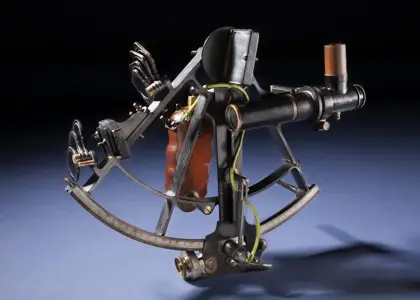 Sextant, Brandis, with Willson Bubble Telescope, Early
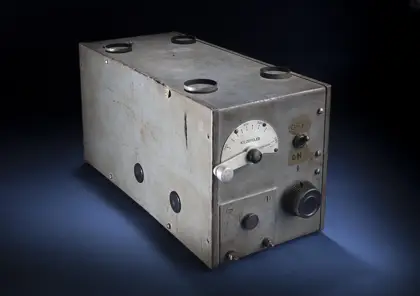 Receiver, Radio Range, ARC, Lab Prototype, Model B
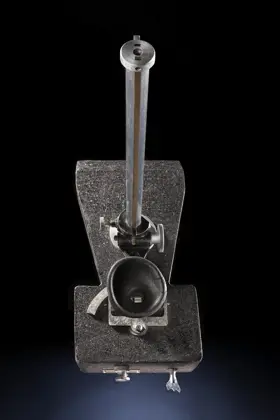 Sight, Drift & Ground Speed, Gatty
 Dead Reckoning, E-6B, Prototype