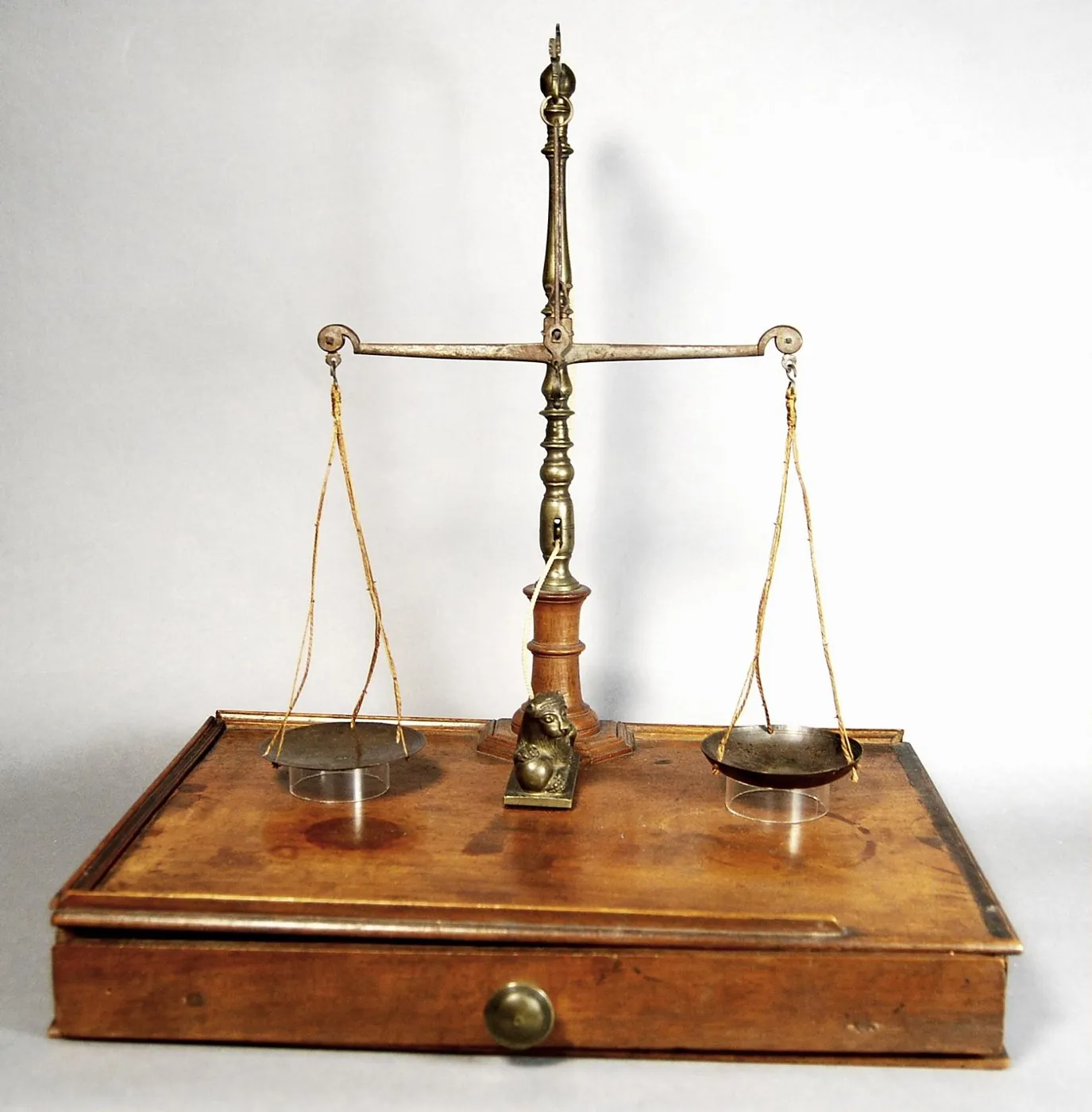
Balance
A merchant placed a coin on one pan and weights on the other to check its weight before accepting it.
- Maker
- Tobias Martin Kolb
- Place
- Germany: Bavaria, Nuremberg
- Dimensions
- overall: 14 1/2 in x 13 in x 10 in; 36.83 cm x 33.02 cm x 25.4 cm; overall: 14 1/2 in x 13 in x 12 1/4 in; 36.83 cm x 33.02 cm x 31.115 cm
- Museum
- National Museum of American History
- Credit line
- Gift of American Pharmaceutical Association and Bristol-Myers Squibb Company
Coin balance mounted on a wooden box. The beam has swan box ends that are made of iron. The drawer contains the weights and one smaller, handheld coin balance. There are 62 square tapered weights, 2 nested weights, and 13 fraction weights. The fraction weights fit into a recess with a hinged lid. A pair of forceps in the drawer (as well as a double-hooked hanger) is used to lift the weights on and off the balance pan. The drawer has carved recesses for the large and small balances. The weights are marked with the name of the coins with which they correspond.
The Master sign on the inner surface of one pan is that of T.M. Kolb, who received his master degree in 1754. The mark is hearts, 3X, with TMK on top within a shield. Kolb was a scale maker and also an adjuster for scales and weights. The other pan has a coat of arms, probably that of Nuremberg.
The small handheld balance has one round pan and one triangular pan, a common arrangement for coin balances. It has no maker marks. The pulley cord which lifts the pans into weighing position has a weight at the end in the shape of a lion, the symbol of Nuremberg. One of the nested weight sets is for weighing kronen and the other is for weighing ducats.
The museum's own record (Smithsonian, National Museum of American History)
Also made in Nuremberg see all
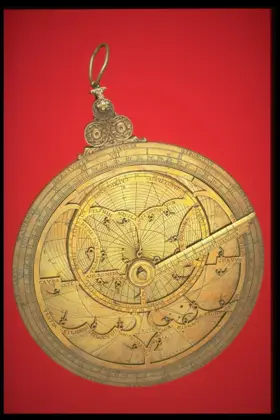 Hartman's Planispheric Astrolabe
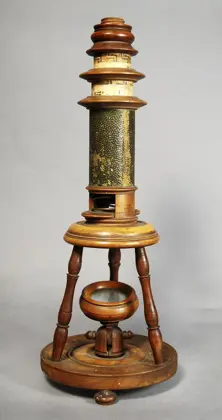 Microscope
Also answering “How much?” see all
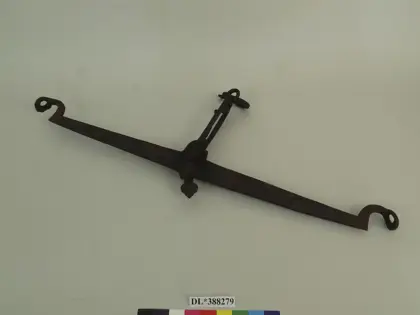 Beam Balance
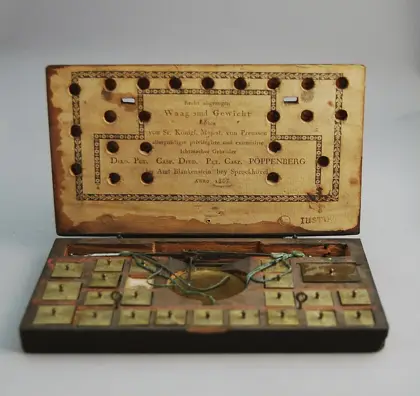 Balance
 Thomas Arithmometer
 Grunow Spherometer
 Patent Model for Circular Slide Rule Invented by John W. Nystrom
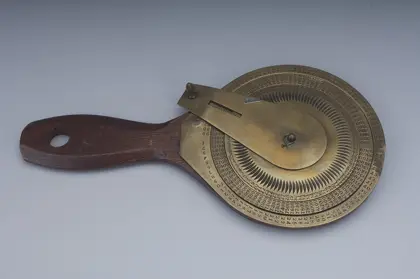 Hatfield Machine for Adding Numbers
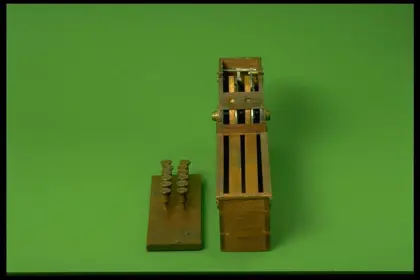 Hill Arithmometer
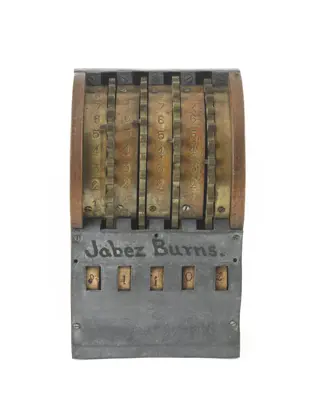 Burns Addometer
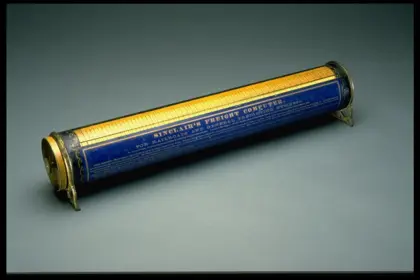 Rotating Mathematical Table, Sinclair's Freight Computer
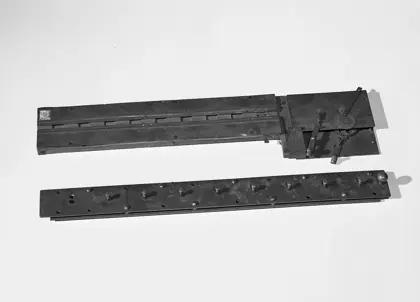 Barbour Calculating Machine Model
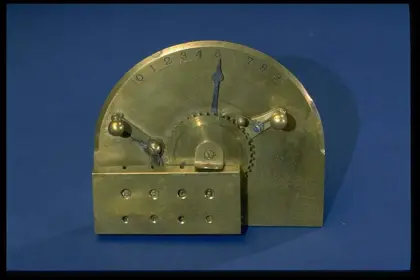 Baldwin Arithmometer
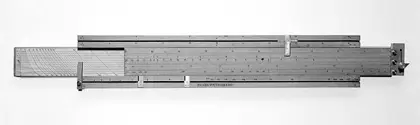 Patent Model for Estimator Slide Rule Invented by Fredric Maurice Stapff