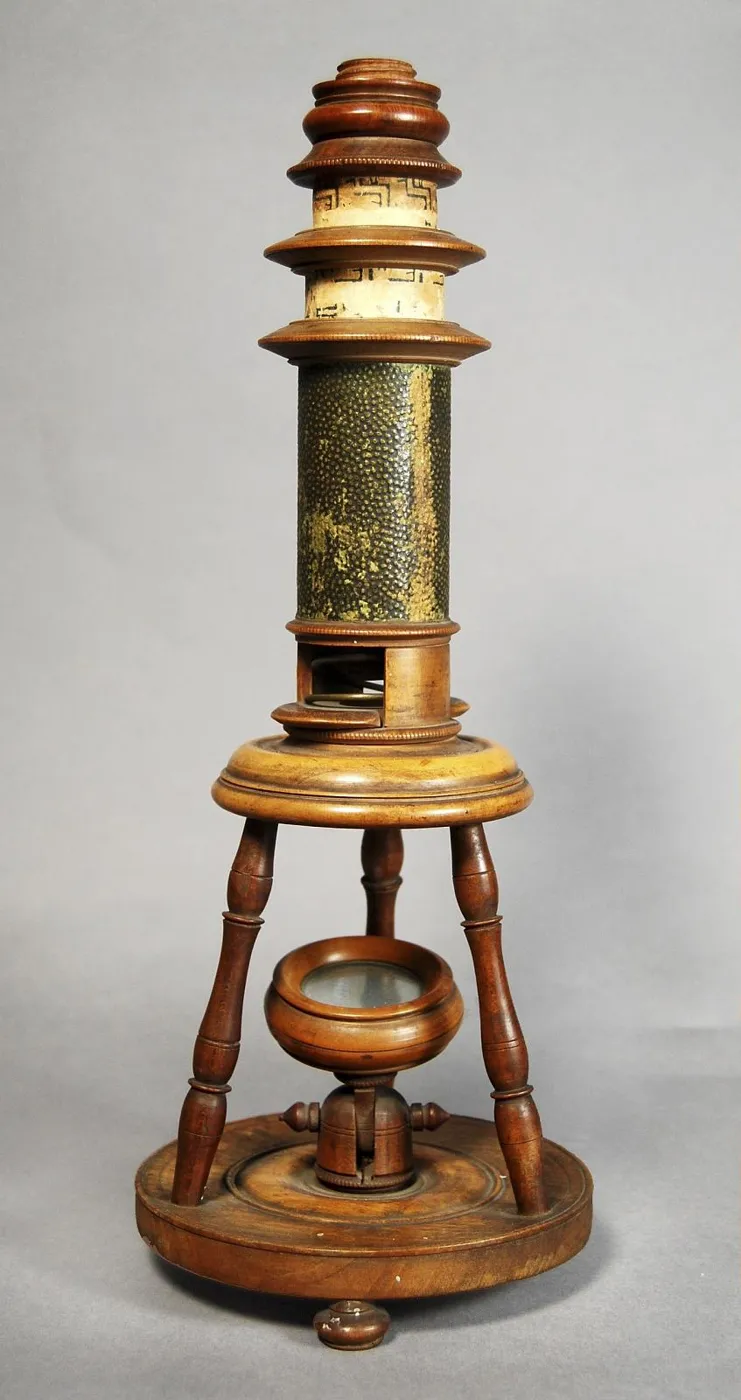
Microscope
Lenses in a cardboard and wood tube magnified small things placed under it, lit by daylight.
- Date
- after 1750
- Place
- Germany: Bavaria, Nuremberg
- Materials
- paper (overall material); shagreen (overall material); glass (overall material); metal (overall material); wood (overall material)
- Dimensions
- overall: 32.7 cm x 12.6 cm; 12 7/8 in x 4 31/32 in; overall: 12 3/4 in x 5 in; 32.385 cm x 12.7 cm
- Museum
- National Museum of American History
- Credit line
- Gift of American Pharmaceutical Association and Bristol-Myers Squibb Company
This “Culpeper” type microscope is made from wood, cardboard and sharkskin (or shagreen). The base is circular and has three wooden vertical supports which connect the base to the round stage. The cardboard tube is covered with shagreen that is dyed green. The mirror is mounted on a wooden hinge attached to the center of the base. A circular mark with initials is burned into the underside of the base, but the letters are illegible. Focusing is achieved by moving the tube up and down. The base is circular and made from turned wood, and has three round wooden feet.
One of the main cottage industries of the city of Nuremberg was the manufacturer of toys. In the 18th and 19th centuries thousands of microscopes like the one in the Squibb Collection were produced. Besides the Culpeper type microscope, several other models were produced including a box shaped, compound monocular microscope attached to a base with a drawer, and a “drum” type microscope. Nuremberg microscopes are rare and sought after by microscope collectors.
The museum's own record (Smithsonian, National Museum of American History)
 Hartman's Planispheric Astrolabe
 Balance
 Microscope
 Spy Glass
 Microscope, Lerebours
 Polariscope
 Heliostat
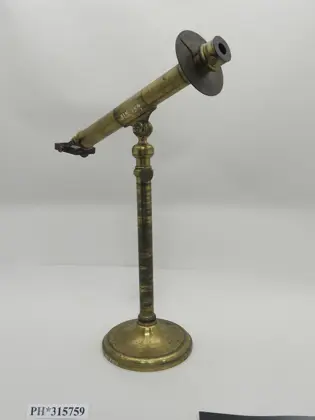 Polariscope
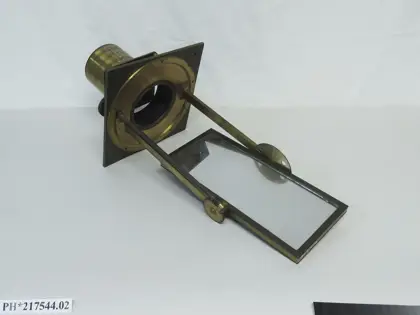 Solar Microscope
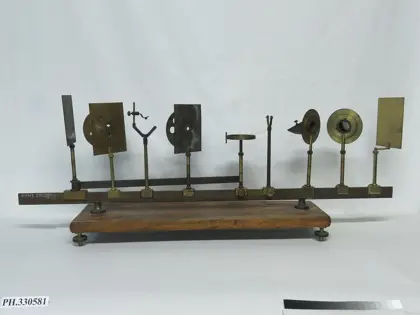 Melloni Bench
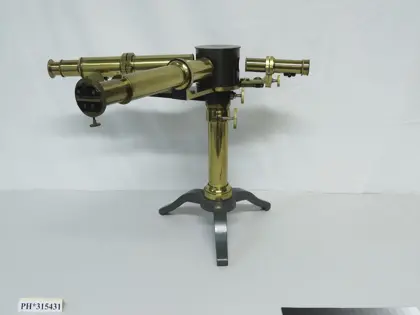 Spectroscope
 Spectroscope
 Spectrometer
 Jamin Apparatus