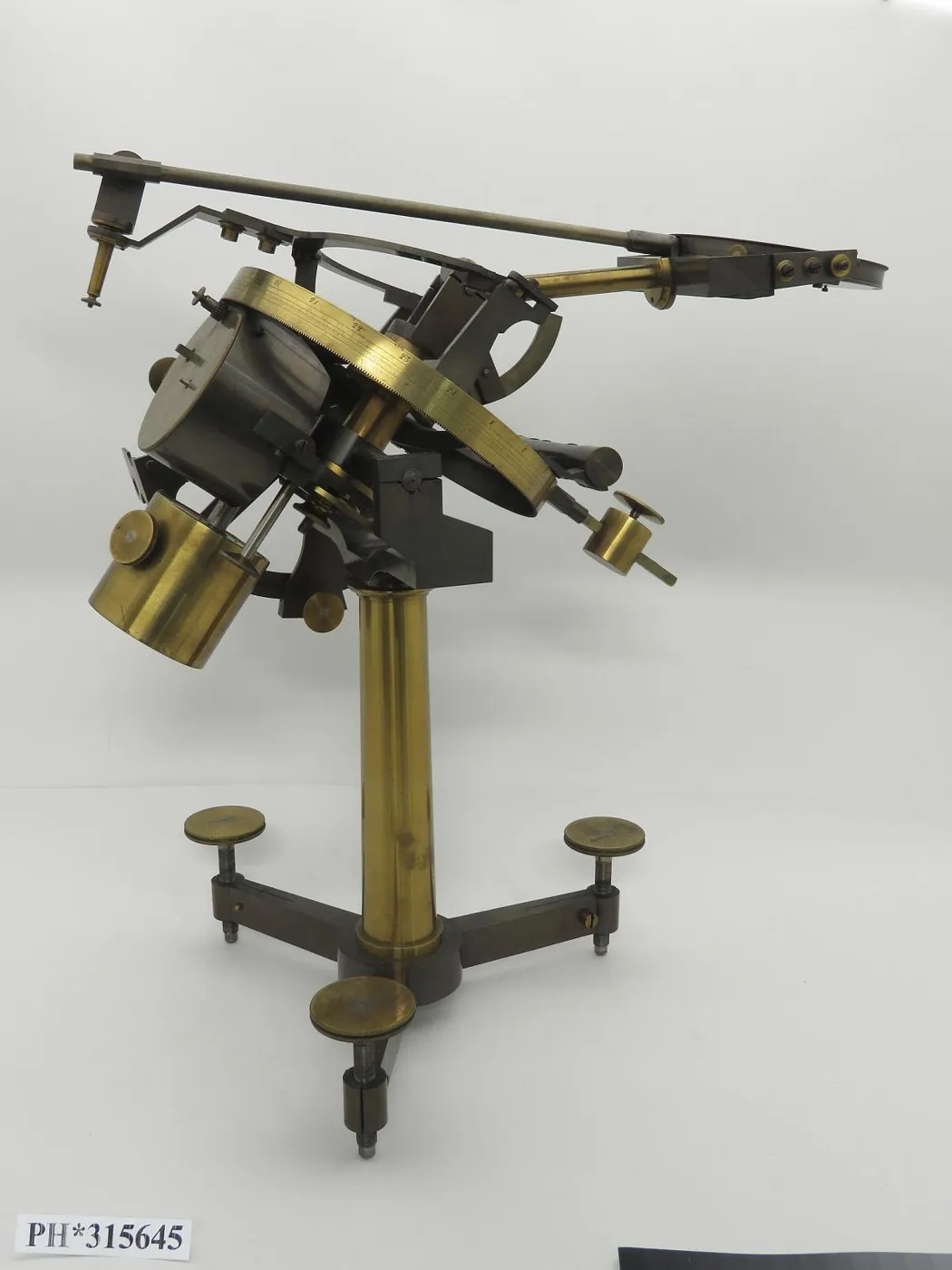
Heliostat
A mirror turned by clockwork followed the sun and threw its light in one fixed direction for experiments.
- Date
- ca 1830
- Maker
- Henri Prudence Gambey
- Place
- France: Île-de-France, Paris
- Dimensions
- overall: 22 in; 55.88 cm; overall: 16 1/2 in x 15 1/2 in x 10 1/4 in; 41.91 cm x 39.37 cm x 26.035 cm
- Museum
- National Museum of American History
- Credit line
- U.S. Military Academy
A heliostat throws sunlight where it might be used for photography or scientific observations. This example has one glass mirror 9.5 cm in diameter, a clockwork mechanism, and a tripod base with leveling screws. The “Gambey à Paris” inscription refers to Henri-Prudence Gambey, a mathematical instrument maker who won a gold medal at the Paris exhibition of 1823 for his heliostat of new construction.
Ref: D. J. Warner, “Gambey’s American Customers,” Rittenhouse 4 (1990): 65-78
The museum's own record (Smithsonian, National Museum of American History)
Also made in Paris see all
 Polariscope
 Microscope, Lerebours
 Hair Hygrometer
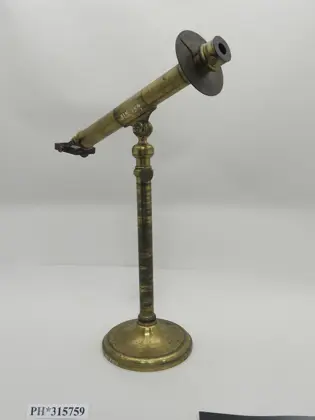 Polariscope
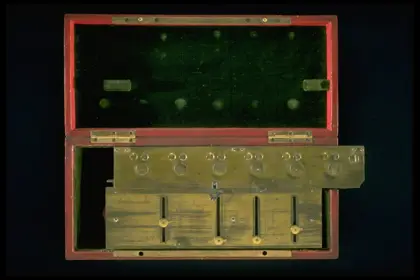 Thomas Arithmometer
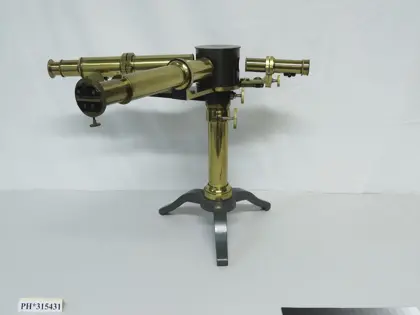 Spectroscope
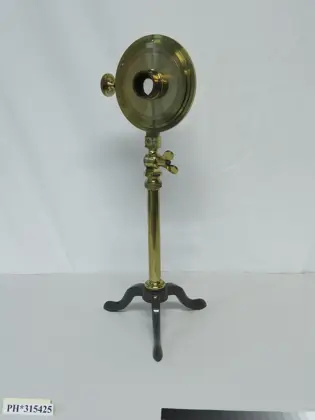 Jamin Apparatus
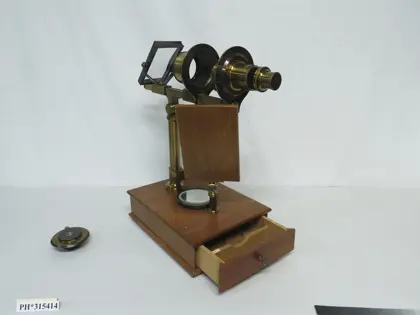 Projection Polariscope
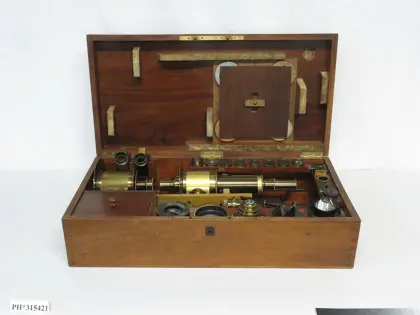 Projection Polariscope
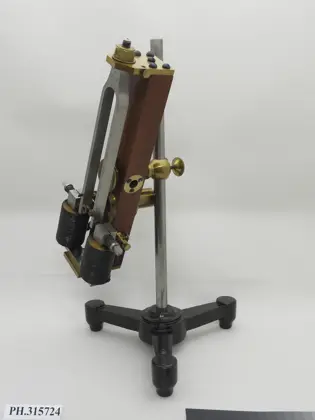 Vibration Microscope
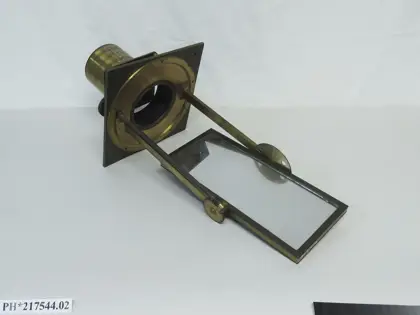 Solar Microscope
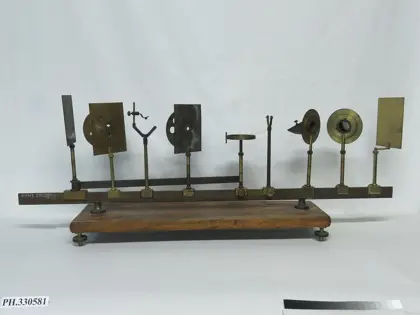 Melloni Bench
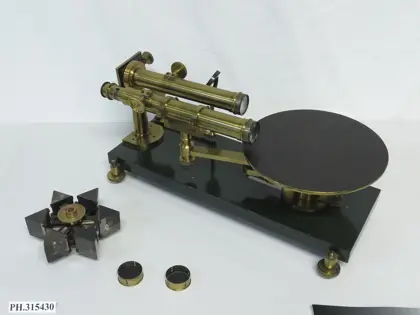 Spectroscope
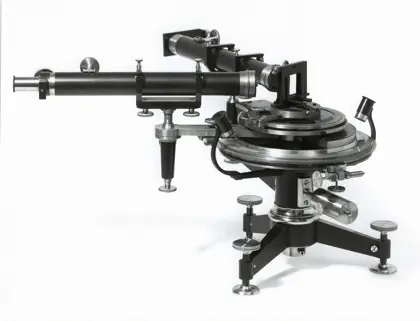 Spectrometer
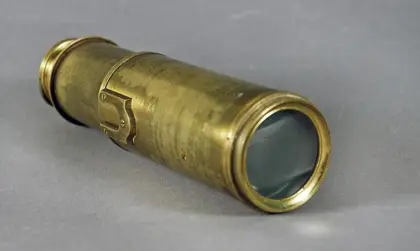 Spy Glass
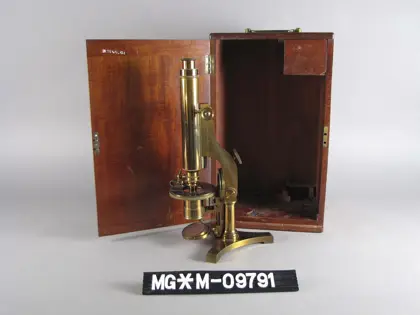 Microscope