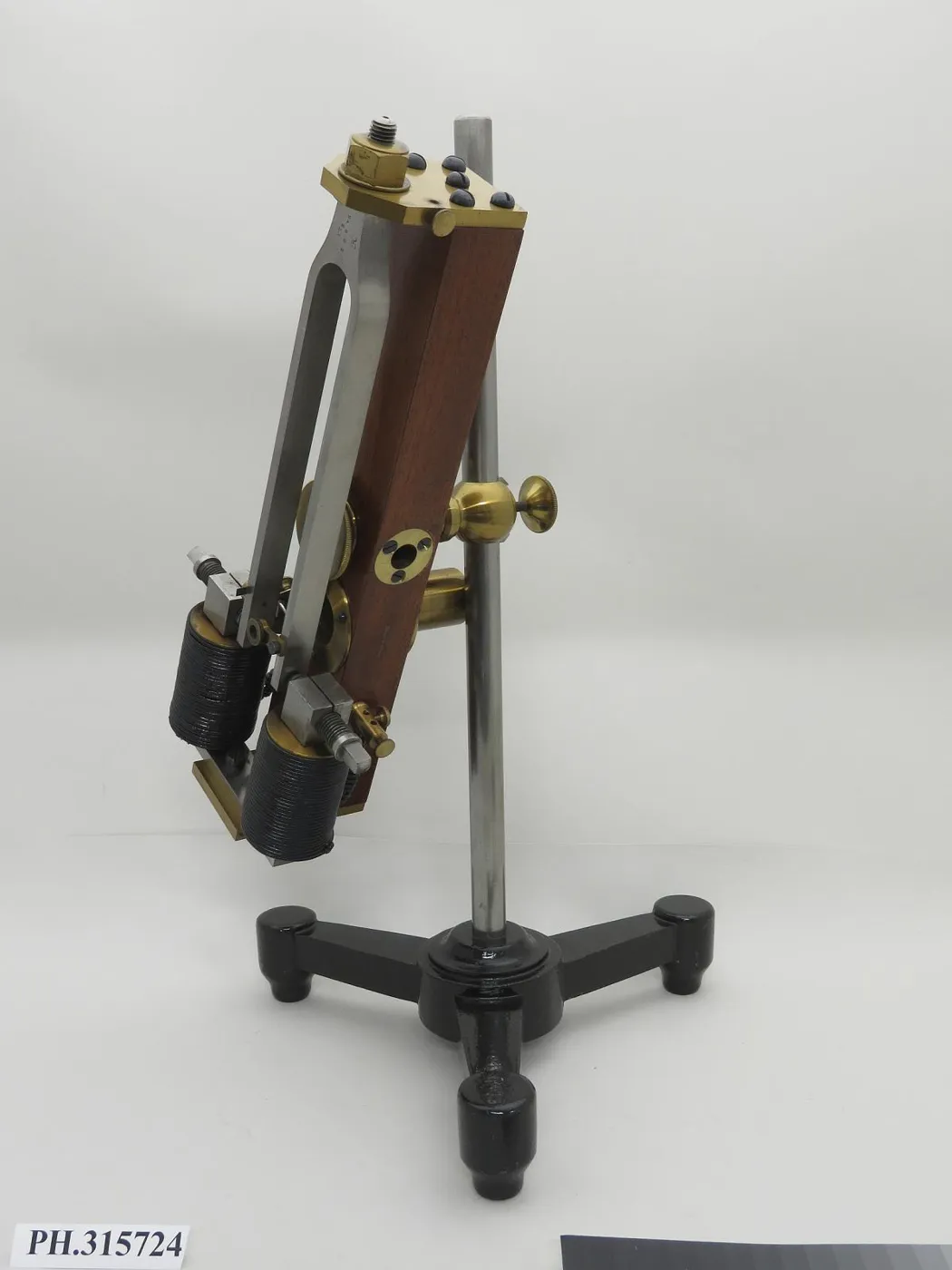
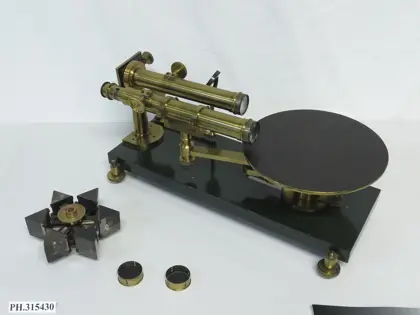
Vibration Microscope
You looked through it at a vibrating tuning fork, and the pattern you saw let you check its exact pitch.
- Maker
- Rudolph Koenig
- Place
- France: Île-de-France, Paris
- Dimensions
- overall: 17 1/8 in x 9 1/2 in x 9 1/2 in; 43.4975 cm x 24.13 cm x 24.13 cm
- Museum
- National Museum of American History
- Credit line
- United States Military Academy
The vibration microscope (or optical comparator) was used to calibrate the frequency of a tuning fork in terms of a fork of known frequency. Hermann von Helmholtz invented the form; Jules Antoine Lissajous introduced that in which the reference fork is driven electromagnetically. This electromagnetic example is inscribed “Rudolph Koenig a Paris” and was used at the U.S. Military Academy at West Point.
Ref: Rudolph Koenig, Catalogue des Appareils d’Acoustique (Paris, 1865), p. 12.
Rudolph Koenig, Catalogue des Appareils d’Acoustique (Paris, 1889), p. 83.
The museum's own record (Smithsonian, National Museum of American History)
Also made in Paris see all
 Thomas Arithmometer
 Microscope, Lerebours
 Hair Hygrometer
 Polariscope
 Heliostat
 Polariscope
 Spectroscope
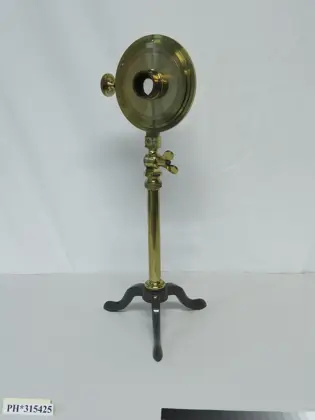 Jamin Apparatus
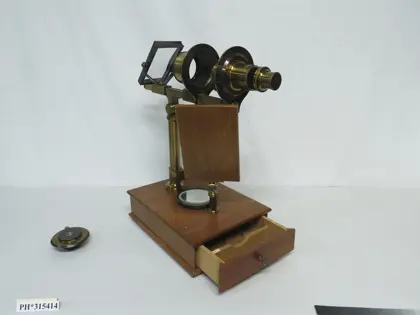 Projection Polariscope
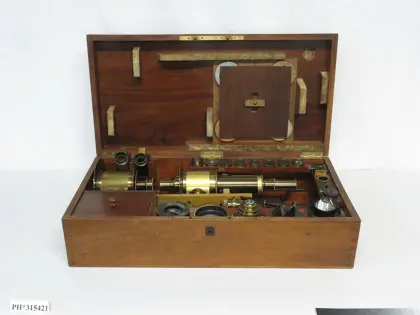 Projection Polariscope
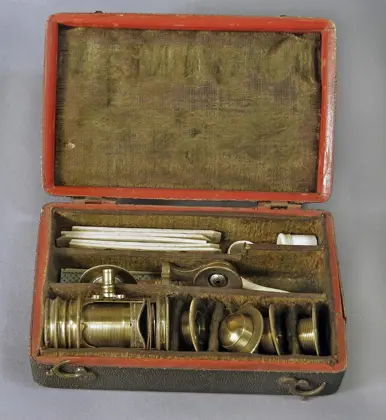 Microscope
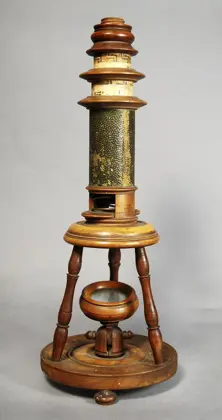 Microscope
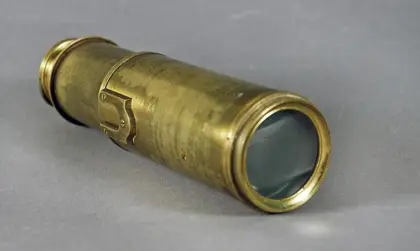 Spy Glass
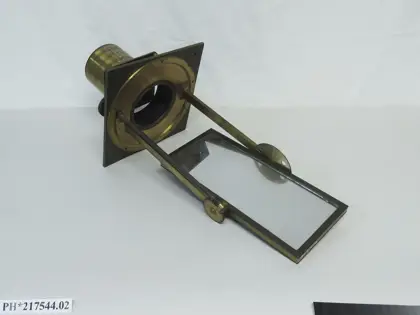 Solar Microscope
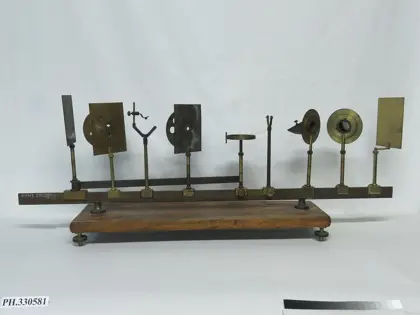 Melloni Bench
 Spectroscope
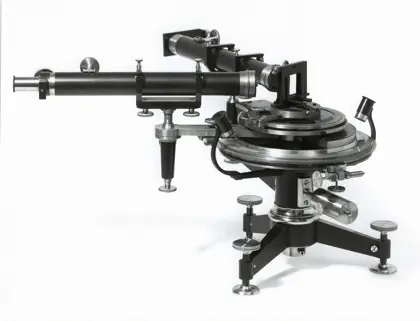 Spectrometer