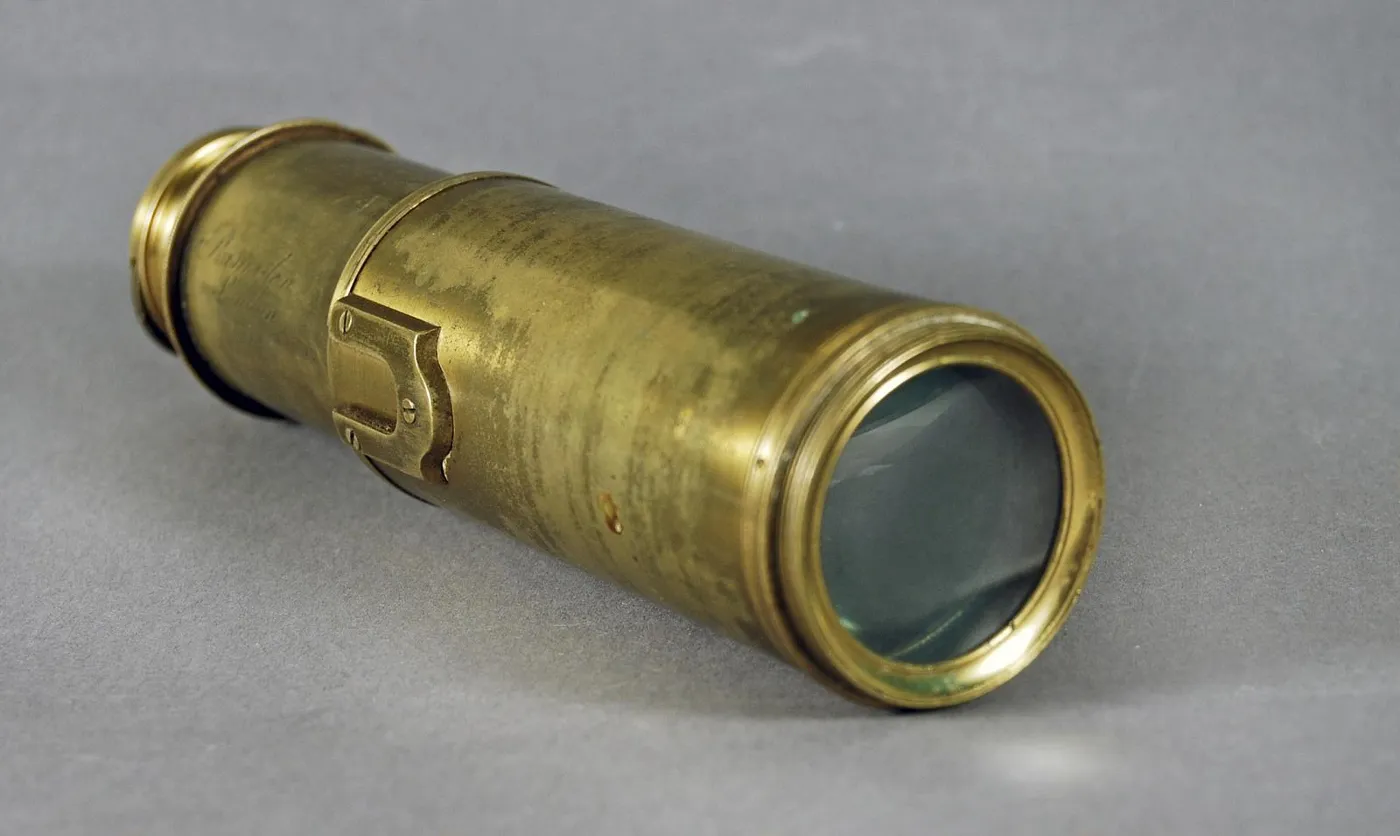
Spy Glass
Lenses at each end made faraway things look closer, so a sailor or soldier could study distant ships or land.
- Date
- 1775-1800
- Maker
- Jesse Ramsden
- Place
- United Kingdom: England, London
- Materials
- brass (overall material); glass (overall material); shagreen (overall material); paper (overall material)
- Dimensions
- overall: 12 cm x 4.2 cm; 4 23/32 in x 1 21/32 in; overall, case: 2 1/4 in x 5 5/8 in x 2 1/4 in; 5.715 cm x 14.2875 cm x 5.715 cm; overall, telescope: 1 5/8 in x 1 3/4 in x 4 3/4 in; 4.1275 cm x 4.445 cm x 12.065 cm
- Museum
- National Museum of American History
- Credit line
- Gift of American Pharmaceutical Association and Bristol-Myers Squibb Company
Small refracting telescope with an achromatic objective 1¼ inches aperture. There are two brass tubes. The inner one is engraved “Ramsden / London” and calibrated from one to four. A dial adjusts the eyepiece. The telescope is housed in a cylindrical cardboard container covered in shagreen.
Jesse Ramsden (1735-1800), a prominent maker of mathematical and optical instruments. began in business in 1762, and became a Fellow of the Royal Society of London in 1786.
The museum's own record (Smithsonian, National Museum of American History)
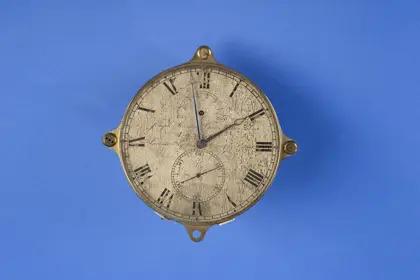 box chronometer movement
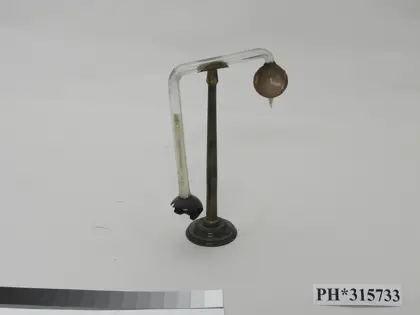 Daniell Hygrometer
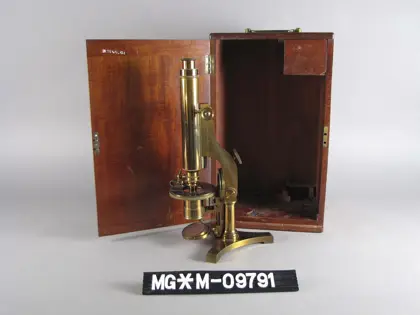 Microscope
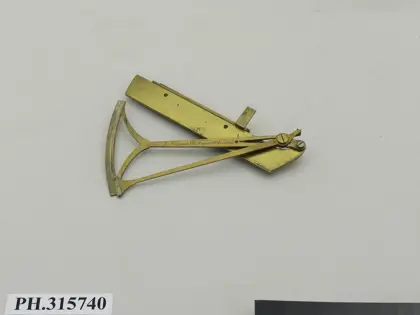 Pyrometer
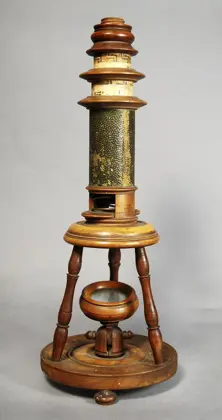 Microscope
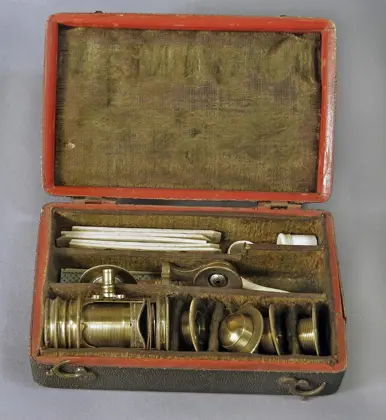 Microscope
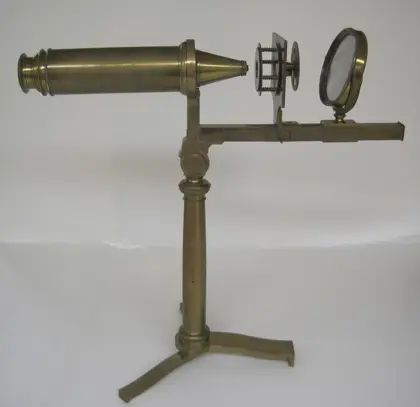 Microscope, Lerebours
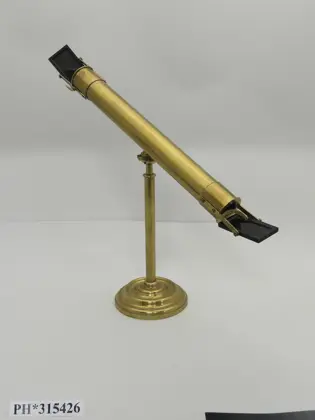 Polariscope
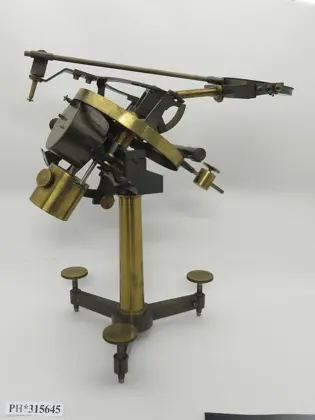 Heliostat
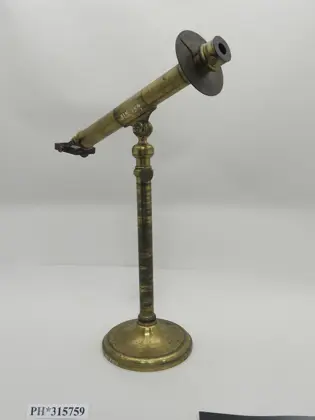 Polariscope
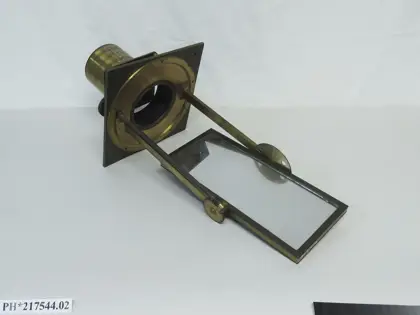 Solar Microscope
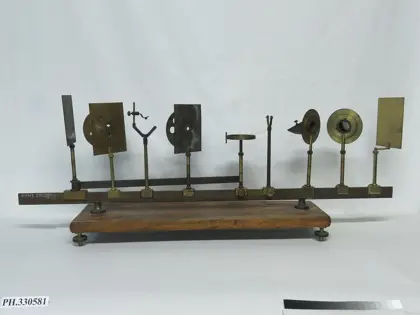 Melloni Bench
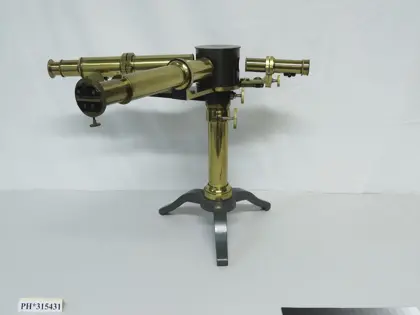 Spectroscope
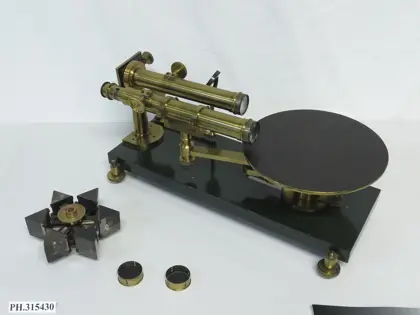 Spectroscope
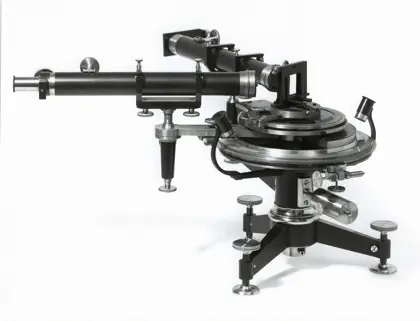 Spectrometer
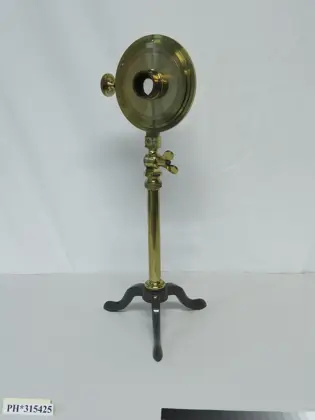 Jamin Apparatus