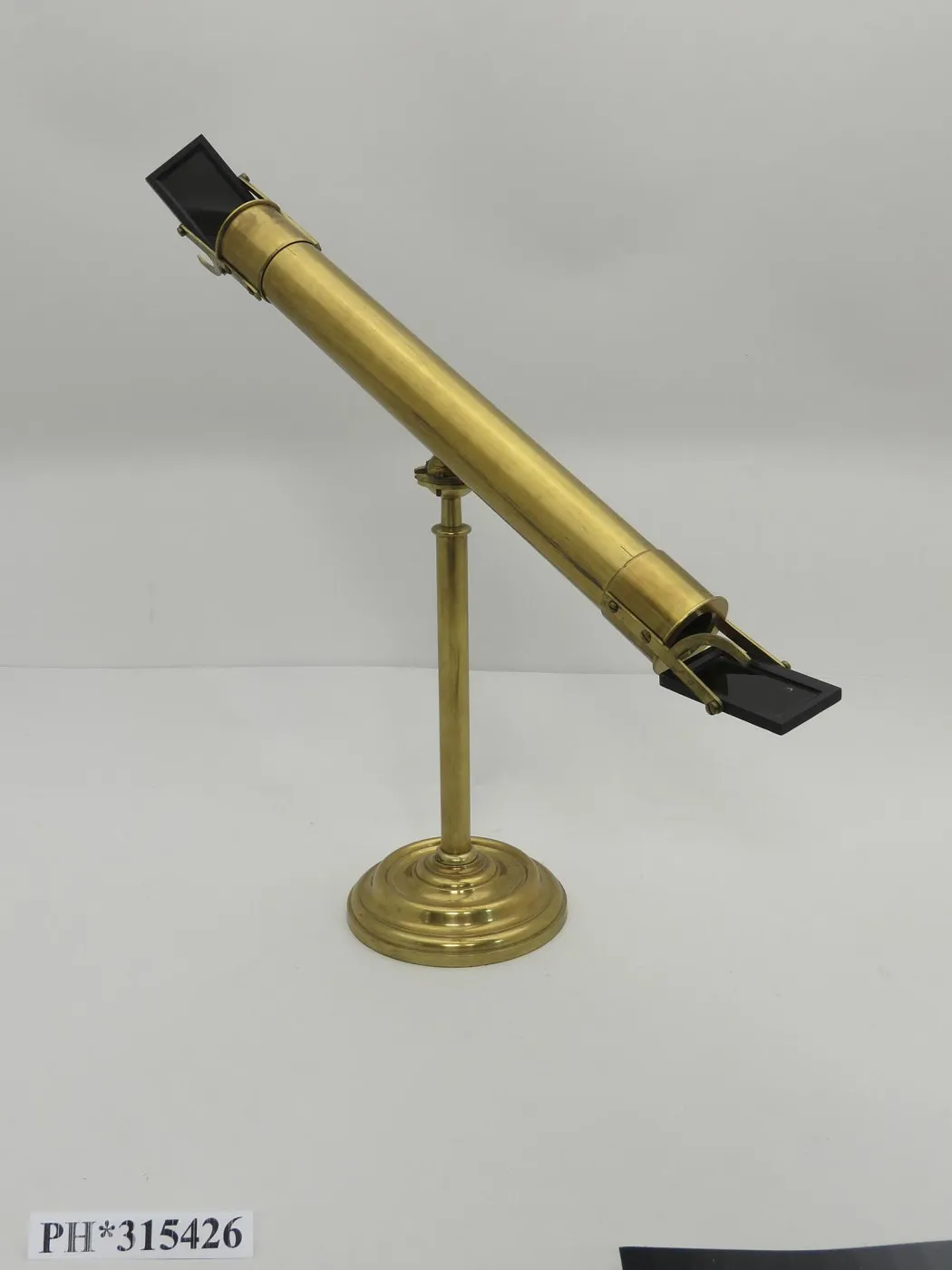
Polariscope
Polarized light passed through a crystal or sample, and the colors that appeared showed hidden properties of the material.
- Date
- around 1830
- Maker
- Lerebours
- Place
- France: Île-de-France, Paris
- Dimensions
- overall: 12 5/8 in x 4 in x 13 in; 32.0675 cm x 10.16 cm x 33.02 cm
- Museum
- National Museum of American History
- Credit line
- U.S. Military Academy
This instrument, which the U.S. Military Academy bought from Lerebours in Paris in 1830, consists of a hollow brass tube (10.25 inches long) supported by a brass stand (10 inches high). At either end of the tube is a dark rectangular mirror that can be aimed in various directions. It demonstrates the phenomenon, found by Étienne Malus in 1808, that light can be polarized by reflection.
The museum's own record (Smithsonian, National Museum of American History)
Also by Lerebours see all
Also made in Paris see all
 Heliostat
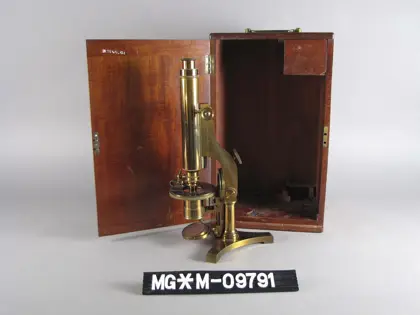
 Microscope, Lerebours
 Hair Hygrometer
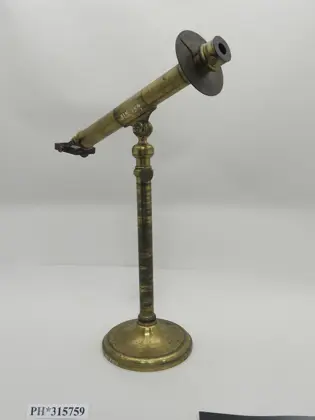 Polariscope
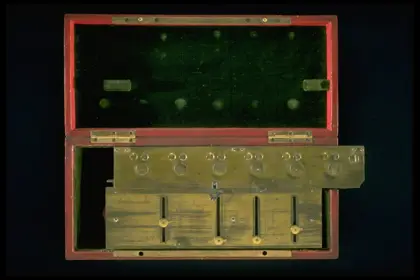 Thomas Arithmometer
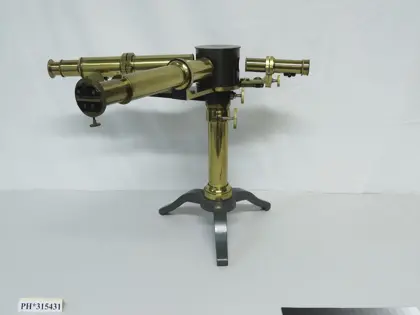 Spectroscope
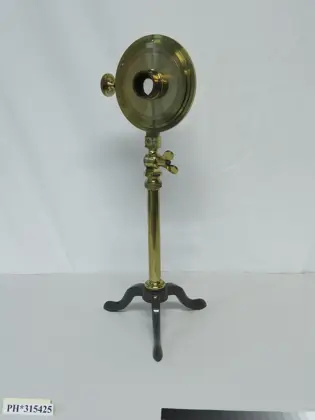 Jamin Apparatus
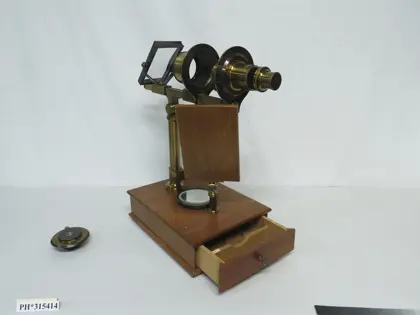 Projection Polariscope
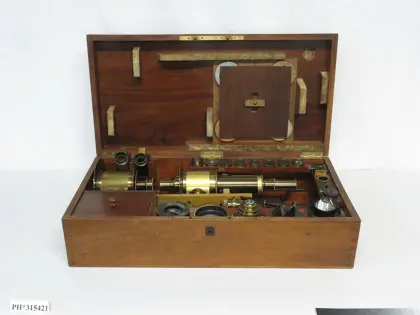 Projection Polariscope
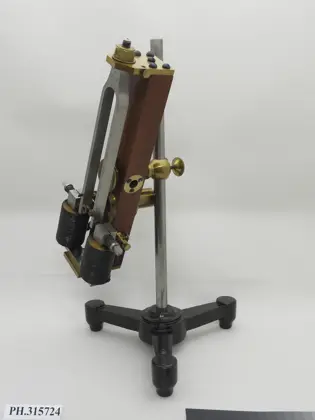 Vibration Microscope
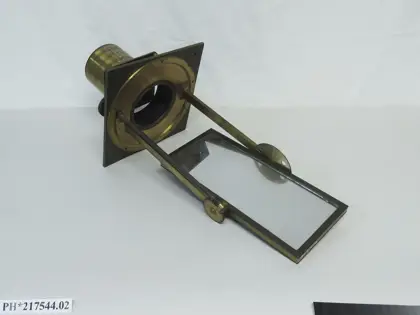 Solar Microscope
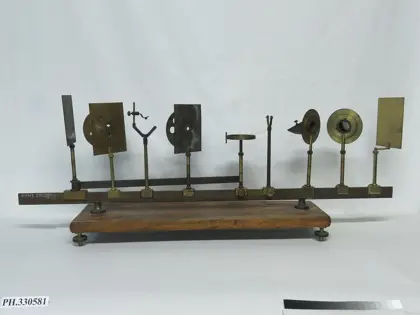 Melloni Bench
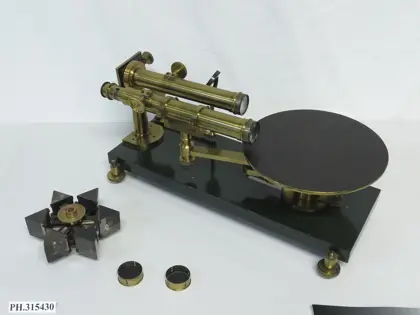 Spectroscope
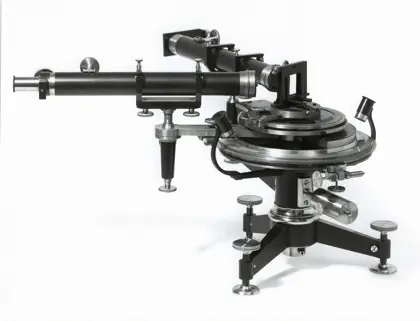 Spectrometer
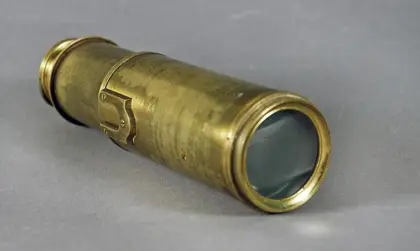 Spy Glass
 Microscope