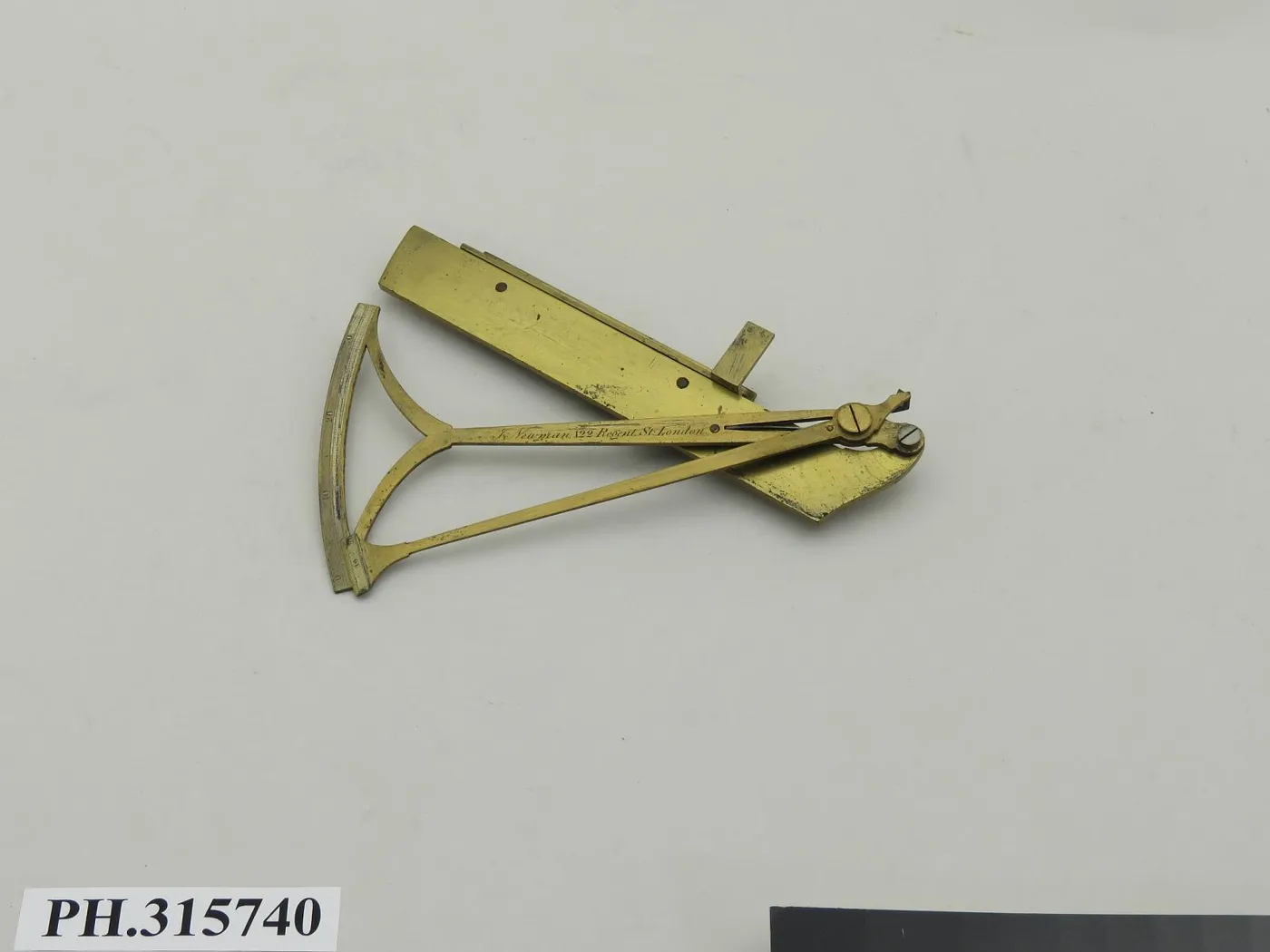
Pyrometer
A metal bar expanded when heated and pushed a pointer, so a scientist could read very high temperatures.
- Maker
- James Newman
- Place
- United Kingdom: England, London
- Dimensions
- overall: 6 1/2 in x 2 in x 5 3/4 in; 16.51 cm x 5.08 cm x 14.605 cm; overall in case: 1 3/8 in x 6 9/16 in x 5 1/8 in; 3.4925 cm x 16.66875 cm x 13.0175 cm
- Museum
- National Museum of American History
John Frederic Daniell (1790-1845) was an English scientist who, in 1831, became the first professor of chemistry in King’s College, London. He was also known for having devised a pyrometer that measured heat by means of the expansion of a metal bar. This Daniell pyrometer came from the U.S. Military Academy. The “J. Newman, 122 Regent Street, London” inscription refers to James Newman, an instrument maker active in the 1830s.
Ref: J. Frederick Daniell, “On a New Register-Pyrometer, for Measuring the Expansion of Solids, and Determining the Higher Degrees of Temperature upon the Common Thermometric Scale,” Philosophical Transactions of the Royal Society of London 120 (1830): 257.
J. Frederick Daniell, “Further Experiments with a New Register-Pyrometer for Measuring the Expansion of Solids,” Philosophical Transactions of the Royal Society of London 121 (1831): 443-458.
James Newman, A Catalogue of Philosophical Instruments (London, 1836 and 1837).
The museum's own record (Smithsonian, National Museum of American History)
Also made in London see all
 Spy Glass
 box chronometer movement
 Daniell Hygrometer
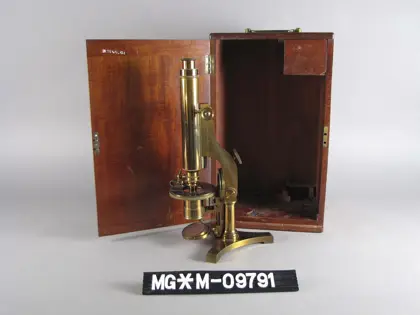 Microscope
Also answering “How much?” see all
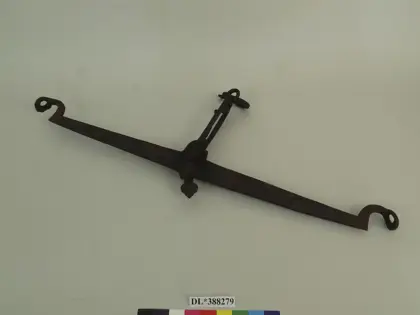 Beam Balance
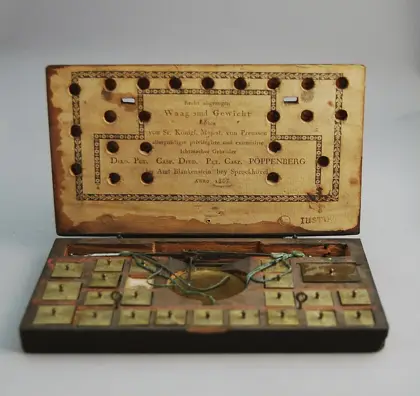 Balance
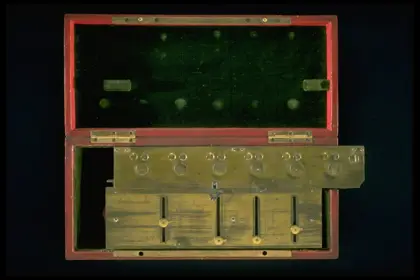 Thomas Arithmometer
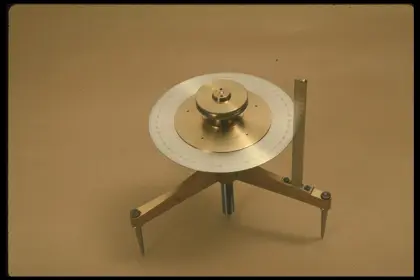 Grunow Spherometer
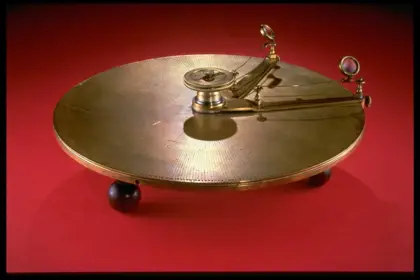 Patent Model for Circular Slide Rule Invented by John W. Nystrom
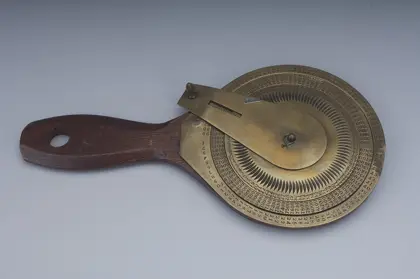 Hatfield Machine for Adding Numbers
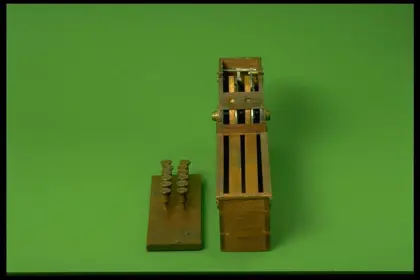 Hill Arithmometer
 Burns Addometer
 Rotating Mathematical Table, Sinclair's Freight Computer
 Barbour Calculating Machine Model
 Baldwin Arithmometer
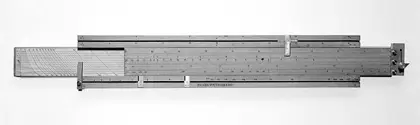 Patent Model for Estimator Slide Rule Invented by Fredric Maurice Stapff