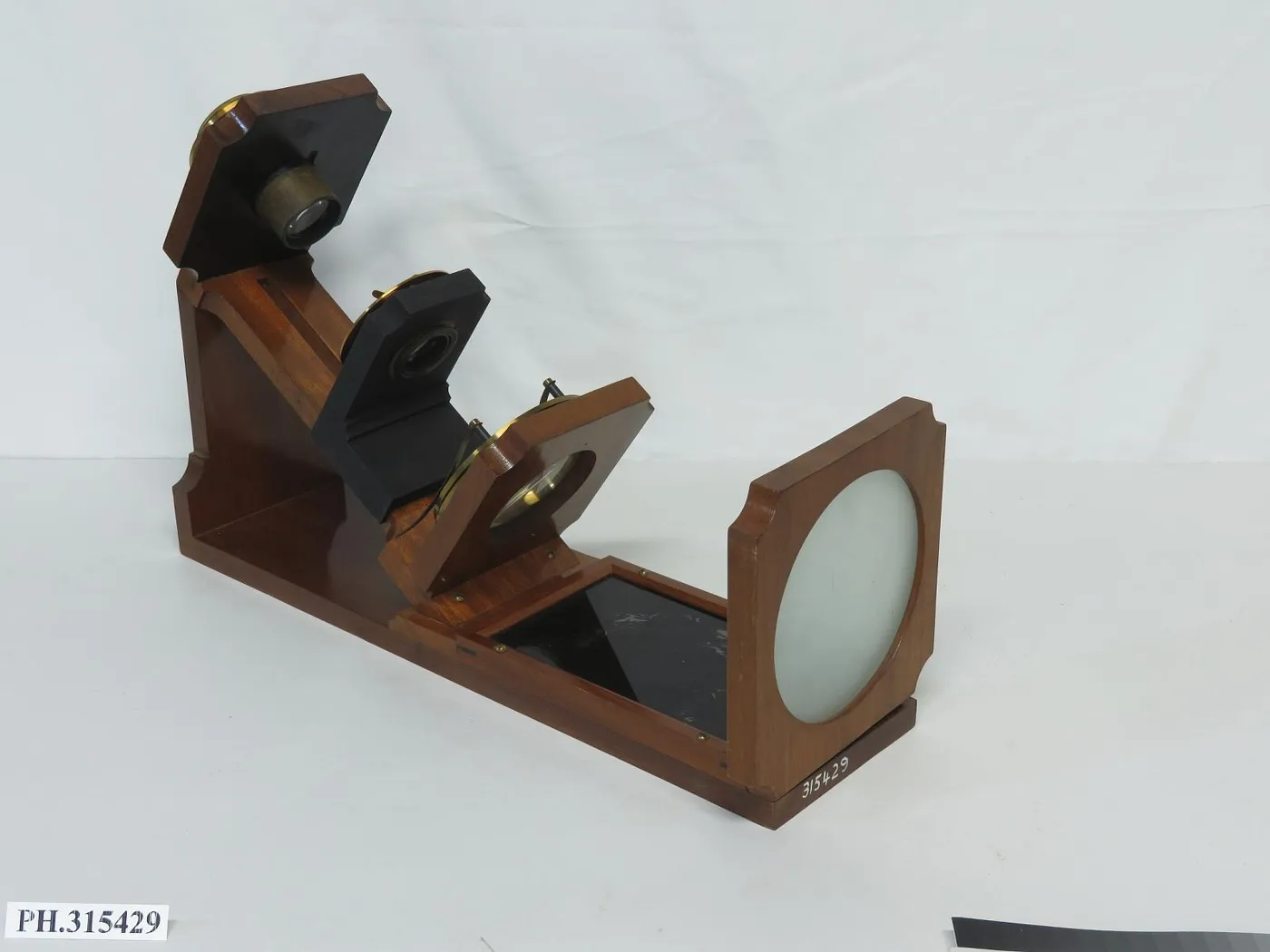
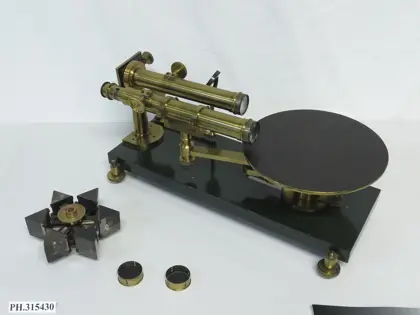
polariscope
Polarized light passed through a crystal or sample, and the colors that appeared showed hidden properties of the material.
- Date
- late 19th century
- Maker
- James W. Queen
- Place
- United States: Pennsylvania, Philadelphia
- Dimensions
- overall in case: 12 1/2 in x 18 1/2 in x 6 5/8 in; 31.75 cm x 46.99 cm x 16.8275 cm
- Museum
- National Museum of American History
- Credit line
- U.S. Military Academy
This fairly rugged and inexpensive instrument has a wooden frame, a horizontal plate of blackened glass for the polarizer, a brass stage to hold the object to be examined, a magnifying lens, a Nichol prism analyzer, and a ground glass screen to shut off images of distant objects. The whole fits into a wooden box (12 inches x 18 inches x 6.75 inches high). The “James W. Queen & Co. / PHILADELPHIA” inscription on the stage refers to the firm that introduced this type of instrument in the 1880s.
Ref: Queen & Co., Inc., Catalogue of Physical Apparatus (Philadelphia, 1898), pp. 8-90.
The museum's own record (Smithsonian, National Museum of American History)
Also made in Philadelphia see all
 Surveyor's Vernier Compass
 Pocket compass from the Lewis and Clark Expedition, 1804-1806
 Patent Model for Circular Slide Rule Invented by John W. Nystrom
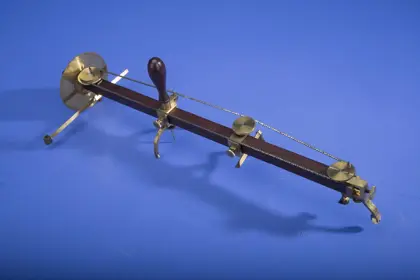 William W. Wythes Cyclo-Ellipto-Pantograph Patent Model
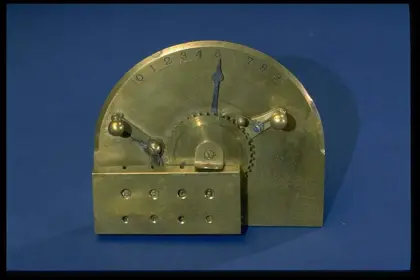 Baldwin Arithmometer
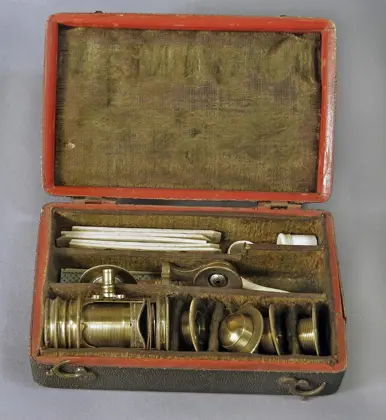 Microscope
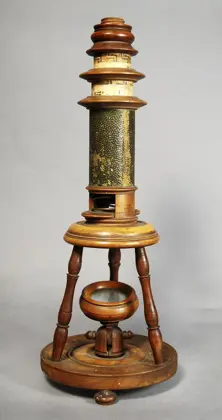 Microscope
 Spy Glass
 Microscope, Lerebours
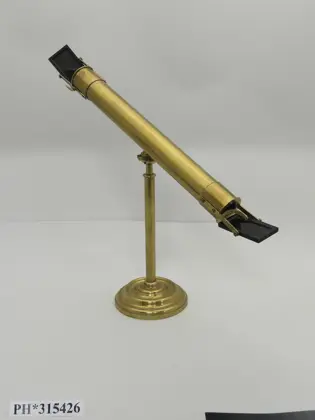 Polariscope
 Heliostat
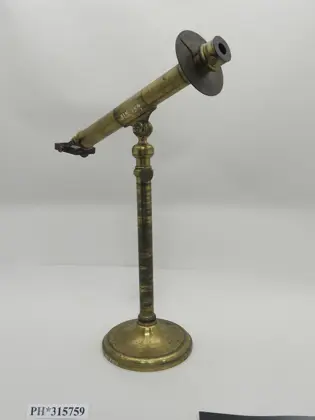 Polariscope
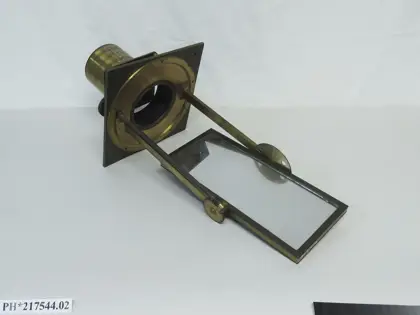 Solar Microscope
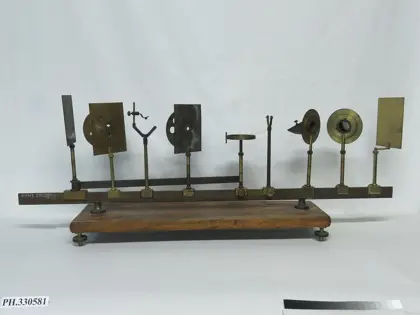 Melloni Bench
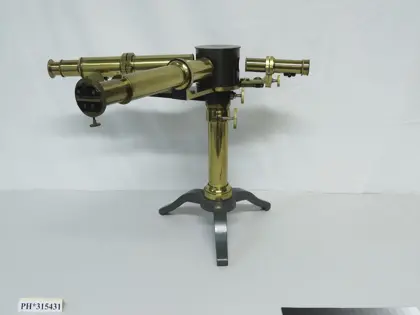 Spectroscope
 Spectroscope
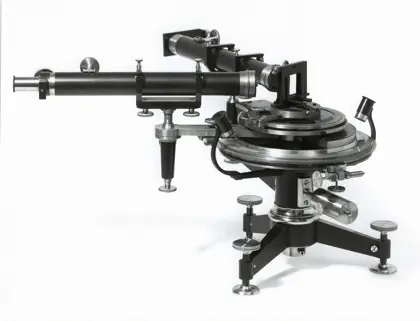 Spectrometer