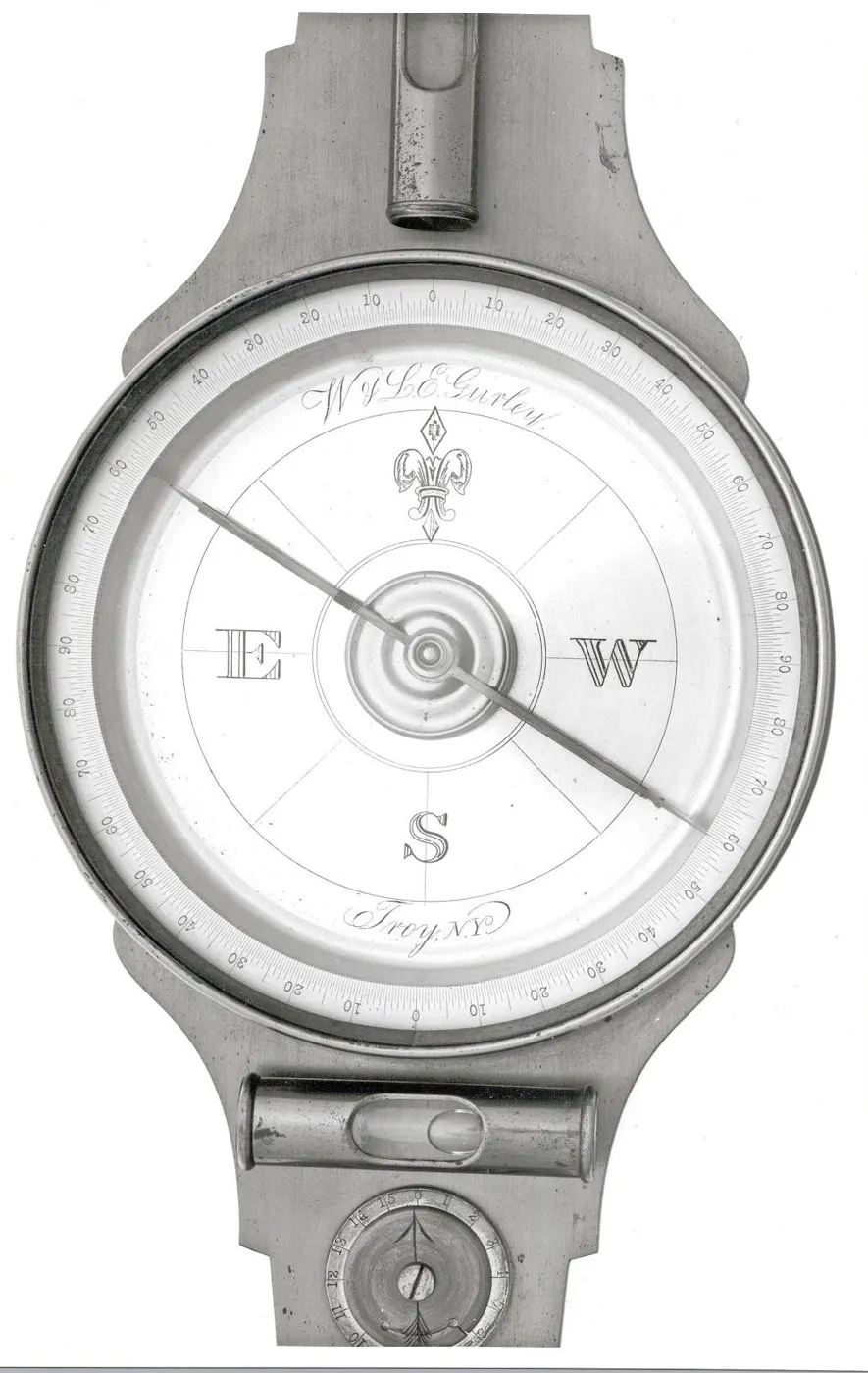
Surveyor's Compass
Its magnetic needle pointed north, and sights or a small telescope let a surveyor measure directions and boundaries.
- Maker
- W. & L. E. Gurley
- Place
- United States: New York, Troy
- Dimensions
- overall length: 12 3/4 in; 32.385 cm; needle: 4 in; 10.16 cm; telescope: 8 5/8 in; 21.9329 cm; overall; case: 4 1/4 in x 13 3/4 in x 6 5/8 in; 10.795 cm x 34.925 cm x 16.8275 cm
- Museum
- National Museum of American History
Patent model for W. & L. E. Gurley, "Improvement in Telescope Attachments for Surveyors’ Compasses," U.S. Patent #205,742 (July 9, 1878).
The basic instrument is a standard small compass with a north-south level on the north arm, and an east-west level and an outkeeper on the south arm. The hand-engraved signature indicates that the compass was made before the middle of 1876. The telescope, which attaches to one of the sight vanes, was presumably made shortly before the patent application was submitted in June 1878. The inscription reads "W. & L. E. Gurley" and "Troy, N.Y."
The museum's own record (Smithsonian, National Museum of American History)
Also by W. & L. E. Gurley see all
 Surveyor's Vernier Compass
 Vernier Compass with Telescope
Also made in Troy see all
Also answering “Where am I?” see all
 Surveyor's Vernier Compass
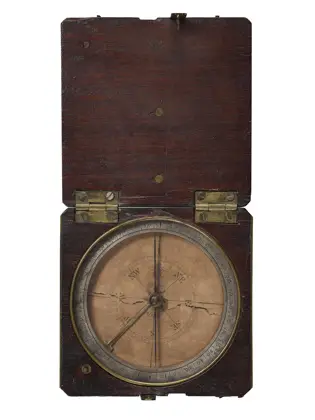 Pocket compass from the Lewis and Clark Expedition, 1804-1806
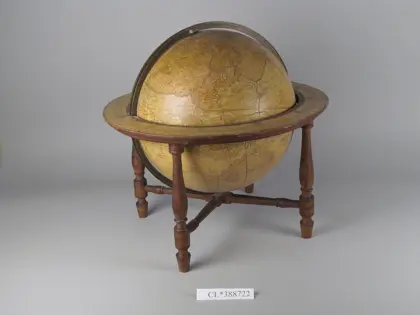 James Wilson's Terrestrial Globe, 1811
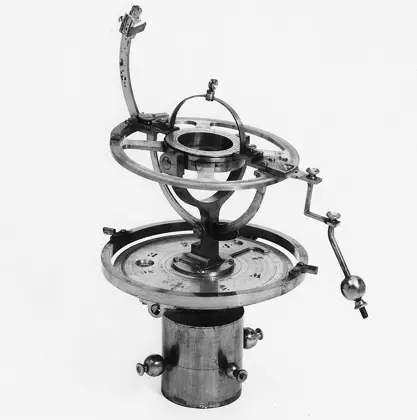 Solar Compass
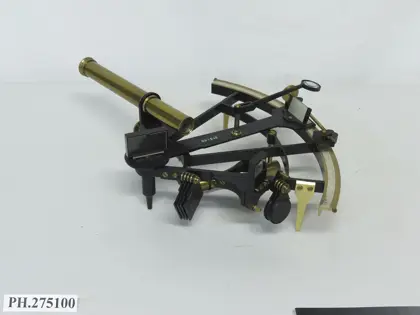 Sextant
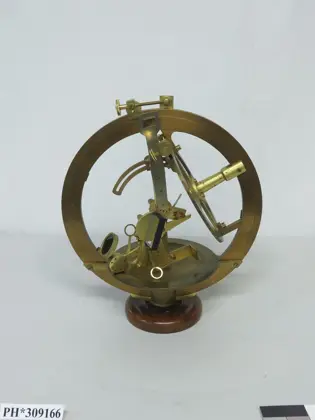 Equatorial Sextant
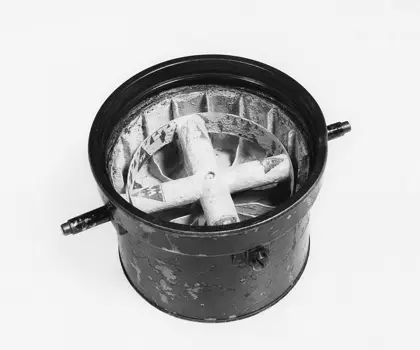 Liquid Compass
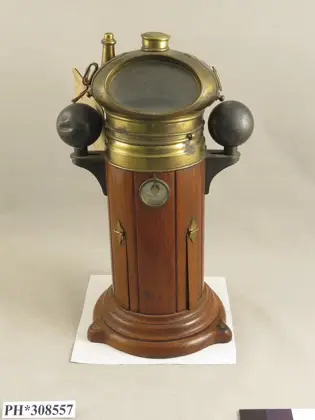 Dry Card Compass with Binnacle
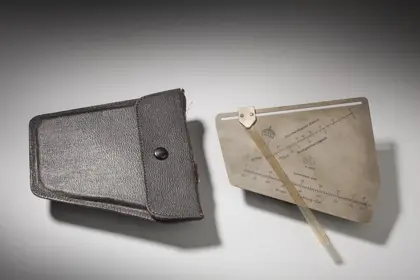 Plotter, Drift
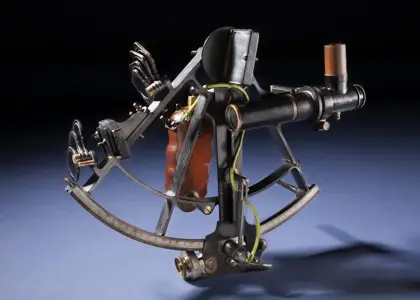 Sextant, Brandis, with Willson Bubble Telescope, Early
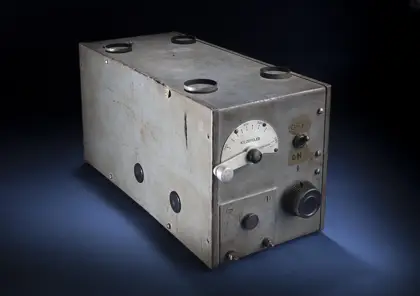 Receiver, Radio Range, ARC, Lab Prototype, Model B
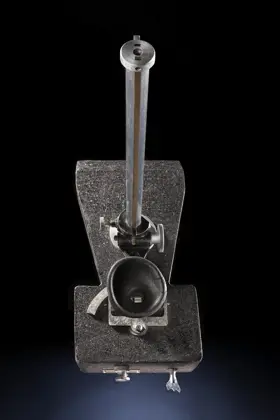 Sight, Drift & Ground Speed, Gatty