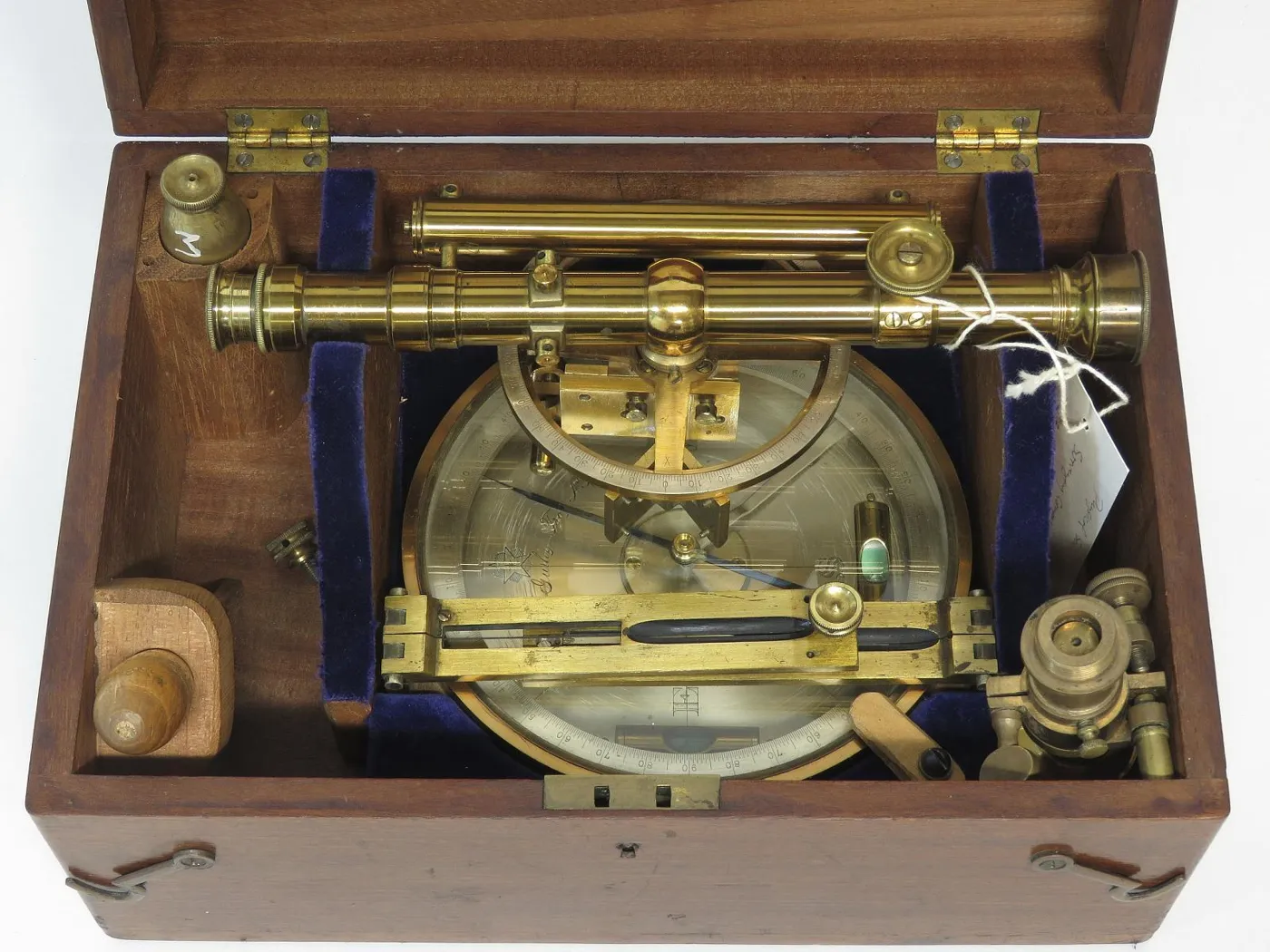
Vernier Compass with Telescope
Its magnetic needle pointed north, and sights or a small telescope let a surveyor measure directions and boundaries.
- Maker
- W. & L. E. Gurley
- Place
- United States: New York, Troy
- Dimensions
- overall: 5 3/4 in; 14.605 cm; needle: 4 1/2 in; 11.43 cm; telescope: 8 3/4 in; 22.225 cm; vertical circle: 3 1/2 in; 8.89 cm; overall in case: 5 in x 10 3/8 in x 7 1/8 in; 12.7 cm x 26.3525 cm x 18.0975 cm
- Museum
- National Museum of American History
- Credit line
- Robert V. R. Reynolds
The inscription on this compass reads "W. & L. E. Gurley, Troy, N. Y." Gurley described this as a "Pocket Railroad Compass with Telescope." The form, with the folding sights offset so that the telescope is aligned with the north south line, was made between 1887 and 1920. The rim is graduated to 30 minutes, and numbered in quadrants from north and south. The outside of the box has a variation arc that extends ± 35 degrees, and that reads by folded vernier to 5 minutes. New, it cost $58.
Ref: W. & L. E. Gurley, A Manual of the Principal Instruments Used in American Engineering and Surveying (Troy, N.Y., 1904), p. 140.
William H. Skerritt, Catalog of the Charles E. Smart Collection of Antique Surveying Instruments (Troy, N.Y., 1996), pp. 36-39.
The museum's own record (Smithsonian, National Museum of American History)
Also by W. & L. E. Gurley see all
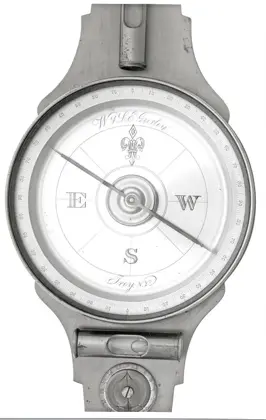 Surveyor's Compass
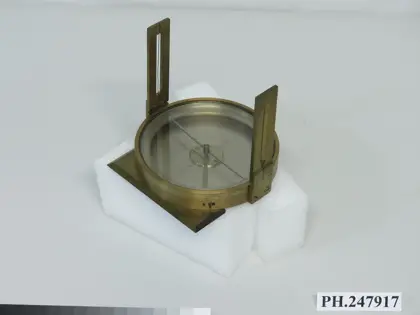 Surveyor's Vernier Compass
Also made in Troy see all
Also answering “Where am I?” see all
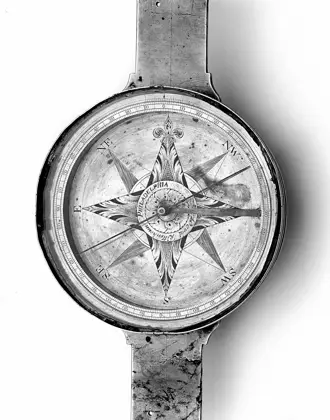 Surveyor's Vernier Compass
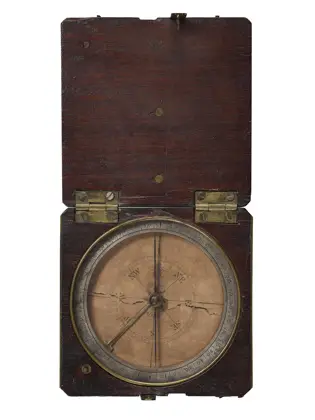 Pocket compass from the Lewis and Clark Expedition, 1804-1806
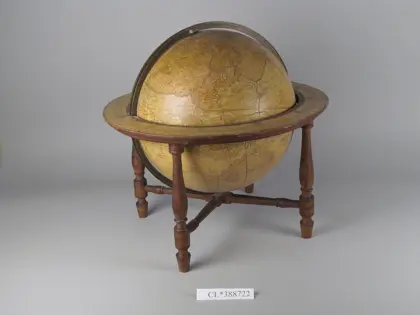 James Wilson's Terrestrial Globe, 1811
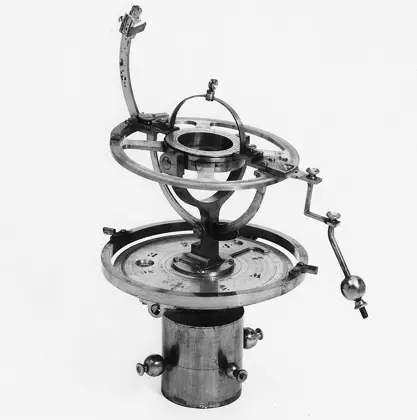 Solar Compass
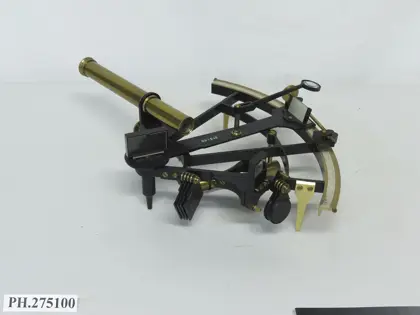 Sextant
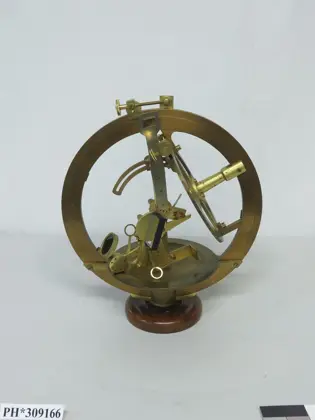 Equatorial Sextant
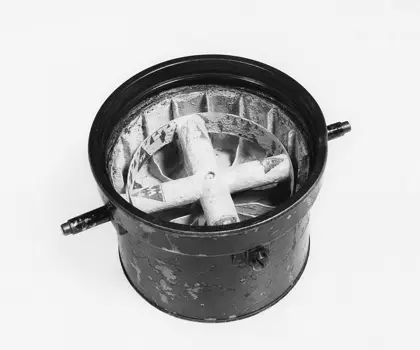 Liquid Compass
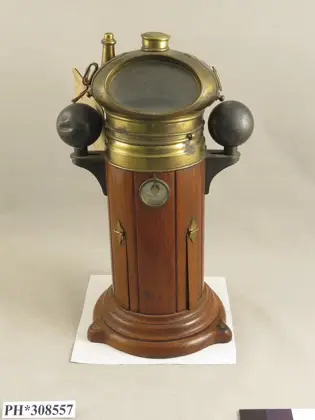 Dry Card Compass with Binnacle
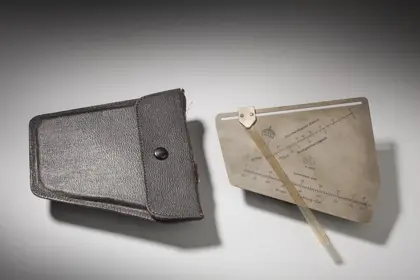 Plotter, Drift
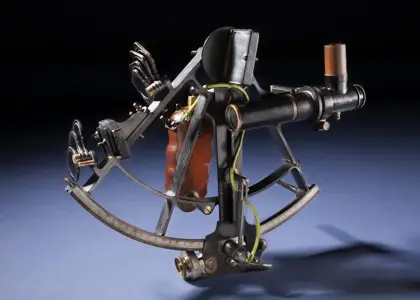 Sextant, Brandis, with Willson Bubble Telescope, Early
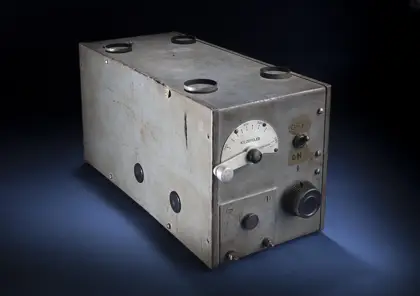 Receiver, Radio Range, ARC, Lab Prototype, Model B
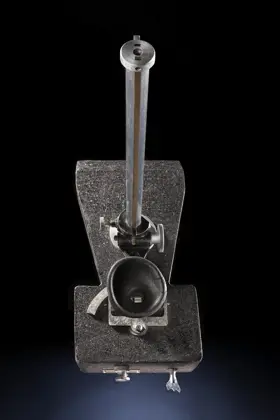 Sight, Drift & Ground Speed, Gatty