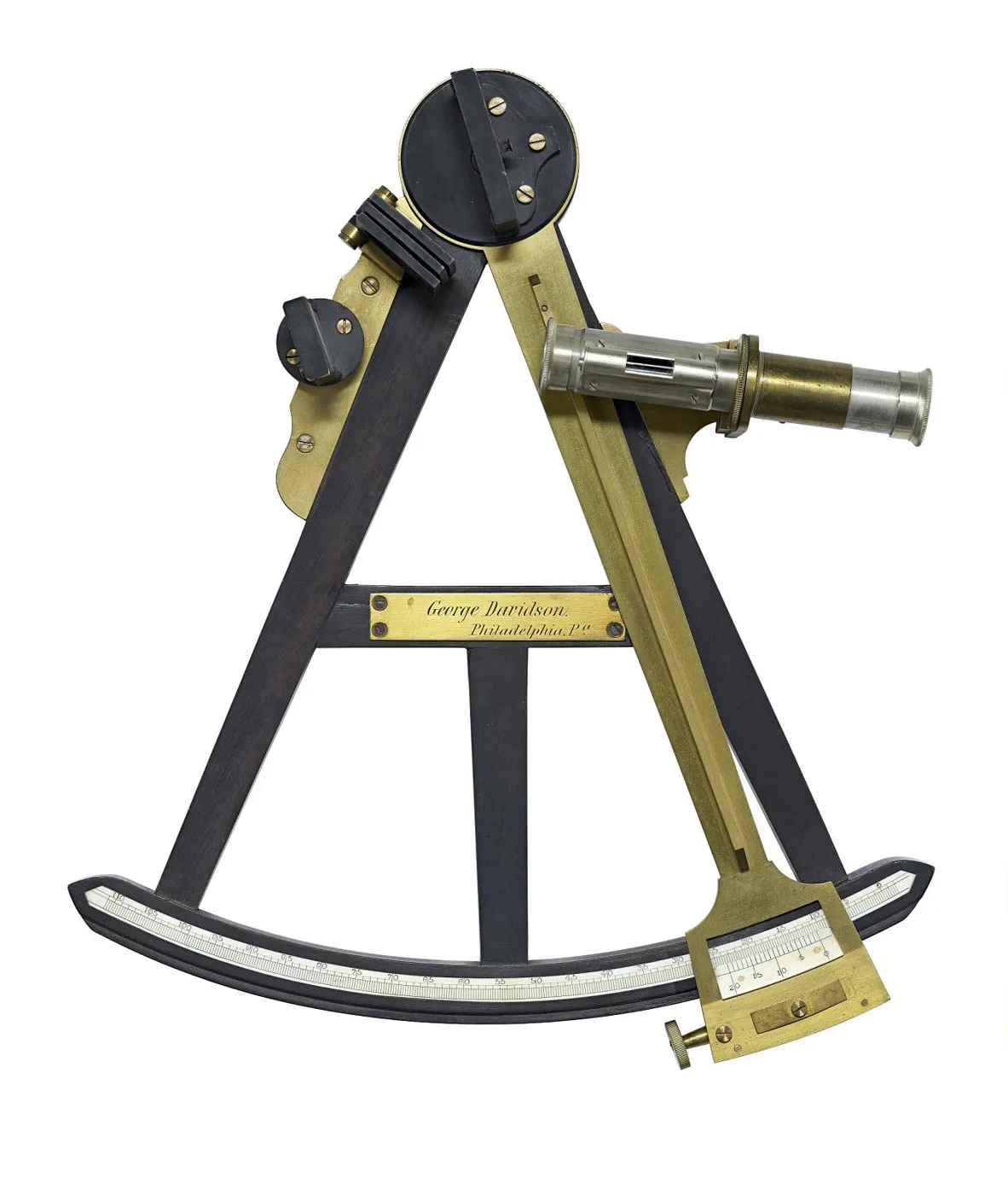
Octant
A sailor lined up the sun and the horizon with mirrors, and the angle on the arc helped fix the ship's position.
- Date
- mid 19th century
- Maker
- E. & G. W. Blunt
- Place
- United States: New York, New York City
- Dimensions
- radius: 11 in; 27.94 cm; overall: 3 in x 11 1/8 in x 12 1/4 in; 7.62 cm x 28.2575 cm x 31.115 cm
- Museum
- National Museum of American History
Octant with an ebony frame, reinforced brass index arm, and telescopic sight. The ivory scale is graduated every 20 minutes from -2° to +111° and read by vernier and tangent screw to single minutes of arc. The "E. & G. W. BLUNT, New York" inscription may indicate that it was made after 1857 when the Blunts began offering nautical instruments "of American manufacture," and before 1866 when the firm became Blunt & Nichols.
The inscription on the brass nameplate reads: "George Davidson. Philadelphia, Pa." George Davidson (1825-1911) was a surveyor, geodesist and astronomer affiliated with the U.S. Coast Survey.
Ref: Deborah J. Warner, "American Octants and Sextants: The Early Years," Rittenhouse 3 (1989): 86-112, on 91-92.
"George Davidson," American National Biography, vol. 6, pp. 143-144.
The museum's own record (Smithsonian, National Museum of American History)
Also by E. & G. W. Blunt see all
Also made in New York City see all
 Grunow Spherometer
 Sextant
 Burns Addometer
 Spectroscope
 Spectrometer
 Keuffel & Esser 1741 Thacher Cylindrical Slide Rule
Also answering “Where am I?” see all
 Surveyor's Vernier Compass
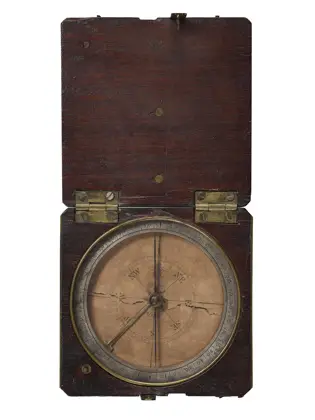 Pocket compass from the Lewis and Clark Expedition, 1804-1806
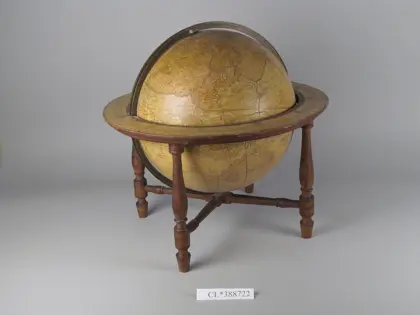 James Wilson's Terrestrial Globe, 1811
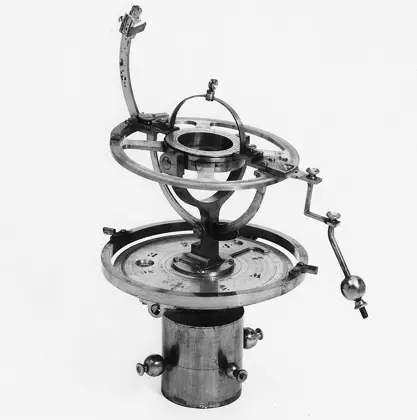 Solar CompassSextant
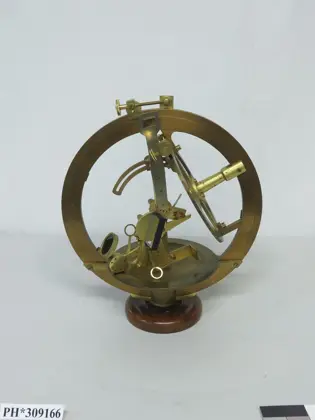 Equatorial Sextant
 Liquid Compass
 Dry Card Compass with Binnacle
 Plotter, Drift
 Sextant, Brandis, with Willson Bubble Telescope, Early
 Receiver, Radio Range, ARC, Lab Prototype, Model B
 Sight, Drift & Ground Speed, Gatty